
Light Requirements
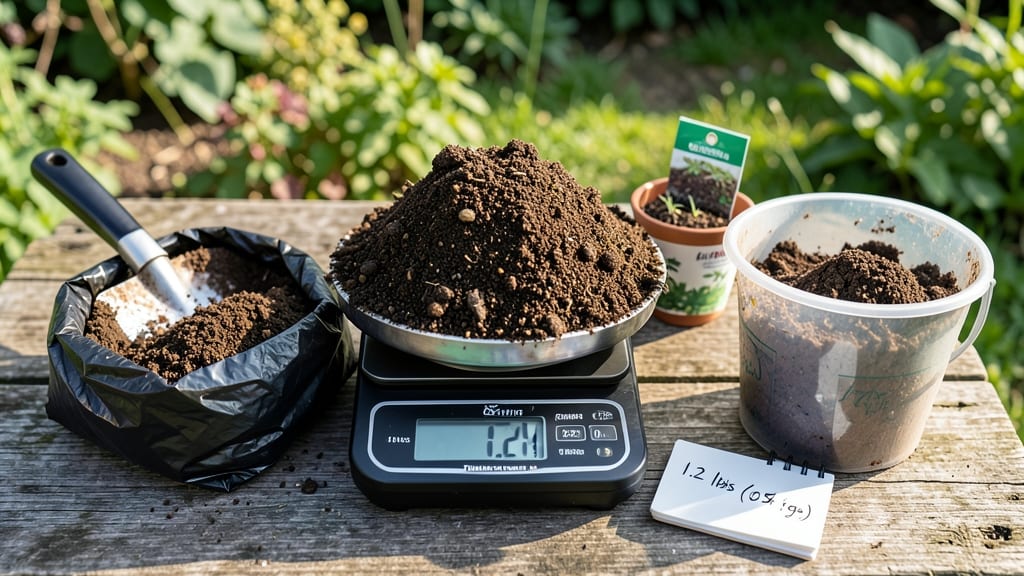
Determining how much a scoop of topsoil weighs depends on its moisture level, compaction, and whether it's loose or shoveled—typically ranging from 1 to 3 pounds per scoop. Loose topsoil usually measures 1.5–2 pounds, while tightly packed soil can exceed 3 pounds due to water absorption and density variations.
Understanding topsoil weight helps gardeners plan projects accurately. Moisture plays a huge role—wet soil can weigh up to 50% more than dry soil, while organic matter like compost adds bulk without extra weight.
For example, a 5-gallon bucket of loose topsoil might hold just 12–15 pounds, but the same volume when packed could double. Always check soil moisture before estimating—this simple step prevents overbuying or running short for your garden beds or lawn patches.
Pro tip: Use a kitchen scale to test your soil's weight per scoop. Fill a 1-quart container (about 32 oz) and weigh it—most garden soils fall between 1.5 and 2.5 pounds in this volume.
This DIY method saves money by helping you calculate bulk orders precisely, whether you're amending flower beds or leveling a vegetable patch.
💡 In This Article
- Factors Affecting Topsoil Weight per Scoop
- Topsoil Weight Calculator: Converting Cubic Feet to Pounds
Factors affecting topsoil weight per scoop
Moisture content is the single biggest factor in topsoil weight variations. When soil is dry, its particles pack tightly, but adding water creates capillary action that forces air pockets to collapse. This increases density—wet topsoil can weigh up to 50% more than dry soil.
For example, a 1-cubic-foot sample might weigh 60 pounds when dry but jump to 90 pounds after saturation. This explains why spring planting often requires heavier soil calculations.
Soil density also plays a critical role, measured by how tightly particles are packed. Loose, aerated topsoil (like freshly tilled garden soil) typically has a bulk density of 60–80 pounds per cubic foot, while compacted soil (like roadside fill) can exceed 100 pounds per cubic foot.
The organic matter percentage matters too—compost-amended soil feels lighter per scoop because organic particles hold more air but break down over time, increasing long-term density.
Compaction from tools or machinery further alters weight. A shovel scoop of freshly tilled soil might weigh 1.5 pounds, but the same volume after being trodden on could reach 2.5 pounds. This is why professional landscapers always specify "loose" or "compacted" when ordering bulk soil.
For gardeners, this means your 5-gallon bucket of topsoil could vary from 12 pounds (loose) to 20 pounds (packed) depending on how it was handled.
Temperature and mineral composition add subtle variations. Clay-heavy soils weigh more than sandy soils because clay particles bind tightly with water. In cold climates, frozen soil can appear lighter due to ice crystals forming between particles, but thawing restores its true weight.
These factors explain why your spring soil might feel heavier than fall soil—winter freezing and thawing cycles compress particles differently.
For practical applications, consider these real-world examples: A 100-square-foot garden bed filled to 6 inches depth requires about 3 cubic yards of topsoil. If your soil weighs 2 pounds per scoop (loose), that translates to roughly 2,700 pounds—or 1,350 pounds if packed.
This knowledge prevents overordering for raised beds or underestimating for lawn patches.
To test your soil's weight at home, use a 1-quart container (32 oz). Fill it with a shovel scoop, weigh it on a kitchen scale, then subtract the container's weight. Most garden soils fall between 1.5 and 2.5 pounds per quart.
This DIY method reveals whether your soil is unusually heavy (clay) or light (sandy), helping you adjust project estimates accordingly.
Understanding these factors transforms guesswork into precision. Whether you're amending flower beds or leveling a vegetable patch, accounting for moisture and compaction ensures you order exactly what you need—no surprises, no wasted trips to the bulk soil supplier. 🌱