
Light Requirements
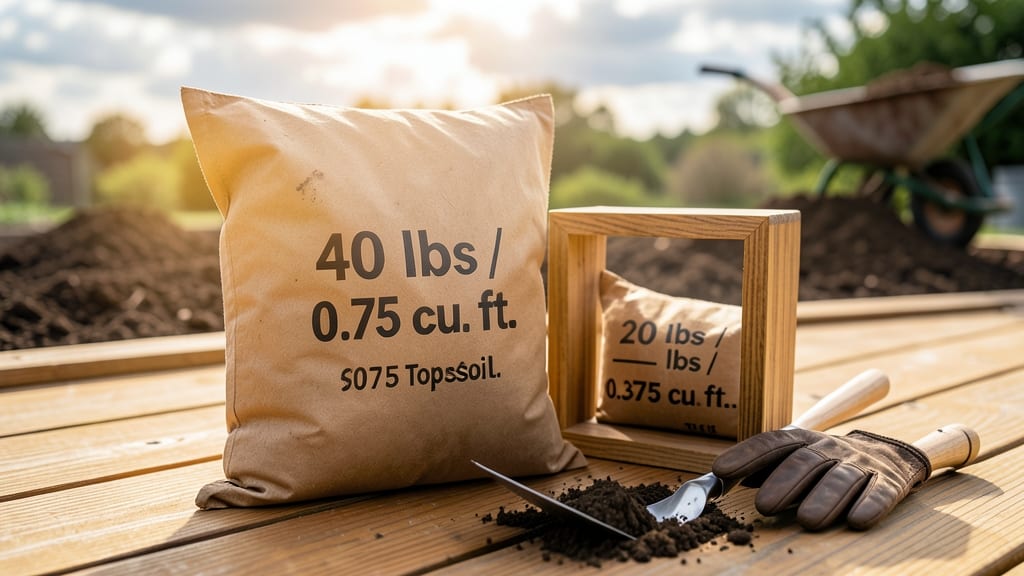
When buying topsoil, a standard bag usually holds about 2 cubic feet, though you'll find options ranging from 1 to 4 cubic feet. The weight typically falls between 40 and 100 pounds, depending on how wet or dry the soil is and what kind of bag it's in. Always double-check the label before you buy to know exactly what you're getting.
Most gardeners assume all topsoil bags are the same, but the cubic footage and weight can vary significantly based on how the soil is compressed or packaged. 🌱 A 2-cubic-foot bag might weigh 60 pounds when damp but drop to 40 pounds if it's bone-dry—this matters when you're hauling bags to your garden or raised beds.
I always recommend buying slightly more than you think you need, since settling and uneven distribution can leave you short. For example, a 4-foot-by-8-foot raised bed needs about 16 cubic feet of topsoil, so you'd want eight 2-cubic-foot bags to account for any gaps.
Another key factor is the type of soil—some bags contain screened topsoil (smoother, easier to work with), while others have more organic matter or sand mixed in, which can change both weight and coverage.
If you're planning a large project, ask the supplier for a sample first to test how it feels and drains. This small step can save you time and frustration later!
💡 In This Article
- Standard Topsoil Bag Sizes Explained
- Topsoil Weight Variations and What They Mean
Standard topsoil bag sizes explained
Topsoil bags come in standardized cubic foot measurements to help gardeners estimate coverage for their projects. A 1-cubic-foot bag is the smallest common size, typically used for small repairs or filling gaps in flower beds. These bags weigh around 20-30 pounds when dry, making them manageable for single-handed transport.
At the other end of the spectrum, 4-cubic-foot bags are designed for larger projects like lawn topdressing or filling raised beds, often weighing 80-100 pounds when saturated.
The most popular size, 2 cubic feet, strikes a balance between convenience and coverage. This size is perfect for filling a 4-foot-by-1-foot-by-1-foot area (like a small raised bed) or topdressing a 20-square-foot lawn patch.
What's interesting is how these measurements translate to real-world gardening: a 4-foot-by-8-foot raised bed (a common size) requires about 16 cubic feet of topsoil, meaning you'd need eight 2-cubic-foot bags. Always round up—soil settles as you spread it, and you don't want to run short mid-project!
Here's where things get practical: the depth of application matters just as much as the area. For example, a 1-inch layer over a 100-square-foot lawn requires roughly 7 cubic feet of topsoil. This is why suppliers often sell bags in cubic feet rather than pounds—it's about volume, not weight.
If you're unsure, ask for a coverage calculator or use the rule of thumb: 1 cubic foot covers 1 square foot at 1 inch deep. This simple formula helps avoid over- or under-purchasing.
Another key detail is how soil is compressed in bags. A bag labeled 2 cubic feet might actually contain slightly less when loosened because the soil is packed tightly during manufacturing. This compression can make the bag 20-30% heavier than loose soil of the same volume.
For instance, a 2-cubic-foot bag might weigh 60 pounds when compressed but only 45 pounds if you were to fill a loose pile with the same amount. This difference is crucial if you're hauling bags up stairs or into a truck bed.
Consider these common scenarios to visualize coverage:
- Flower bed (3' x 6' x 6" deep): Needs about 7 cubic feet—four 2-cubic-foot bags should suffice.
- Lawn topdressing (100 sq ft, 1/2" layer): Requires 3.5 cubic feet—two 2-cubic-foot bags plus one 1-cubic-foot bag.
- Raised bed (4' x 8' x 12" deep): Demands 32 cubic feet—sixteen 2-cubic-foot bags, with extras for settling.
The takeaway? Always measure your project's volume before buying, and don't forget to account for the 30% rule: purchase 30% more than your calculations suggest to handle settling and uneven distribution. This small buffer can save you a trip back to the store mid-garden! 🌱