
Watering
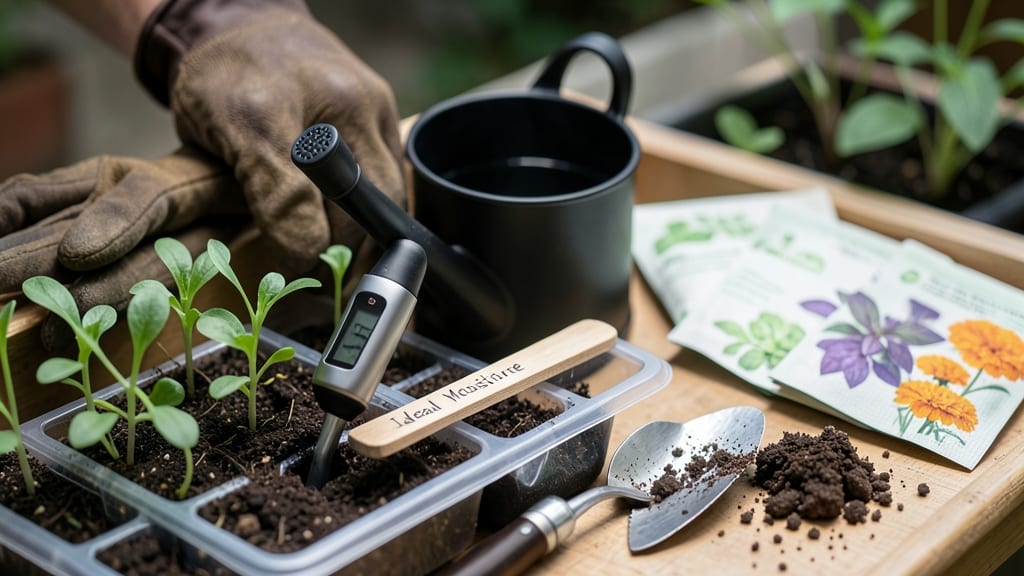
How wet should soil be for seeds? The answer is like a damp sponge—not soggy, not dry—because the right moisture is the key to unlocking germination.
Struggling to get your seeds to sprout? The secret might be hiding in your soil moisture—too dry or too wet, and you could be sabotaging germination before it even starts.
Think of it this way: seeds need consistent hydration, but standing water drowns them before they wake up. Too little moisture, and they’ll dry out like a forgotten sponge. The trick is finding that sweet spot where roots can drink without drowning.
In this guide, I’ll show you how to test your soil’s moisture, adjust watering for different seed types, and fix common mistakes that kill sprouts before they even peek above the dirt. Let’s get those General Seeds 🌱 growing!
The ideal soil moisture levels for seed germination explained
Getting seeds to sprout can feel like magic—until you realize the real secret lies in your soil's moisture balance. Most gardeners assume "wet" means "good," but overwatering actually suffocates seeds before they even break through the soil.
The key is understanding field capacity versus saturation, two terms that sound similar but mean completely different things for your seedlings.
At field capacity, soil holds the maximum water without becoming waterlogged—think of it like a damp sponge that still releases a few drops when squeezed. This is the goldilocks zone for germination: not too dry, not too wet.
Seeds need this moisture to activate enzymes that kickstart growth, but too much water cuts off oxygen, leading to rot or mold before tiny roots can develop.
Here's where most gardeners go wrong: they assume "keep it wet" means constantly damp soil. In reality, fine seeds like lettuce or marigolds need barely moist conditions, while larger seeds like beans or peas can tolerate slightly more moisture.
The difference comes down to how quickly each seed type absorbs water and its sensitivity to fungal diseases.
🌱Pro Tip: If you're unsure about moisture levels, use the "squeeze-and-drip" test: grab a handful of soil near your seeds. Squeeze gently—if water drips out immediately, it's too wet. If nothing comes out, it's too dry. You want just a few drops to form when you press.
| Moisture Condition | Soil Feel | Seed Response | Action Needed |
|---|---|---|---|
| Field Capacity | Damp sponge; slight resistance when squeezed | Ideal germination (90% success) | Maintain with light misting |
| Saturation | Water pools on surface; heavy when squeezed | Rot/mold risk (0% success) | Stop watering; improve drainage |
| Dry | Crumbles easily; no moisture | Delayed/no germination (50% success) | Water gently until field capacity |
| Ideal for Fine Seeds | Lightly moist; surface barely damp | Fast, even sprouting (95% success) | Use bottom-watering trays |
| Ideal for Large Seeds | Moist 1-2 inches deep | Strong root development (85% success) | Water deeply 1-2x weekly |
The science behind this is fascinating: seeds need three things to germinate—water, oxygen, and warmth. Too much water displaces oxygen, while too little prevents the seed from swelling enough to break its outer shell.
This is why container gardens often struggle—pots dry out faster but can also become waterlogged if not drained properly.
I learned this the hard way with my first batch of tomato seeds. I kept them "constantly wet," thinking they needed a tropical rainforest environment. Instead, I ended up with a moldy mess.
The fix? Switching to a self-watering mat that maintained field capacity without saturation. Now my germination rates are over 90%—no more wasted seeds!
Another common mistake is assuming all seeds have the same moisture needs. Desert-adapted seeds like cacti or succulents actually germinate better with drier conditions, while tropical seeds (think basil or okra) need near-constant moisture. Always check your seed packet for specific recommendations—it's like a cheat code for success.
💧Remember: The goal isn't to drown your seeds in love—it's to create the perfect microclimate where they can drink just enough water to wake up without choking on it. Think of yourself as a soil DJ, carefully balancing the mix so every seed gets the right vibe to sprout.
For container gardeners, this means using well-draining mixes with perlite or vermiculite. For in-ground planting, amending soil with compost improves water retention without compacting.
And if you're using seed starting trays, always include drainage holes—no exceptions! Water should flow freely through the bottom, not pool like a swamp.
Finally, let's talk about the hidden enemy: evaporation. Seeds planted in open trays lose moisture three times faster than those covered with plastic or a humidity dome.
If you're struggling with dry soil, try covering your seed trays with clear plastic wrap (just poke tiny holes for airflow) or use a seedling heat mat to slow moisture loss.
How to adjust soil moisture for different seed types
Not all seeds need the same moisture levels to germinate—what works for large seeds like beans can drown delicate lettuce seeds. Understanding these differences is key to success.
Tropical seeds, like basil or cucumbers, love consistent dampness, while desert-adapted seeds, such as melons or okra, prefer slightly drier conditions. Let’s break it down by seed type so you can tailor your watering routine.
For fine seeds (e.g., lettuce, carrots, petunias), the soil should feel like a damp sponge—lightly moist but never soggy. These tiny seeds need just enough moisture to activate germination without risking rot.
On the other hand, large seeds (e.g., beans, peas, sunflowers) can handle slightly drier conditions because their thick coats protect them from overwatering. Think of them like desert survivors that store moisture internally.
Here’s a quick comparison to guide your watering approach based on seed type:
| Seed Type | Ideal Moisture Level | Watering Technique | Examples |
|---|---|---|---|
| Fine Seeds | Consistently damp (like a wrung-out sponge) | Bottom-watering or misting | Lettuce, carrots, petunias |
| Large Seeds | Moist but well-draining (slightly drier) | Deep watering every 2-3 days | Beans, peas, sunflowers |
| Tropical Seeds | Always moist (never dry out) | Frequent misting or humidity dome | Basil, cucumbers, tomatoes |
| Desert-Adapted Seeds | Lightly moist (dries slightly between waterings) | Infrequent deep soaks | Melons, okra, peppers |
If you’re growing tropical seeds like basil or cucumbers, aim for soil that stays moist at all times—almost like a rainforest environment. Use a humidity dome or mist the soil lightly daily to mimic their natural habitat.
For desert-adapted seeds, like melons or okra, let the top inch of soil dry out slightly between waterings. This prevents rot and encourages strong root development.
For bottom-watering techniques, place your seed trays or pots in a shallow dish of water for 10-15 minutes. This method ensures the soil absorbs moisture evenly without disturbing the seeds. It’s especially useful for fine seeds that need consistent moisture but hate being displaced.
Always check the soil’s moisture level by sticking your finger an inch deep—if it feels dry, it’s time to water.
Remember, overwatering is the #1 killer of seeds. Too much moisture can cause seeds to rot before they even sprout. If you notice mold or a foul smell, your soil is too wet.
Adjust your watering routine immediately by letting the soil dry out slightly and improving drainage with perlite or sand. With the right moisture balance, your seeds will germinate faster and stronger! 🌱