
Tools
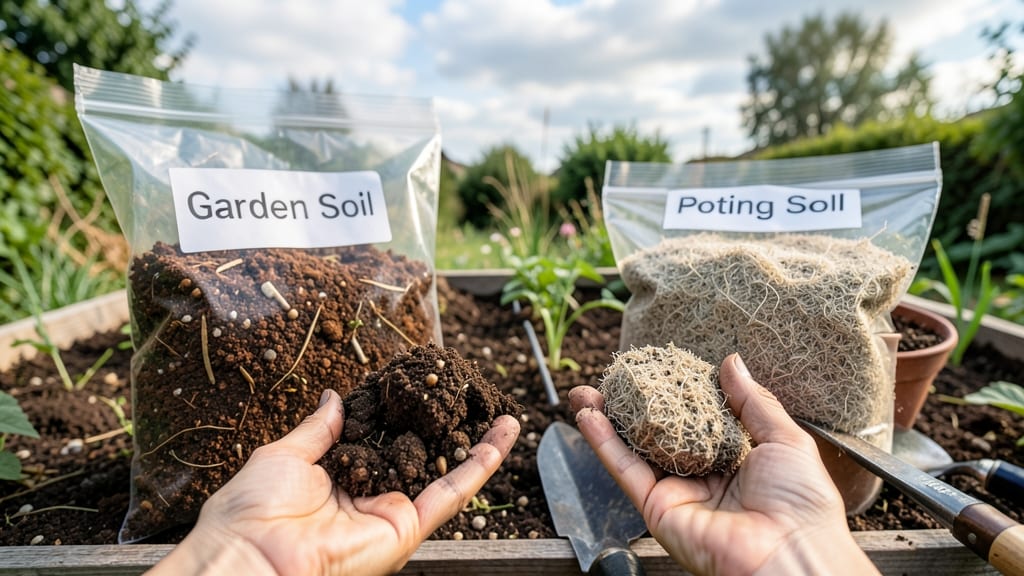
Garden soil and potting soil aren't the same, and mixing them up can mean the difference between thriving plants and struggling ones. 🌱 I learned that the hard way when my container tomatoes wilted after just two weeks—turns out, they needed something lighter and more nutrient-packed than what was in my backyard.
The wrong mix leads to poor drainage, compacted roots, or plants that can't access the nutrients they need. Garden soil is what you find in your yard or buy in bulk for in-ground planting.
It's heavy, packed with organic matter, and perfect for vegetables, perennials, and shrubs that spread their roots deep. But when you stuff it into containers, it stays soggy, blocks airflow, and suffocates roots. That's why garden soil works great for flower beds but fails in pots.
Potting soil, on the other hand, is designed for containers—it's lightweight, fluffy, and packed with amendments like perlite, vermiculite, and compost to improve drainage and aeration. It's also higher in nutrients to feed plants that can't reach down for sustenance. The trade-off?
It drains too fast and lacks the structure for in-ground planting. For containers, stick with potting soil. For garden beds, use garden soil and amend it with compost if it's too dense. The right mix makes all the difference—your plants will thank you with stronger growth and bigger harvests.
The first product explained
Meet Miracle-Gro Indoor Potting Mix—your go-to solution for thriving container plants! 🌱✨ This premium potting soil is specially formulated for indoor and outdoor container gardening, ensuring your plants get the nutrients and aeration they need to flourish. Whether you're a seasoned gardener or just starting, this product is designed to simplify plant care while delivering exceptional results.
📏 Specs & Features
Here’s what makes Miracle-Gro Indoor Potting Mix stand out:
- Perfect Blend: A balanced mix of peat moss, compost, and perlite for optimal drainage and moisture retention.
- Nutrient-Rich: Contains controlled-release fertilizer to feed plants for up to 6 months.
- Lightweight & Fluffy: Ideal for containers, hanging baskets, and window boxes.
- pH-Balanced: Designed to support healthy root growth and nutrient uptake.
- Bag Size: Available in 8-quart and 2-cubic-foot bags to suit different project sizes.
🎯 Target Users
This potting mix is perfect for:
- 🌿 Indoor Gardeners: Ideal for herbs, succulents, and houseplants like ferns or snake plants.
- 🏡 Balcony & Patio Planters: Supports flowers, vegetables, and ornamental plants in containers.
- 👩🌾 Beginners & Experts: Easy to use with no guesswork—just add plants and water!
- 🌳 Seed Starters: Provides a sterile, nutrient-packed environment for seedlings.
💰 Price Point & Value
Priced competitively at $6.97 for the 8-quart bag and $12.97 for the 2-cubic-foot bag, this potting mix offers incredible value. With its long-lasting nutrients and versatility, it’s a cost-effective choice for both small projects and larger container gardens.
Plus, it’s widely available at home improvement stores, garden centers, and online retailers.
Pro Tip: 💡 Mix this potting soil with a bit of perlite or vermiculite for even better aeration if you’re growing moisture-sensitive plants like cacti or succulents!
The second product explained
Meet Miracle-Gro Indoor Potting Mix—your go-to companion for container gardening! 🌱✨ This premium potting soil is designed specifically for indoor and outdoor plants thriving in pots, planters, and hanging baskets. Unlike garden soil, it’s lightweight, aerated, and packed with essential nutrients to keep your plants happy and healthy.
📏 Key Specs & Features
- Type: Premium peat-based potting mix (sterile and weed-free)
- Size: 8-quart bag (perfect for small to medium containers)
- Nutrients: Enriched with slow-release fertilizer for up to 6 months of growth
- Drainage: Lightweight formula with perlite and vermiculite to prevent compaction and root rot
- pH Balance: Slightly acidic (5.5–6.5), ideal for most houseplants and herbs
- Organic Matter: Blended with coconut coir for moisture retention and microbial activity
🎯 Who’s It For?
This potting mix is a game-changer for:
- 🌿 Houseplant lovers (snake plants, pothos, ferns, and more)
- 🌶️ Herb and veggie gardeners (basil, tomatoes, peppers in containers)
- 🏡 Balcony and patio planters (flowers, succulents, and decorative plants)
- 🛒 DIYers and beginners—no amendments needed; ready to use straight from the bag!
💰 Price Point & Value
Priced at $12.97 for an 8-quart bag, this potting mix offers exceptional value for its quality and convenience.
While it’s slightly more expensive than generic garden soil, the long-lasting nutrients and superior drainage make it a cost-effective choice for serious plant parents. Pro tip: 💡 Buy in bulk if you’re a frequent container gardener—it’s cheaper per quart and ensures you’re always stocked!
⚠️ When Not to Use It
While this mix is versatile, it’s not ideal for:
- 🌍 In-ground gardening (too lightweight for heavy clay or sandy soils)
- 🌱 Vegetables with deep root systems (like potatoes or carrots)
- 🏡 Raised beds (unless mixed with garden soil for structure)
For these projects, a blend of garden soil and compost works better!
Head-to-head comparison
Curious about how garden soil and potting soil stack up? Let’s break it down in a side-by-side comparison so you can make the best choice for your plants!
Whether you're tending to a sprawling backyard garden or nurturing delicate houseplants, understanding these differences will help you avoid common mistakes and keep your greenery thriving. 🌱
📏 Performance: What Works Best for Your Plants?
Garden soil and potting soil are designed for completely different environments, which directly impacts how well they perform for your plants.
- Garden Soil: Perfect for outdoor beds and in-ground planting. It’s naturally rich in organic matter, supports robust root systems, and provides long-term nutrients. Ideal for vegetables, shrubs, and perennials that thrive in open, well-drained spaces. However, it can be too dense for container plants, leading to poor aeration and water drainage.
- Potting Soil: Engineered for containers, raised beds, and indoor gardening. It’s lighter, fluffier, and often mixed with perlite, vermiculite, or coconut coir to improve drainage and aeration. This makes it a top choice for herbs, succulents, and flowering plants that need a well-balanced, moisture-retentive (but not soggy) growing medium.
Pro Tip: 💡 If you’re using garden soil in pots, mix it with compost or potting soil to lighten it up and prevent compaction.
🎯 Features: Composition and Additives
The ingredients in each type of soil are tailored to their specific use, which affects texture, nutrient availability, and overall plant health.
| Feature | Garden Soil | Potting Soil |
|---|---|---|
| Primary Ingredients | Natural topsoil, clay, sand, silt, organic matter (like decomposed leaves or compost) | Peat moss, coconut coir, perlite, vermiculite, compost, and sometimes synthetic additives |
| Texture | Heavier, denser, and can compact over time | Lighter, airy, and designed to stay loose for better root growth |
| Drainage | Varies by location; may retain too much water in clay-heavy soils | Excellent drainage due to added amendments like perlite |
| Nutrient Content | Naturally rich in minerals but may lack consistency; benefits from fertilization | Often enriched with slow-release fertilizers or organic matter for steady nutrition |
| Sterility | Not sterile; may contain weeds, pests, or pathogens from the outdoors | Usually pasteurized or sterilized to reduce disease risk |
Pro Tip: ✨ If you’re repurposing garden soil for pots, sterilize it first by baking it in the oven (at 200°F for 30 minutes) to kill weeds and pests.
💰 Price: Budget-Friendly or Premium Investment?
Your wallet will notice the difference between these two soil types, especially if you’re planning a large garden or a collection of potted plants.
- Garden Soil: Typically the more affordable option since it’s sourced directly from the earth. Prices can vary based on location and quality, but you can often find it for free or cheap if you dig it yourself! 🌍
- Potting Soil: Generally more expensive due to the processing, sterilization, and added amendments. A 12-quart bag can cost anywhere from $3 to $8, depending on the brand and quality. However, the convenience and plant-specific benefits often justify the cost.
Pro Tip: 💰 For large container gardens, consider buying potting soil in bulk to save money while still getting the benefits of a high-quality mix.
🏗️ Durability: How Long Will It Last?
Durability isn’t just about how long the soil stays in place—it’s also about how well it retains its structure and nutrient levels over time.
- Garden Soil: Highly durable in outdoor settings, especially if amended with compost. It can last for years with minimal maintenance, but erosion, weathering, and nutrient depletion may require occasional top-dressing with organic matter.
- Potting Soil: Less durable in the long term because it breaks down faster, especially the organic components like peat moss. After 1-2 years, it may lose its structure and nutrient density, requiring a refresh. This makes it a better short-term solution for container gardening.
Pro Tip: 🌡️ To extend the life of potting soil, mix in compost or worm castings every few months to replenish nutrients and improve texture.
🌿 Best Uses: When to Choose Each
Not sure which soil to use for your next project? Here’s a quick guide to help you decide:
- Use Garden Soil For:
- In-ground vegetable gardens
- Perennial flower beds
- Shrubs and trees
- Raised garden beds (if amended with compost)
- Use Potting Soil For:
- Container gardening (pots, hanging baskets)
- Seed starting trays
- Houseplants and indoor herbs
- Vegetables grown in pots (like tomatoes or peppers)
Pro Tip: 🎯 For the best results, some gardeners mix the two! For example, use 50% garden soil and 50% potting soil in raised beds to combine the benefits of both.
Which one should you choose?
So, is garden soil the same as potting soil? After weighing the differences, the answer is a clear no—but the right choice depends entirely on your gardening goals! Here’s your tailored verdict and recommendation to help you pick the perfect soil for your green thumbs. 🌱✨
🌿 For Outdoor Gardens & In-Ground Planting
If you’re planting perennials, shrubs, trees, or vegetables directly in your yard, garden soil is your best bet.
Its natural composition—rich in microbes, organic matter, and local minerals—supports long-term root growth and resilience. Pro tip: Amend it with compost or organic fertilizer to boost nutrients for heavy feeders like tomatoes or roses! 💡
🏺 For Potted Plants, Seedlings & Containers
Potted plants, herbs, and seedlings thrive in potting soil because it’s lighter, sterile, and packed with moisture-retention additives (like peat moss or coconut coir). This prevents compaction and root rot—critical for confined spaces. Bonus: Mix in perlite or vermiculite for even better drainage if your plants hate soggy roots! 🌡️
🔄 Special Scenarios: When to Mix or Switch
| Scenario | Recommended Soil | Why? |
|---|---|---|
| Raised garden beds | Garden soil + compost | Balances natural fertility with aeration. |
| Succulents/cacti | Potting soil + sand/perlite | Prevents root rot in fast-draining mixes. |
| Seed starting | Seedling-specific potting mix | Sterile and fine-textured for delicate sprouts. |
Final pro tip: Label your bags! If you’re repurposing potting soil for garden beds, sterilize it first (bake in the oven at 200°F for 30 mins) to kill weeds and pathogens. 🔥
Still unsure? Start with a small test: Dig a hole, fill it with your chosen soil, and observe how water drains. If it pools, opt for a lighter mix; if it drains too fast, add organic matter. Your plants will thank you! 🎯