
How To
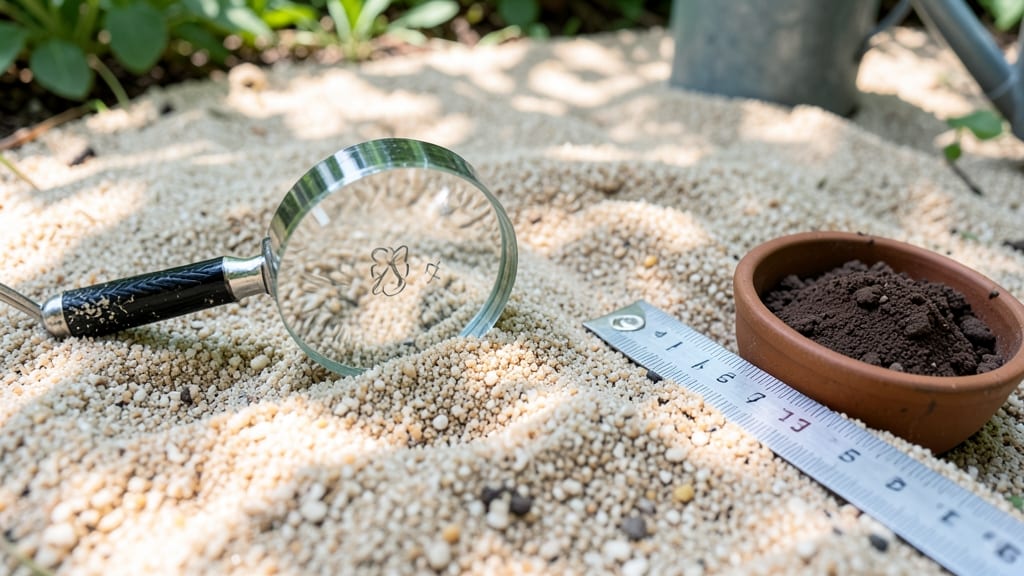
A sandy soil definition highlights its large mineral particles, which create a loose, gritty structure that drains water quickly but struggles to hold nutrients, making it challenging for most plants to establish strong roots. This unique composition benefits drought-tolerant species while posing difficulties for moisture-dependent varieties.
A sandy soil definition describes this soil type as one formed by the natural breakdown of rocks and minerals, creating particles between 0.05–2.0 millimeters in diameter. 🌱 The coarse texture gives it excellent aeration and drainage but also means nutrients wash away faster than in clay or loam soils.
Gardeners often improve it by mixing in compost or organic matter to boost moisture retention and fertility.
Understanding its characteristics helps you choose the right plants—deep-rooted species like pines thrive here, while shallow-rooted annuals may struggle without amendments. The key is balancing its strengths (fast drainage) with its weaknesses (nutrient loss) through smart gardening practices.
💡 In This Article
- How Sandy Soil Forms and Its Physical Characteristics
- Planting Strategies for Sandy Soil Gardens
How sandy soil forms and its physical characteristics
Sandy soil originates from the geological process of weathering, where rocks break down into smaller particles through wind, water, and temperature fluctuations. These fragments, ranging from 0.05 to 2.0 millimeters, are transported by wind or water and deposited in layers.
The result is a loose, gritty texture that feels almost like coarse sugar between your fingers when dry. 🔥 Unlike clay or loam, sandy soil lacks fine particles, giving it a high porosity—about 40-50%—which allows air and water to move freely through its structure.
This particle size distribution directly impacts its physical properties. Sandy soil has a bulk density of roughly 1.4-1.7 grams per cubic centimeter, lighter than clay but heavier than organic matter.
Its large pores create rapid water infiltration, with water moving through at rates of 1-2 inches per hour—far faster than clay’s 0.1-0.5 inches per hour.
However, this same porosity means it holds only 5-15% water by volume, compared to clay’s 30-50%, making it prone to drought conditions. The trade-off? Its excellent aeration supports root respiration for plants adapted to such environments.
Heat absorption is another defining trait. Sandy soil warms up quickly in sunlight, reaching temperatures up to 10-15°F hotter than loam during peak summer hours. This rapid heating can stress heat-sensitive plants but benefits species native to arid climates.
The lack of fine particles also means it has minimal cation exchange capacity (CEC), typically 1-5 meq/100g, which explains why nutrients like nitrogen, phosphorus, and potassium leach out faster than in clay soils (which can hold 10-30 meq/100g).
This nutrient loss is why sandy soil often requires regular fertilization to support plant growth.
To visualize the differences, imagine three soil types: clay feels sticky when wet and compact when dry, loam balances texture and fertility, while sandy soil resembles dry beach sand—light, airy, and quick to drain.
This structure makes it ideal for drought-resistant plants like rosemary, lavender, or pines but challenging for moisture-loving vegetables like lettuce or carrots, which need consistent water availability. The key to working with sandy soil lies in understanding these trade-offs and adapting gardening techniques accordingly.
One lesser-known characteristic is its low water-holding capacity, which can be mitigated by adding organic amendments like compost. These amendments improve the soil’s structure by filling the large pores with smaller particles, increasing its ability to retain moisture and nutrients.
For example, mixing in 3-5 inches of compost can boost water retention by 20-30% while also enhancing microbial activity, which breaks down organic matter into plant-available nutrients. This simple adjustment transforms sandy soil from a nutrient desert into a more productive growing medium.
Consider the case of coastal gardens, where sandy soil is common. Gardeners in these areas often use mulching techniques to slow water evaporation and add organic matter.
A 3-inch layer of mulch can reduce soil temperature fluctuations by 5-10°F and improve moisture retention by 15-25%, creating a more stable environment for plants. This approach highlights how understanding sandy soil’s physical traits allows gardeners to work with its limitations rather than against them.