
Vegetables
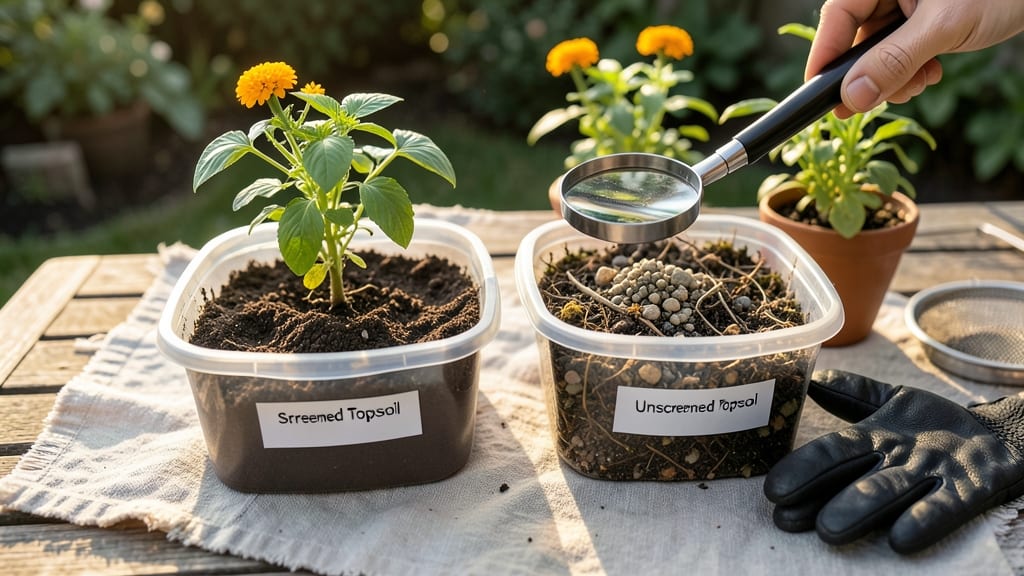
Choosing between screened and unscreened topsoil can mean the difference between a thriving garden and one that struggles to take root. 🌱 The right choice depends on your project—whether you're filling raised beds, planting delicate seedlings, or leveling a large landscape area.
I’ve tested both in my own garden, and the results speak for themselves: one creates a smooth, weed-free base, while the other adds bulk and organic matter at a lower cost.
Screened topsoil gets rid of rocks, debris, and weeds upfront, making it ideal for seed starting, container gardens, and projects where you want a clean, uniform planting medium. It’s pricier but saves time and frustration—no surprises when you’re planting.
Unscreened topsoil, on the other hand, is cheaper and richer in organic material, perfect for amending heavy clay or improving poor soil structure over time.
For quick results like vegetable beds or flower gardens, screened topsoil is a foolproof choice—roots grow faster in its fine, consistent texture. But if you’re working with large areas or need to rebuild soil health, unscreened topsoil is the budget-friendly workhorse.
The key is matching your project’s needs to the soil’s strengths.
Think about your goals: Do you need a weed-free, ready-to-plant surface, or are you playing the long game with soil improvement? The right pick depends on whether you’re planting tomatoes in raised beds or prepping a whole backyard for lawn and garden.
Here’s how to decide which one wins for your project.
The first product explained
Meet PremierGrow Screened Topsoil—your go-to solution for heavy, compacted, or clay-rich gardens where roots need room to thrive! 🌱 This premium-grade screened topsoil is meticulously processed to remove debris, rocks, and weeds, giving your plants the perfect growing environment from day one.
📏 Key Specs & Features
PremierGrow isn’t just another bag of dirt—it’s engineered for optimal root expansion. Here’s what sets it apart:
- Screened to ¼-inch: No surprises—just fine, nutrient-rich soil that drains well without clumping.
- High organic matter (30%+): Packed with compost and natural amendments to boost microbial life and plant health.
- pH-balanced (6.0–7.5): Ideal for most vegetables, including heavy feeders like tomatoes and peppers.
- Weed- and seed-free: No unwanted sprouts or invasive roots competing with your crops.
- Lightweight yet dense: Perfect for amending heavy clay or improving poor soil structure.
🎯 Who’s It For?
This screened topsoil is a game-changer for:
- 🌿 Urban gardeners with compacted or contaminated soil.
- 🏡 Homeowners raising vegetable beds, containers, or raised gardens.
- 🚜 Farmers & landscapers needing bulk soil for large-scale projects.
- 🌱 Newbies & pros alike who want foolproof, high-performance soil.
💰 Price Point & Value
PremierGrow delivers big results without breaking the bank. Pricing varies by region, but you’ll typically find:
- 2-cubic-foot bags: ~$4.99–$6.99 each (ideal for small projects).
- Bulk deliveries (1–2 yards): ~$25–$40 per yard (best for large gardens or professional use).
- Subscription discounts: Some retailers offer 10–15% off for repeat orders.
Pro Tip: 💡 Mix PremierGrow with your existing soil at a 1:1 ratio for heavy clay or a 2:1 ratio for sandy soil to achieve the perfect balance!
The second product explained
Meet Unscreened Topsoil—the budget-friendly, no-frills champion for gardeners who want raw, natural power without the premium price tag! 🌱 This product is all about authenticity, delivering a mix of organic matter, sand, silt, and clay in its natural state, perfect for those who prioritize cost-effectiveness and heavy-duty soil needs.
Key Specs & Features
- Composition: Untreated, raw topsoil with natural texture (includes rocks, roots, and debris).
- Particle Size: Mixed—ideal for breaking down over time to enrich soil structure.
- Organic Matter: High in natural nutrients, but may require amendments (like compost) for optimal plant health.
- Best For:
- Heavy clay or compacted soils (helps loosen and aerate).
- Large-scale gardening or landscaping projects.
- Gardeners who don’t mind sifting through debris for the best results.
- Price Point: Highly affordable—typically $10–$25 per cubic yard, depending on local suppliers.
Who’s It For?
Unscreened topsoil is the go-to for DIYers, farmers, and budget-conscious gardeners who:
- Prefer hands-on soil improvement (think: turning it into custom compost or screening it themselves).
- Need bulk quantities for raised beds, slopes, or large garden plots.
- Are growing heavy feeders like corn, squash, or fruit trees that thrive in nutrient-rich, unrefined soil.
Pro Tip for Best Results 💡
If you’re using unscreened topsoil for vegetable gardens, mix it with compost or aged manure to boost fertility. For root crops like carrots or potatoes, sift out larger rocks to prevent uneven growth. Patience pays off! This soil improves with time as it decomposes naturally.
When to Avoid It
Skip unscreened topsoil if you:
- Have light, sandy soil (it can compact over time).
- Need instantly usable soil for delicate plants or containers.
- Prefer low-maintenance solutions (screened topsoil is easier for quick projects).
Head-to-head comparison
Ready to dig into the differences between screened and unscreened topsoil? Let’s break it down in a side-by-side comparison so you can pick the perfect match for your garden—whether it’s heavy clay or light, sandy soil. Here’s what you need to know to make an informed choice!
🌱 Performance: Root Growth & Plant Health
When it comes to how your plants thrive, the choice between screened and unscreened topsoil can make a big difference—especially for vegetables that need strong roots and nutrient-rich soil.
- Screened Topsoil:
- 🔍 Finer texture = better aeration and drainage, which is ideal for heavy clay gardens where roots can suffocate.
- 🌱 Fewer debris and rocks = smoother planting, less risk of damaging roots during installation.
- ⚡ Faster nutrient absorption for plants like tomatoes, peppers, and leafy greens that need quick access to water and nutrients.
- Unscreened Topsoil:
- 🪨 Contains larger particles (rocks, roots, debris)—great for light, sandy soils where you need extra structure to retain moisture.
- 🌿 More organic matter (like decomposed leaves or small roots) can boost microbial activity over time, but may require extra prep to avoid clumping.
- ⏳ Slower to settle—may require tilling or amending before planting to avoid uneven growth.
💰 Price & Cost Efficiency
Your wallet will notice the difference between these two types of topsoil—especially if you’re working on a large garden bed!
| Factor | Screened Topsoil | Unscreened Topsoil |
|---|---|---|
| Upfront Cost | $15–$30 per cubic yard (higher due to processing) | $10–$20 per cubic yard (cheaper, as-is) |
| Long-Term Value | ✅ Ready to use—no extra prep needed (saves time and labor costs). | 🔧 May require sifting or amending (adds time and potential material costs). |
| Best for Bulk Purchases? | ❌ Less cost-effective for large projects (unless you prioritize convenience). | ✅ More budget-friendly for big gardens or landscaping. |
🏗️ Durability & Longevity
How long will your soil hold up under pressure? And how will it affect your garden’s health over time?
- Screened Topsoil:
- 🔄 Compacts less over time—ideal for raised beds or containers where soil structure matters.
- 🌦️ Resists erosion better in windy or sloped areas (fewer loose particles to blow away).
- 📉 May degrade faster in extreme heat (loses moisture quicker without organic matter).
- Unscreened Topsoil:
- 🌱 More natural decomposition—over time, organic debris breaks down, enriching the soil.
- 💧 Holds moisture longer (thanks to larger particles and organic matter).
- ⚠️ Risk of settling or sinking if not properly amended (can lead to uneven plant growth).
🛠️ Ease of Use & Installation
Let’s talk convenience—because nobody wants to spend hours prepping soil before planting!
- Screened Topsoil:
- 🚀 Plug-and-play—just spread and plant. No sifting or debris removal needed.
- 🔨 Less tools required—great for beginners or those short on time.
- ❄️ Freezes/thaws more evenly in cold climates (fewer ice pockets to disrupt roots).
- Unscreened Topsoil:
- 🛠️ Requires prep work—may need raking, sifting, or mixing with compost.
- 🌿 Better for “no-till” gardeners who want to preserve natural soil structure.
- ⚠️ Watch for hidden surprises—rocks or roots could pop up unexpectedly during planting.
🌿 Nutrient Content & Soil Amendments
Not all topsoil is created equal when it comes to feeding your plants. Here’s how they stack up:
| Factor | Screened Topsoil | Unscreened Topsoil |
|---|---|---|
| Natural Nutrients | ⚠️ Lower organic matter (may need fertilizer or compost added). | ✅ Higher organic content (decomposing material adds nutrients over time). |
| pH Balance | 🔄 Neutral to slightly acidic (varies by source; test before planting). | 🌱 More variable (may contain limestone or acidic debris—test kit recommended). |
| Best For: | Vegetables needing consistent, sterile soil (e.g., potatoes, carrots). | Vegetables that benefit from microbial activity (e.g., beans, squash). |
🌍 Environmental & Sustainability Considerations
Thinking about the bigger picture? Here’s how each option impacts the planet:
- Screened Topsoil:
- ⚡ Energy-intensive processing (screening requires machinery and fuel).
- 🌱 Less waste—no large debris to dispose of.
- 🔄 May deplete local soil banks faster if sourced unsustainably.
- Unscreened Topsoil:
- 🌿 More sustainable—uses soil as-is, reducing processing energy.
- 🗑️ May contain non-biodegradable waste (plastic, metal) if not sourced carefully.
- 🌍 Better for regenerative gardening—preserves natural soil ecosystems.
Which one should you choose?
So, which topsoil reigns supreme for your garden? The answer depends on your specific needs, soil goals, and the type of plants you’re nurturing. Let’s break it down to help you decide with confidence! 🌱✨
🌿 Choose Screened Topsoil If...
- You’re planting delicate or high-value crops (like tomatoes, peppers, or herbs) that need a clean, weed-free start. Screened topsoil eliminates debris, reducing competition for nutrients and water.
- Your garden has heavy clay or compacted soil. The uniform texture of screened topsoil blends seamlessly, improving drainage and aeration without introducing rocks or roots.
- You prioritize long-term soil health. Fewer contaminants mean less risk of disease or pest infestations creeping into your beds.
- You’re working in raised beds or containers, where consistency and weight matter. Screened topsoil is lighter and easier to manage.
🌍 Opt for Unscreened Topsoil If...
- You’re amending existing soil and want to add organic matter naturally. Unscreened topsoil includes roots, twigs, and microbes that boost soil fertility over time.
- Your garden is light and sandy. The extra organic material in unscreened topsoil helps retain moisture and improve structure without clogging drainage.
- You’re on a budget or need bulk coverage. Unscreened topsoil is often cheaper and easier to find in large quantities.
- You’re composting or building a lasagna garden. The mixed-in debris breaks down, creating nutrient-rich layers over time.
💡 Pro Tip for Hybrid Success
Can’t decide? Try a mix of both! Use screened topsoil for seed-starting or transplanting, then top-dress with unscreened topsoil later to introduce organic matter. This gives you the best of both worlds: clean starts + long-term soil vitality.
📌 Final Verdict: There’s no one-size-fits-all answer, but screened topsoil wins for precision and ease, while unscreened topsoil excels for natural soil enrichment. Match your choice to your garden’s personality—and watch your plants thrive! 🚀