
How To
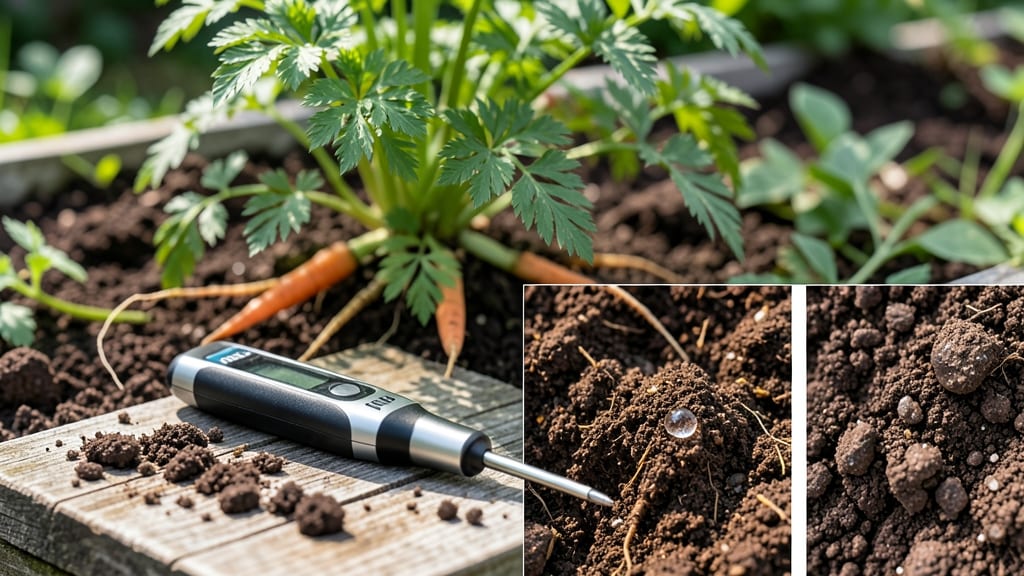
The soil conditions for carrots aren’t just dirt—it’s the secret to straight, sweet roots that pull effortlessly from the earth. 🌱 I’ve dug up more forked, stunted carrots than I’d like to admit, and the fix always starts with the soil.
Carrots demand loose, stone-free loam that lets them grow deep without bending or splitting. The ideal mix is 60% sand, 30% organic matter, and 10% silt, with a pH between 6.0 and 6.8. Clay or rocky soil?
Break it up with compost and coarse sand—think of it like fluffing a pillow for your roots. A 6-inch-deep bed of amended soil is non-negotiable for full-sized carrots.
You’ll know you’ve nailed it when your soil feels like a damp sponge—light enough to crumble between fingers but moist enough to hold shape. No more guessing: this is the texture that rewards patience with crisp, uniform harvests.
For rocky patches or heavy clay, double-digging (6–8 inches deep) or raised beds solve the problem permanently. Test your soil’s pH first—lime raises it, sulfur lowers it. Now let’s get those seeds in straight soil!
📚 In This Guide
- What you need
- Instructions
- Tips and common mistakes
- Wrapping up and next steps
What you need
- ● Loose, well-draining soil: Aim for sandy loam or silt loam (avoid clay or rocky soil). Mix in 2–3 inches of compost or aged manure to enrich nutrients.
- ○ Carrot seeds: Choose a variety like ‘Nantes’ or ‘Danvers’ (1–2 oz per 10 ft row). Optional: Pre-sprouted seeds for faster germination.
- ● Fertilizer: Low-nitrogen, balanced fertilizer (e.g., 5-10-10) or organic options like fish emulsion.
- ● Garden trowel or hoe for digging and loosening soil.
- ● Rake to smooth soil and remove clumps.
- ○ Seedling tray or flat (optional, for pre-sprouting seeds).
- ● Watering can or hose with a gentle spray nozzle (avoid disrupting soil).
- ● Row marker or sticks to space seeds evenly (recommended: 1–2 inches apart, rows 12–18 inches apart).
- ● Sunlight: Full sun (6–8 hours daily).
- ● pH level: Slightly acidic to neutral (6.0–7.0). Test soil with a kit if unsure.
- ● Depth: Loosen soil to 12–15 inches deep (carrots need room to grow!).
- ● Weed control: Clear the area of weeds or debris before planting.
How to prepare perfect soil for growing carrots
Carrots need the right soil to grow straight and sweet—here’s how to create ideal conditions.
🌱 Step 1: Test and Amend Heavy or Compacted Soil
Carrots refuse to grow in dense, clay-heavy soil because their roots can’t push through. Before planting, dig a 6-inch deep hole and squeeze a handful of soil—if it forms a tight ball that doesn’t crumble, you need to amend it. Work in 2-3 inches of compost or well-rotted manure to loosen the texture while adding organic matter.
For extremely tight soil, mix in 1 part sand (coarse builder’s sand, not fine beach sand) to 3 parts soil. The goal is a crumbly, almost sandy-loam texture that feels like a damp sponge. Avoid garden centers’ "soil mix" bags—they’re too fine and often contain clumps that will stunt root growth.
🪴 Step 2: Remove All Rocks, Debris, and Clumps
Carrot roots will grow around obstacles, creating knobby, misshapen roots. Sift through the soil with your hands or use a fine-mesh garden screen to remove every stone, root fragment, or pebble larger than ¼ inch. Even small gravel can cause forking, so be thorough—this is the single most important step for straight roots.
If your soil contains fibrous roots from previous crops, chop them into tiny pieces with a pruning shears. These remnants will compete with carrots for nutrients and space. After screening, fluff the soil with a garden fork to break up any remaining clumps. The final texture should resemble fine, moist sand.
☀️ Step 3: Adjust pH and Nutrient Levels
Carrots thrive in soil with a pH between 6.0 and 6.8. Test your soil with a home kit—if it’s below 6.0, sprinkle lime at a rate of 5 pounds per 100 square feet and work it in 2-3 weeks before planting. For soil above 7.0, add sulfur at 1 pound per 100 square feet and wait 2 months for the pH to stabilize.
Add a balanced 5-10-10 fertilizer at planting time, following package rates for vegetable gardens. Carrots are light feeders, so avoid over-fertilizing—too much nitrogen produces leafy tops at the expense of root development. A handful of bone meal (1 tablespoon per foot of row) at planting time provides phosphorus for strong roots without excess nitrogen.
💧 Step 4: Maintain Consistent Moisture Without Waterlogging
Carrots need even moisture to grow straight, but their roots rot quickly in soggy soil. After planting, water 1 inch per week, breaking it into two sessions: a deep soaking in the morning and a light watering in the evening. Use a rain gauge to track amounts—carrots wilt visibly when thirsty, but they’ll split if overwatered.
Mulch with 2 inches of straw after seedlings emerge to retain moisture and prevent soil crusting, which can deform roots. Avoid synthetic mulches—they don’t break down and can suffocate young plants. Check soil moisture by pushing your finger 1 inch deep; if it feels dry, water immediately. Carrots grow best in soil that stays damp but never saturated.
✂️ Step 5: Monitor and Replenish as Needed
As carrots grow, their roots will gradually loosen the soil. Check for compaction every 2-3 weeks by gently pressing your thumb into the soil around the plants. If it feels firm again, add a ½-inch layer of compost and lightly fork it in to maintain loose conditions. Avoid tilling—it can bring buried stones to the surface and damage roots.
Watch for signs of nutrient deficiency: yellowing leaves indicate nitrogen needs, while purple stems signal phosphorus deficiency. Side-dress with compost tea or a low-nitrogen fertilizer if you see these symptoms. The key is gentle maintenance—carrots grow best when soil conditions stay consistently loose and fertile throughout the season.
Tips & tricks for perfect carrot soil preparation
Here's what nobody tells you about creating the ideal growing environment for carrots—these details make all the difference.
The Texture Test: When testing soil compaction in Step 1, squeeze the soil tightly in your palm—if it holds its shape like clay, you need to amend it. The goal is a texture that crumbles easily between your fingers, almost like damp sand. I've seen gardeners overlook this step and end up with forked, gnarled carrots because their soil was still too dense after "amending." Take the extra 10 minutes to work in that 2-3 inches of compost until it passes the crumble test.
Rock Removal Strategy: In Step 2, don't just glance at your soil—get down on your knees and examine it like you're searching for treasure. Use a fine-mesh screen to catch even the tiniest pebbles larger than ¼ inch. I learned this the hard way after harvesting carrots that grew around small stones, creating ugly deformations. For stubborn clumps, soak the soil first to help break them apart more easily before screening.
pH Timing Secret: When adjusting pH in Step 3, remember that lime and sulfur take time to work. If you're correcting acidic soil with lime, apply it 2-3 weeks before planting to give it time to adjust the pH. For alkaline soil needing sulfur, be patient—it can take up to 2 months to show results. Test your soil again just before planting to confirm you've hit that perfect 6.0-6.8 range. I've seen gardeners rush this step and end up with less-than-ideal growing conditions.
Moisture Monitoring: The 1 inch per week watering guideline in Step 4 is a starting point, but don't rely solely on the calendar. Check soil moisture daily by pushing your finger 1 inch deep—if it feels dry at that depth, water immediately. Carrots are particularly sensitive to moisture fluctuations, which can cause them to split or develop bitter flavors. Mulching with 2 inches of straw helps maintain even moisture, but don't skip those regular checks, especially during hot, dry periods.
Pro Tips for Soil Conditions For Carrots
- Here's what nobody tells you about creating the ideal growing environment for carrots—these details make all the difference.
- The Texture Test: When testing soil compaction in Step 1, squeeze the soil tightly in your palm—if it holds its shape like clay, you need to amend it.
- Rock Removal Strategy: In Step 2, don't just glance at your soil—get down on your knees and examine it like you're searching for treasure.
Frequently asked questions
Got questions about growing perfect carrots?
Here are some of the most common ones—plus quick, actionable answers to help you avoid rocky roots and soggy soil!
What’s the ideal soil pH for carrots?
Carrots thrive in slightly acidic to neutral soil with a pH between 6.0 and 6.8. Test your soil with a kit—if it’s too alkaline (high pH), amend with sulfur or peat moss. Pro tip: Avoid over-amending; carrots are sensitive to excess salts!
How long does it take for carrot soil to be ready for planting?
Prep your soil 4–6 weeks before planting. Loosen the top 12 inches, remove rocks, and mix in compost. If starting from scratch, allow 2–3 weeks for organic matter to integrate. Cold soil slows germination—wait until the ground reaches 50°F (10°C) for best results.
What if my soil has too many rocks or clods?
Carrots hate obstacles—they’ll fork or split if they hit rocks or compacted soil. Solutions:
- Screen the soil (use a ¼-inch mesh) before planting.
- Add sand or perlite (1–2 parts) to heavy clay.
- Try shallow-rooted varieties (e.g., ‘Paris Market’) if rocks are unavoidable.
Can I grow carrots in wet or clay-heavy soil?
Drainage is critical—carrots rot in soggy soil. For clay:
- Mix in 50% sand or coarse compost to improve aeration.
- Plant on mounds or raised beds to prevent water pooling.
- Choose drought-tolerant varieties like ‘Danvers Half Long’ if moisture is inconsistent.
What’s a good alternative if my soil isn’t loose enough?
If amending isn’t an option, try:
- Container growing: Use a deep pot (12+ inches) with 50% potting mix + 50% perlite.
- Straw mulch: Apply 2–3 inches over planted rows to keep soil loose and weed-free.
- Cover crops: Plant clover or buckwheat in early spring to break up compacted soil.
Wrapping up and next steps
Growing perfect carrots starts with the right soil conditions—loose, well-draining loam free of rocks and clumps. With the right prep, you’ll enjoy sweet, straight roots that thrive from seed to harvest! 🥕✨
Ready to dig in? Test your soil, amend it as needed, and plant your seeds with confidence. Happy gardening—your future carrot harvest is just a few steps away!