
Tools
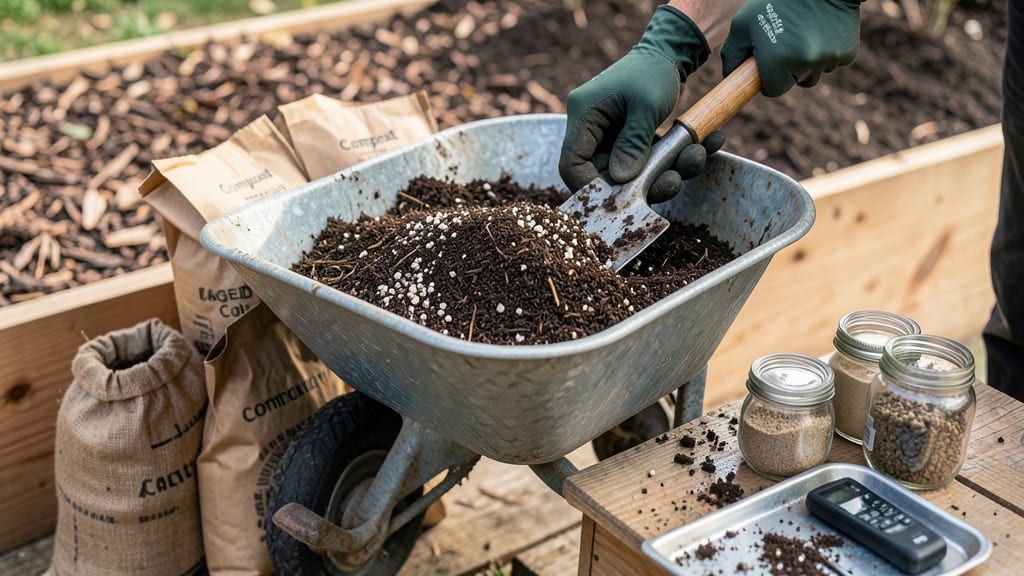
A soil mixture for vegetable gardens should balance loam soil (60-70%) with compost (30-40%) to improve drainage, nutrient retention, and root growth, while adjusting ratios for heavy clay or sandy native soil. Leaf mold or peat moss can further enhance moisture retention for moisture-sensitive crops like lettuce or herbs.
A well-balanced garden soil mix acts like a sponge for plant roots, holding moisture and nutrients without suffocating them. 🌱 Loam's mineral base provides structure, while compost adds organic matter that feeds beneficial microbes—think of it as the soil's digestive system.
For heavy clay soils, I often add perlite to break up compaction, while sandy soils benefit from extra compost to improve water retention. The key is testing your native soil first; many garden centers offer simple pH kits to check acidity levels before mixing.
This blend isn't one-size-fits-all—different vegetables thrive with slightly varied textures. Root crops like carrots need loose, sandy soil to prevent forking, while leafy greens tolerate denser mixes. I've found that adding worm castings to the compost portion gives an extra nutrient boost, especially for heavy feeders like tomatoes.
The magic happens in the microbial activity below ground where these components work together to create the perfect growing environment.
💡 In This Article
- How Loam and Compost Ratios Affect Vegetable Growth
- Plant-Specific Soil Mix Recipes for Maximum Yields
How loam and compost ratios affect vegetable growth
Loam's ideal texture—about 40% sand, 40% silt, and 20% clay—creates tiny air pockets that roots need to breathe while holding moisture and nutrients. The mineral content in loam provides essential elements like calcium and magnesium, but it lacks organic matter to feed microbes.
That's where compost steps in: its decomposed plant material acts like a slow-release fertilizer, breaking down to release nutrients over time. When you mix 60-70% loam with 30-40% compost, you create a balance where roots get both structure and sustenance—like a well-built foundation with ongoing maintenance.
Root vegetables like carrots and potatoes demand a looser mix to prevent deformities. I've seen carrots fork dramatically when planted in soil with more than 30% clay content—their roots can't push through the dense particles.
For these crops, I recommend 70% loam, 25% compost, and 5% perlite to keep the texture light and airy. Leafy greens, on the other hand, tolerate slightly denser mixes because their shallow roots don't need as much space.
A 60% loam, 35% compost, and 5% leaf mold blend works beautifully for spinach or kale, as the extra organic matter boosts microbial activity near the surface where their roots thrive.
The microbial activity in this mix is what truly transforms it from simple soil to a living ecosystem. Compost contains billions of beneficial bacteria and fungi that break down organic matter, releasing nutrients in forms plants can absorb. These microbes also help prevent soil-borne diseases by outcompeting harmful pathogens.
For example, adding 1 cup of worm castings per square yard can increase microbial populations by 30-50%, which is why I always include them in my compost blends. The more active this underground community, the healthier your plants grow.
pH balance plays a crucial role too—most vegetables prefer a slightly acidic to neutral range between 6.0 and 7.0. Compost typically has a pH around 6.5-7.0, but if your native soil is too acidic (common in pine forests), you'll need to amend it with lime.
For alkaline soils (often found in arid regions), a 1-inch layer of sulfur spread over the bed and worked into the top 6 inches can lower the pH by 1-2 points over a season.
I always test my soil's pH before mixing, because even the best loam-compost blend won't perform well if the chemistry is off.
Compaction is another common issue that disrupts this delicate balance. Heavy foot traffic or clay-heavy soils can squeeze out the air pockets roots need. To fix this, I mix in 10-20% coarse sand or perlite for sandy soils, or 5-10% coconut coir for clay.
These amendments create larger pores while still maintaining moisture. The goal is to achieve what soil scientists call "optimal porosity"—about 50% solid material and 50% pore space—so roots can access both oxygen and water efficiently.
One detail many gardeners overlook is the seasonal adjustment of this mix. In hot climates, I increase the compost ratio to 40-50% to boost moisture retention, while in cooler regions I might reduce it to 25-30% to prevent waterlogging.
The key is observing your plants: yellowing leaves often signal nitrogen deficiency (add more compost), while wilting despite regular watering points to poor drainage (add sand or perlite). This blend isn't static—it's a living system that responds to your local conditions and the specific needs of what you're growing.