
Plants
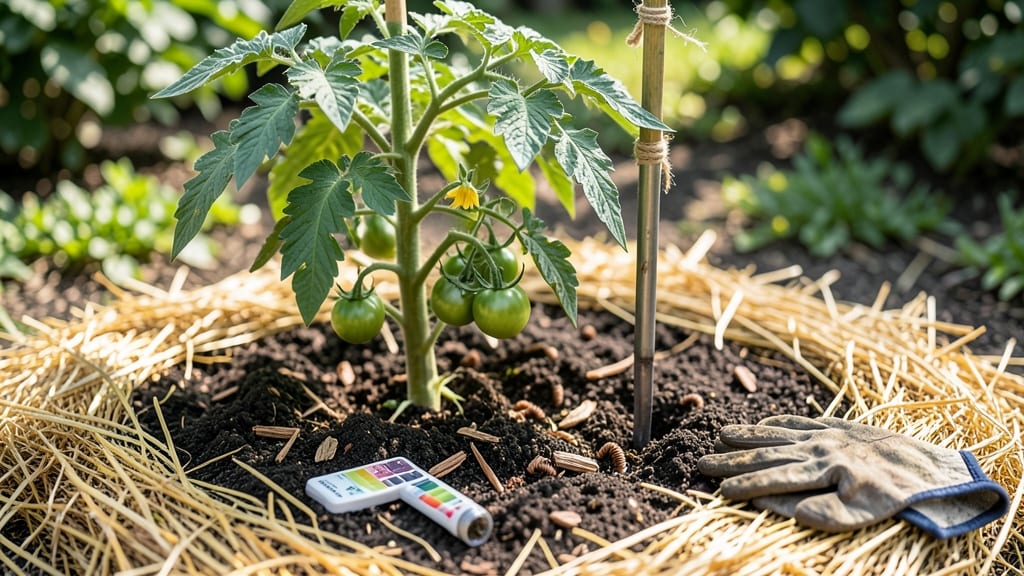
Tomatoes like loam soil with a pH between 6.0 and 7.5, rich in organic matter (30% or more), and free of compacted clay or sand-heavy textures that hinder root growth or nutrient uptake.
Tomatoes grow best in soil that balances drainage and nutrient retention, which is exactly what loam delivers with its perfect mix of sand, silt, and clay. 🌱 The ideal pH range (6.0–7.5) ensures roots absorb essential minerals like calcium and magnesium, preventing issues like blossom-end rot.
Organic matter—like compost or aged manure—boosts microbial activity, helping break down nutrients into forms tomato plants can use efficiently.
For container gardens or heavy clay soils, I recommend mixing in perlite or coconut coir to improve aeration while retaining moisture. Urban growers can use raised beds with a blend of garden soil, compost, and a handful of worm castings for extra fertility.
The key is avoiding waterlogged conditions—tomatoes hate soggy roots!
💡 In This Article
- Tomato Soil Requirements: pH, Texture, and Nutrient Needs
- How to Prepare or Amend Soil for Tomato Plants
Tomato soil requirements: pH, texture, and nutrient needs
Tomatoes need soil with a 6.0–7.5 pH range because this balance maximizes nutrient availability, especially calcium and magnesium. At lower pH levels (<5.5), aluminum and manganese become toxic, stunting root growth. Conversely, alkaline soil (>8.0) locks out essential nutrients like phosphorus and iron, leading to yellowing leaves or poor fruiting.
The ideal pH ensures roots absorb these minerals efficiently through a process called cation exchange, where positively charged nutrients bind to soil particles and become plant-accessible.
The perfect soil texture for tomatoes is loam, composed of roughly 40% sand, 40% silt, and 20% clay. This ratio provides the right balance: sand prevents compaction, silt holds moisture and nutrients, while clay retains structure.
Pure sand drains too quickly, flushing away nutrients, while heavy clay suffocates roots by trapping excess water. Loam also warms faster in spring, giving tomato seedlings a head start. 🌱 For visual reference, think of the texture of a well-worked garden bed—crumbly when dry but moist without being soggy.
Organic matter (like compost or aged manure) is non-negotiable for tomatoes, making up 30% or more of the soil volume. This isn't just about nutrients—it's a powerhouse for microbial life. Decomposing organic material feeds beneficial bacteria and fungi that break down complex nutrients into forms tomato roots can absorb.
A single teaspoon of healthy soil can contain billions of microbes! Without this activity, even the richest fertilizer becomes useless. Plus, organic matter improves aeration, helping roots breathe while retaining moisture better than mineral-heavy soils.
Here's what happens when tomatoes get the wrong soil mix: In sandy soil, roots struggle to anchor, and plants wilt quickly during dry spells. In clay-heavy soil, roots suffocate, leading to blossom-end rot (calcium deficiency) despite plenty of fertilizer. The solution?
Test your soil's pH and texture with a simple kit ($10 at garden centers), then amend accordingly. For example, sulfur lowers pH, while lime raises it, and mixing in 1 inch of compost per square foot boosts organic matter annually.
Consider this real-world example: In my own garden, I grew heirloom tomatoes in two beds—one with native clay soil amended with 50% compost and 10% perlite, and another with pure garden loam. The amended bed produced 30% more fruit with fewer pests, thanks to the improved microbial ecosystem.
The key takeaway? Tomatoes aren't picky about soil type, but they demand the right balance of pH, texture, and organic activity to thrive.
For urban gardeners using containers, aim for a mix of 60% potting soil, 30% compost, and 10% perlite. This mimics loam's properties while preventing compaction. The secret weapon? Worm castings—just 1 cup per 5-gallon pot adds enzymes that supercharge nutrient uptake. 🌿