
How To
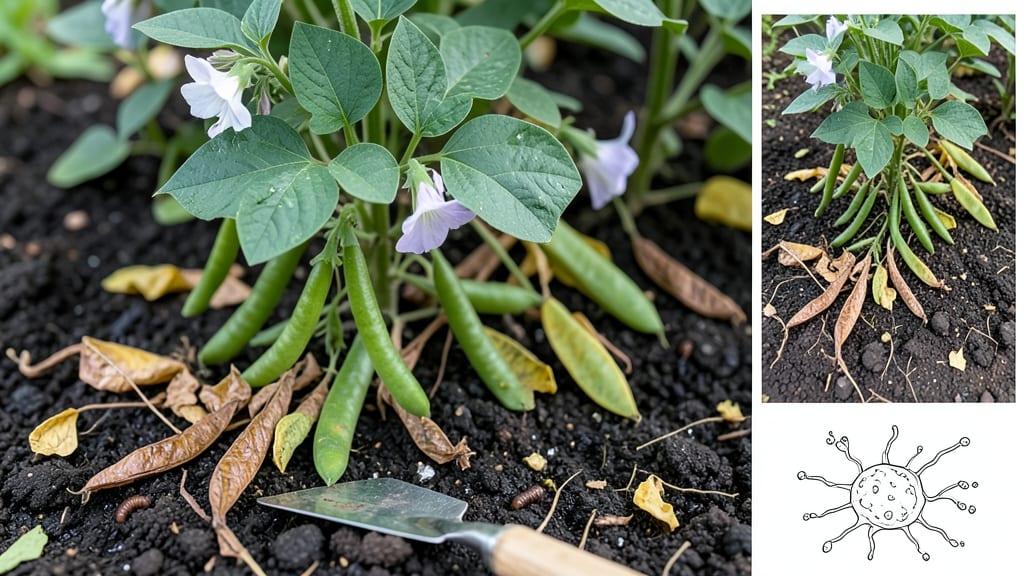
Bush beans increase soil health by capturing nitrogen from the air through root nodules, turning it into plant-available nutrients that feed future crops. Their extensive root systems also break up compacted soil, reduce erosion, and add organic matter as they decompose.
This natural soil enrichment happens because bush beans host beneficial bacteria called Rhizobium in their roots. These microscopic partners convert atmospheric nitrogen into ammonia, which the plants absorb and later release into the soil when their roots and leaves decompose. 🌱 The result?
Healthier soil with improved water retention and nutrient availability for other plants. Unlike synthetic fertilizers, this process builds long-term soil fertility without chemical buildup.
What's particularly exciting is how this works in real gardens. When you plant bush beans as a cover crop between seasons, they not only prevent weeds but also leave behind nitrogen-rich residues that subsequent crops can utilize.
I've seen firsthand how a single bush bean planting can transform struggling soil into a thriving ecosystem within just one growing season.
💡 In This Article
- How Bush Beans Fix Nitrogen Through Root Bacteria
- Practical Ways to Maximize Soil Benefits from Bush Bean Plantings
How bush beans fix nitrogen through root bacteria
Bush beans form a remarkable partnership with soil bacteria called Rhizobium, which colonize specialized root structures called nodules. These nodules appear as small, pinkish swellings along the roots and create a protected environment where the bacteria can thrive.
The biochemical process begins when the bean plant releases flavonoids—chemical signals that attract Rhizobium from the surrounding soil. Once inside the nodules, these bacteria convert inert atmospheric nitrogen (N₂) into ammonia (NH₃) through an energy-intensive process called nitrogen fixation.
This transformation requires a specialized enzyme called nitrogenase, which is so sensitive to oxygen that the nodules must maintain low-oxygen conditions to function properly.
The ammonia produced is quickly converted into amino acids and other nitrogen-containing compounds that the bean plant absorbs and uses for growth. When the beans mature and their residues decompose, these nitrogen compounds are released back into the soil as organic matter, becoming available to other plants.
Studies show that a single bush bean plant can fix between 50-100 pounds of nitrogen per acre over a growing season—equivalent to applying 100-200 pounds of synthetic nitrogen fertilizer without the environmental drawbacks. 🌱 The key here is that this nitrogen is "slow-release," gradually becoming available to subsequent crops rather than leaching away like chemical fertilizers.
This symbiotic relationship isn't just about nitrogen—it's a two-way street. The bean plant provides the bacteria with carbohydrates produced through photosynthesis, while the bacteria supply the plant with a vital nutrient that would otherwise be scarce in most soils.
The nodules can fix nitrogen at rates up to 50 times faster than non-symbiotic soil bacteria, making this one of nature's most efficient nutrient cycles.
What's fascinating is that this process has been evolving for millions of years, with some legume species developing specialized root structures that can host multiple strains of Rhizobium simultaneously.
However, not all Rhizobium strains are equally effective. Some varieties are better at fixing nitrogen in cooler soils, while others thrive in warmer climates.
The specific strain of Rhizobium that forms nodules on bush beans is often Bradyrhizobium japonicum, which has been studied extensively for its role in soybean agriculture but functions similarly in bush beans.
The efficiency of this relationship can vary based on soil pH—ideal conditions range between 6.0-7.0, while soils below 5.5 or above 8.0 can significantly reduce nodulation and nitrogen fixation.
The physical structure of bush bean roots plays a crucial role too. Their fibrous root systems penetrate 12-18 inches deep, creating channels that improve soil aeration and water infiltration.
As these roots decay after harvest, they leave behind a network of organic matter that enhances soil structure and microbial activity. This dual benefit—immediate nitrogen enrichment plus long-term soil improvement—is why bush beans are considered one of the most valuable plants for organic gardening systems.
What most gardeners don't realize is that this nitrogen fixation process creates a "legacy effect" in the soil. Even after the bush beans are harvested, the residual nitrogen can remain available for 6-12 months, providing a natural fertilizer for subsequent crops like corn, tomatoes, or brassicas.
This is particularly valuable in vegetable gardens where heavy nitrogen users like leafy greens or squash are planted after the beans. The result is healthier plants with improved yields and disease resistance, all without synthetic inputs. 💫