
Landscaping
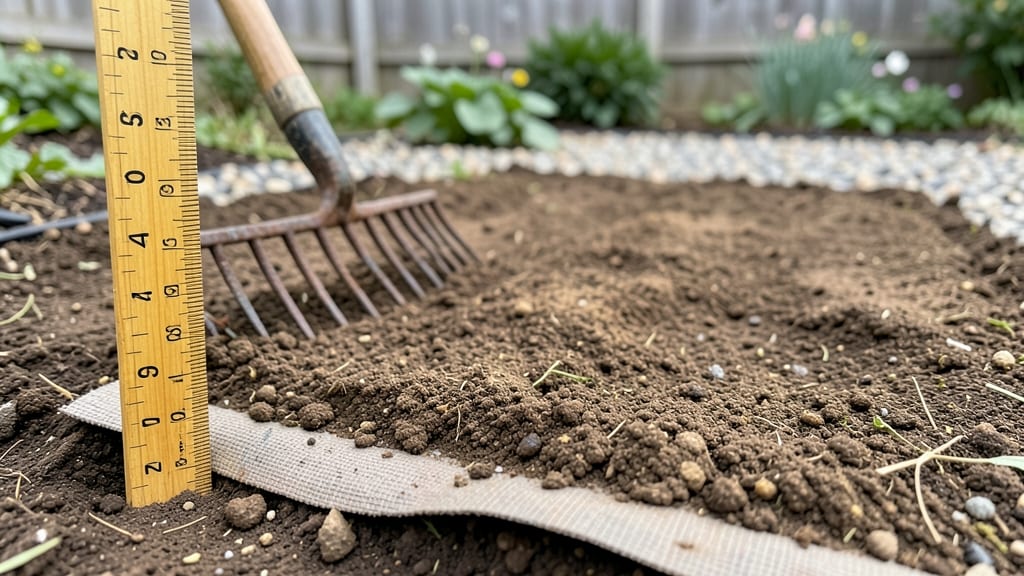
Understanding yard of soil coverage means knowing it typically spreads about 3 inches deep over 100 square feet, though this varies by soil type—sandy soil spreads thinner while clay or loam holds more volume. Always factor in compaction and settling for accurate project planning.
Soil coverage depends on more than just volume—particle size and moisture play huge roles. 🌱 Sandy soils spread wider because their loose particles don't compact well, while clay holds shape better but may settle unevenly over time.
For accurate planning, I always order 10-20% extra to account for settling and uneven terrain in garden beds or landscaping projects.
When calculating needs, measure your project area first, then multiply by desired depth (in feet) to get cubic feet. For example, a 10x10-foot bed needs 100 square feet of coverage at 3 inches (0.25 feet) depth, requiring 25 cubic feet of soil—about 1/4 yard.
Use a tape measure and string line for precise dimensions, especially on slopes.
Pro tip: Test your soil's moisture before spreading—dry soil compacts more than damp soil, affecting final depth. Always mix in compost for better structure and drainage, which prevents future settling issues.
💡 In This Article
- How Soil Density Affects Coverage Depth
- Calculating Soil Needs for Garden Beds and Landscaping
How soil density affects coverage depth
The science behind soil coverage starts with particle composition. Sandy soil has large particles that create air pockets, making it spread thinner—about 4-5 inches deep for a yard's worth, while clay's tiny particles pack tightly, covering only 2-3 inches at the same volume.
Loam, the ideal mix, falls in between with 3 inches coverage due to balanced particle sizes and organic matter.
Moisture content plays a critical role too. Damp soil weighs more and compacts differently than dry soil—wet clay can settle 20-30% more after initial spreading, while sandy soil may lose 10-15% volume as it dries.
This is why professional landscapers always recommend ordering 10-20% extra to account for settling over time. The organic matter in loam helps maintain structure, reducing dramatic volume loss.
Real-world coverage differs from theoretical calculations because of compaction. When you walk on or till soil, particles rearrange, reducing depth by 10-30% depending on how heavily it's worked. For example, a freshly spread yard of loam might measure 3.5 inches deep before settling to 2.5-3 inches after a few weeks.
This settling is most noticeable in clay soils, which can shrink up to 50% in volume when dry.
Consider these key factors when planning your project:
- Particle size: Sandy > Loam > Clay in terms of spread volume
- Moisture level: Wet soil settles more than dry soil
- Organic content: Higher organic matter reduces settling
- Compaction: Foot traffic or machinery reduces depth by 10-30%
For accurate planning, test your soil's density by filling a 12-inch cube container with soil and weighing it. Divide the weight by the container's volume to calculate pounds per cubic foot—this gives you a precise density measurement for your specific soil type.
Most garden soils range from 70-120 lbs per cubic foot, with sandy soils on the lighter end and clay soils heavier.
What most people don't realize is how organic matter affects long-term stability. A yard of soil with 10% compost will maintain its depth better than pure topsoil because the organic material holds structure and resists compaction.
This is why amending your soil with compost before spreading is always a smart move—it improves both coverage stability and plant growth conditions. 🌱