
How To
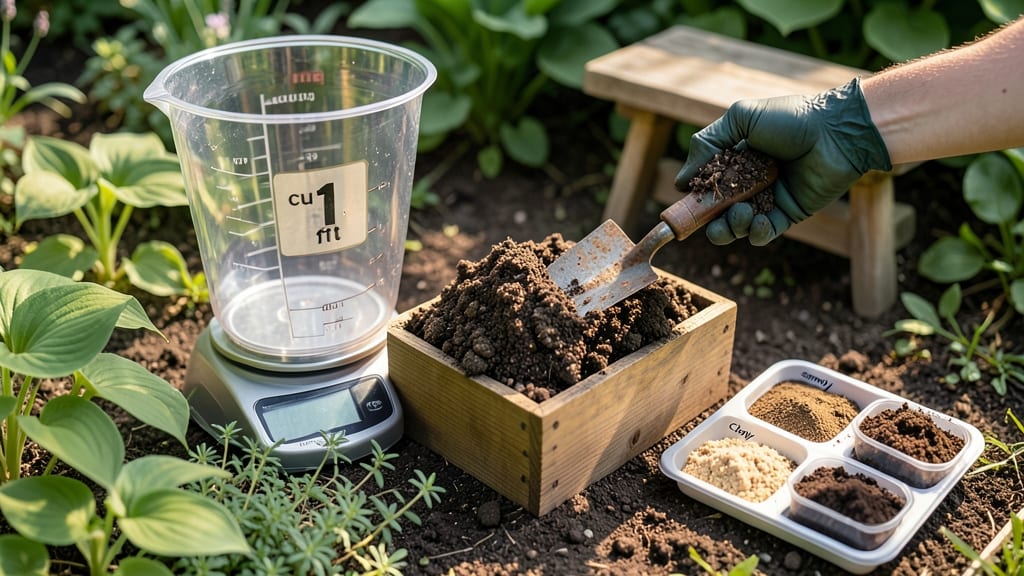
Determining the weight of 1 cubic foot of soil reveals a wide range—from 40 to 140 pounds—because soil density varies dramatically based on its makeup. Sandy soil sits at the lighter end (40–60 lbs), while clay-heavy soil can weigh over 120 lbs. Even moisture levels shift the scale, with saturated soil adding 10–30% more weight.
Soil weight isn't just about dirt—it's a puzzle of particle size, moisture, and organic content. 🌱 Sandy soil's loose structure makes it lighter, while clay's tightly packed particles create heavier blocks.
Even loamy soil, the gardener's gold standard, can swing between 70–100 lbs per cubic foot depending on how much water it holds. I've seen compost-heavy mixes add another 20–30 lbs to that range, which is why gardeners planning raised beds or heavy planters should always account for these variations.
Why does this matter? Because weight impacts everything from plant stability to structural projects. A saturated cubic foot of clay could suddenly jump from 120 lbs to 150 lbs overnight, potentially stressing container walls or foundation supports.
For gardeners, this means checking soil moisture before calculating loads—especially when mixing in amendments like peat moss or coconut coir, which absorb and retain water differently than native soil.
💡 In This Article
- How Soil Composition Affects Weight per Cubic Foot
- Practical Ways to Measure Soil Weight in Gardening Projects
How soil composition affects weight per cubic foot
The weight of soil comes down to its fundamental structure—specifically, the size and arrangement of its particles. Sandy soil, made up of large, coarse grains, creates a loose framework that leaves plenty of air pockets. This open structure means less mass per cubic foot, typically landing between 40–60 pounds.
Think of it like packing marbles versus packing powder: the marbles (sand) take up more space with less overall weight. 🔥
Clay soil, on the other hand, consists of tiny, flat particles that pack tightly together like sheets of paper. This dense arrangement eliminates air spaces, allowing clay to weigh 120–140 pounds per cubic foot or more when dry. The key difference?
Clay's high surface area creates strong molecular bonds that hold water and nutrients tightly, while sand's rough texture repels water and stays lightweight. Loamy soil—the ideal gardening mix—falls in between with 70–100 pounds, thanks to its balanced combination of sand, silt, and organic matter.
Moisture plays a dramatic role in these weight variations. Water fills the pores between particles, adding 10–30% more weight when soil is saturated.
For example, a cubic foot of dry clay might weigh 120 lbs, but after a heavy rain, it could swell to 150+ lbs as water fills its microscopic gaps. This is why clay soils feel heavier when wet and lighter when dry—something gardeners notice when moving pots or tilling beds.
Organic matter also contributes, with compost adding 20–30 lbs per cubic foot due to its water-holding capacity and dense microbial activity.
Compaction further alters these measurements. When soil is heavily compacted—like under foot traffic or machinery—the particles press closer together, reducing air space and increasing density.
A compacted cubic foot of loam might jump from 80 lbs to 100+ lbs, while sandy soil could see a 20% weight increase under similar pressure. This is why construction sites test soil density before building foundations or why gardeners aerate their lawns to prevent compaction-related weight gain.
Porosity matters too. Sandy soils have high porosity (up to 45% air space), while clay soils have low porosity (20–30%). This affects how quickly water drains and how much weight the soil can support.
For instance, a raised garden bed filled with sandy soil might weigh 50 lbs per cubic foot when dry, but the same bed with clay soil could exceed 130 lbs—a critical factor when designing structures or calculating material needs for large-scale projects. 💫
Understanding these factors helps explain why soil weight isn't a fixed number. The interplay between particle size, moisture content, and organic matter creates a dynamic system where even small changes can shift the scale dramatically.
For gardeners and builders alike, this means always considering the soil's current state—not just its type—when estimating weights for projects.