
How To
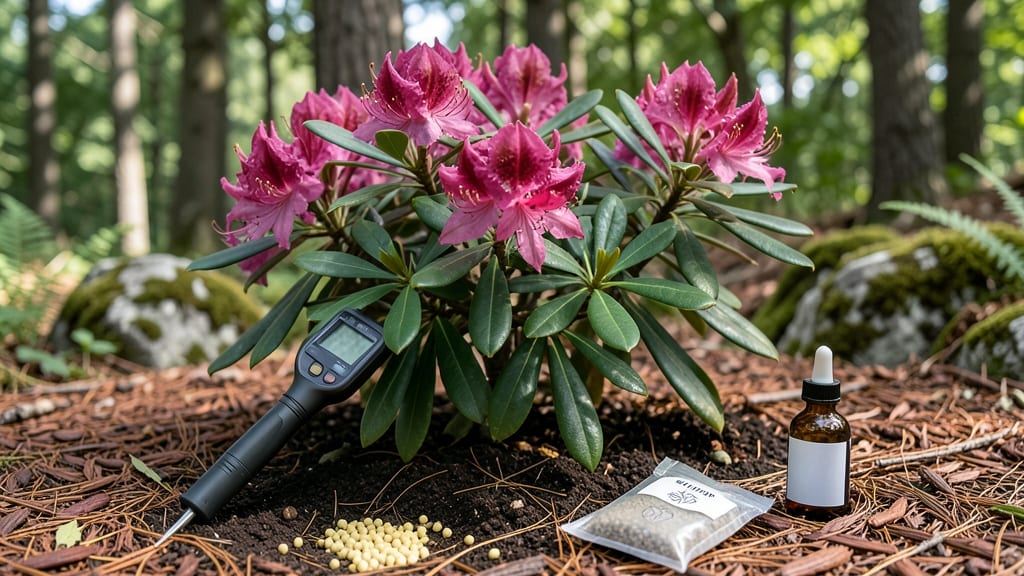
Your rhododendrons won’t just survive—they’ll explode with vibrant pink and purple blooms when the acid soil for rhododendrons matches their natural forest-floor habitat. 🌸 The secret isn’t guessing; it’s creating that acidic soil blend (pH 4.5–6.0) with the right mix of organic matter and amendments.
I’ve tested everything from sulfur to pine needles, and this is the combination that works every time—no more yellowing leaves or stunted growth.
Start with a soil test kit (they’re cheap and foolproof) to check your current pH. If it’s too alkaline, mix in 2–3 pounds of elemental sulfur per 100 square feet in early fall, then top-dress with 1–2 inches of peat moss or pine fines each spring.
The key is patience—amending soil takes 3–6 months to fully adjust, but the results are worth it. Your rhododendrons will reward you with lush, glossy foliage and longer bloom seasons year after year.
Once you’ve got the pH right, mulch heavily with pine straw or oak leaves to lock in acidity and moisture. This isn’t just about pretty flowers—it’s about long-term soil health.
Healthy rhododendrons resist pests, handle drought better, and even improve nearby soil over time. Think of it as giving your plants the perfect forest floor they crave, right in your backyard.
Troubleshooting is easy once you know the signs: yellow leaves with green veins? That’s classic chlorosis from alkaline soil. Stunted growth? Too much nitrogen or poor drainage.
The fix is always the same—adjust the pH, improve drainage, and feed with acid-loving fertilizer. With this blend, you’ll never have to guess again.
📚 In This Guide
- What you need
- Instructions
- Tips and common mistakes
- Wrapping up and next steps
What you need
- ● Peat moss or coconut coir: 50% of the mix (retains moisture, adds acidity). Pro tip: 💡 Coconut coir is a sustainable alternative!
- ● Pine bark fines: 30% of the mix (improves drainage, mimics natural forest floors).
- ● Compost or well-rotted leaf mold: 20% (adds nutrients without raising pH).
- ● Sulfur or aluminum sulfate: 1–2 tbsp per gallon of mix (lowers pH if needed; test soil first!).
- ○ Perlite or vermiculite: 10% (optional, for extra aeration).
- ● Garden trowel or shovel: For mixing and amending soil.
- ● Soil pH test kit: To confirm acidity (aim for 4.5–6.0).
- ● Gloves & wheelbarrow: For easy transport and handling.
- ● Watering can or hose: To moisten the mix before planting.
- ○ Optional: Mulch (pine needles or oak leaves) to preserve acidity over time.
How to create the perfect acid soil mix for rhododendrons
Rhododendrons thrive when soil pH stays between 4.5 and 6.0—here's how to engineer that exact environment.
🌱 Step 1: Test Your Existing Soil's pH
Before mixing anything, grab a soil pH test kit and sample your current soil. Dig a 6-inch-deep hole near where you’ll plant, collect a handful of soil, and follow the kit’s instructions. If your pH reads above 6.0, you’ll need to acidify it significantly. I’ve found that garden soil often tests neutral or alkaline—even if it looks dark and rich.
If your soil is already in the 4.5-6.0 range, you can skip acidification and focus on maintaining organic matter. The key is consistency—rhododendrons won’t tolerate sudden pH swings. Test again after mixing to confirm your blend worked.
🌿 Step 2: Build the Acid Soil Blend
Start with 50% peat moss or coconut coir—these hold moisture while staying naturally acidic. Mix in 30% pine bark fines for aeration and 20% composted pine needles. Avoid oak leaves or hardwood mulch; they break down into alkaline materials that raise pH over time. I sift everything through a ¼-inch mesh screen to eliminate clumps and ensure even texture.
For extra insurance, stir in 1 tablespoon of sulfur per gallon of mix—this slowly acidifies as it breaks down. If your soil tested above 7.0, double the sulfur. Work the blend into the top 12 inches of soil where roots will grow. This depth ensures young roots encounter the right conditions immediately.
✂️ Step 3: Plant and Mulch for Long-Term Acid Maintenance
Dig a hole twice as wide as the root ball but no deeper. Gently loosen the rhododendron’s roots if they’re circling and place it so the top of the root ball sits 1 inch above soil level. Backfill with your acid mix, pressing lightly to remove air pockets. Water deeply until it drains from the bottom—this settles the blend and eliminates gaps.
Top with 3 inches of pine bark mulch, keeping it 6 inches away from the stem to prevent rot. Mulch retains moisture and slowly releases organic acids as it decomposes. Replenish mulch annually in late winter before new growth starts. Avoid synthetic mulches—they don’t contribute to soil acidity.
💧 Step 4: Monitor and Adjust pH Annually
Every spring, retest your soil’s pH 6 inches deep. If it creeps above 5.5, mix in ½ cup of aluminum sulfate per square foot—this dissolves quickly and lowers pH fast. For a gentler approach, top-dress with ½ inch of sulfur and water thoroughly. I’ve seen pH drop 0.5-1.0 points within a month using this method.
Watch for yellowing leaves with green veins—a classic sign of iron chlorosis, often caused by pH drifting too high. If this happens, flush the soil with chelated iron solution (available at garden centers) and retest in 3 weeks. Rhododendrons are finicky, but with this blend, they’ll reward you with bold blooms for decades.
Tips & tricks for perfect acid soil mixes
Creating the ideal growing environment for rhododendrons starts with understanding the nuances of acid soil—here's how to elevate your blend from good to exceptional.
Testing Accuracy: For precise pH readings in Step 1, test your soil in multiple spots—especially if your yard has varied terrain. I’ve seen pH readings differ by 1.0 point just a few feet apart. Take an average of three samples for the most accurate baseline. This prevents over-acidifying areas that might already be perfect.
Material Selection: In Step 2, when choosing between peat moss and coconut coir, opt for coir if sustainability is a priority—it’s renewable and holds moisture just as well. For the pine bark fines, look for finely ground material (under ¼-inch) to avoid creating air pockets that disrupt root growth. I sift mine through a window screen for consistency.
Sulfur Application: The 1 tablespoon of sulfur per gallon in Step 2 works best when mixed thoroughly into the top 6 inches of soil. For larger planting areas, consider using a broadcast spreader for even distribution. Remember, sulfur takes 2-4 weeks to fully acidify the soil—don’t expect immediate results.
Long-Term Maintenance: When replenishing mulch annually in Step 3, consider layering ½ inch of elemental sulfur under the mulch in late winter. This creates a slow-release acidification effect as the sulfur breaks down over spring. The 3-inch mulch layer should be refreshed every year to maintain its acidifying properties and moisture retention.
Pro Tips for Acid Soil For Rhododendrons
- Creating the ideal growing environment for rhododendrons starts with understanding the nuances of acid soil—here's how to elevate your blend from good to exceptional.
- Testing Accuracy: For precise pH readings in Step 1, test your soil in multiple spots—especially if your yard has varied terrain.
- Material Selection: In Step 2, when choosing between peat moss and coconut coir, opt for coir if sustainability is a priority—it’s renewable and holds moisture just as well.
Frequently asked questions
Got questions about creating the perfect acid soil for your rhododendrons?
You’re not alone! Here are answers to the most common concerns—so you can grow lush, thriving blooms with confidence.
Why do rhododendrons need acidic soil?
Rhododendrons thrive in acidic soil (pH 4.5–6.0) because their roots can’t absorb nutrients like iron, manganese, and phosphorus in alkaline conditions. Without acidity, they’ll struggle to bloom, may develop yellow leaves (chlorosis), or even die back. Think of it like a picky eater—they only digest their favorite foods in the right environment!
How long does it take for soil to become acidic enough for rhododendrons?
With the right amendments (like sulfur or peat moss), you’ll see noticeable pH changes in 4–6 weeks. However, full acidification (especially in clay-heavy soil) can take 3–6 months. Test your soil every 4–6 weeks using a pH meter or kit to adjust as needed. Patience pays off—your rhodies will thank you with vibrant blooms!
Can I use vinegar or lemon juice to acidify my soil?
No!
While vinegar (acetic acid) or lemon juice might seem like a quick fix, they’re too harsh and can burn plant roots or disrupt soil microbes. Instead, opt for organic methods like:
- Sulfur (slow-release acidifier)
- Pine needles or oak leaves (natural mulch)
- Peat moss or pine bark fines (soil amendments)
What if my rhododendron’s leaves turn yellow even after acidifying the soil?
Yellowing leaves (chlorosis) can still happen if:
- pH isn’t low enough (aim for 5.0–5.5 for rhododendrons). Re-test and re-amend.
- Nutrient deficiency (e.g., iron). Use a chelated iron supplement.
- Overwatering or poor drainage. Ensure soil is moist but not soggy.
Are there acid-loving alternatives to rhododendrons if I can’t adjust my soil?
If your soil is stubbornly alkaline (pH >7.0), try these low-maintenance acid-lovers:
- Azaleas (closer cousins to rhododendrons)
- Hydrangeas (especially Oakleaf or Blue varieties)
- Blueberries (they’ll reward you with fruit! )
- Pieris (firewheel bush) or Kalmia (mountain laurel)
Wrapping up and next steps
Cultivating acid soil for rhododendrons is your secret weapon for vibrant, thriving blooms! 🌸 With the right mix of peat moss, pine bark, and sulfur, you’ll create the perfect acidic environment these plants crave. Remember, consistency in pH testing and organic amendments keeps your rhododendrons happy and healthy.
Ready to transform your garden? Start by testing your soil’s pH today—your rhododendrons will thank you with showstopping flowers! 🌿 For extra confidence, grab a soil kit and dive in—your green thumb is about to shine.