
Vegetables
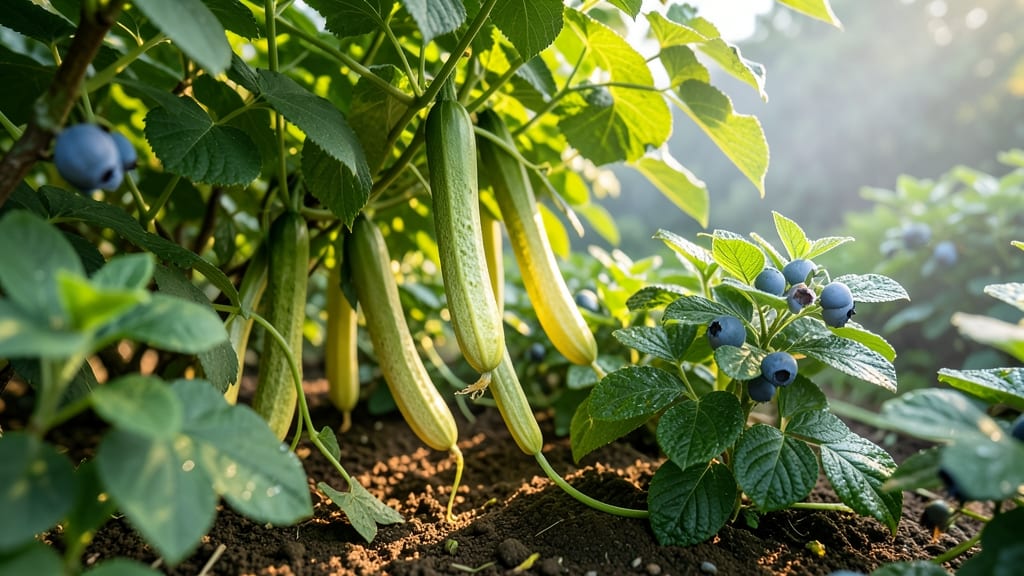
Struggling with blueberries that refuse to thrive? These 10 acidic-loving vegetables not only flourish in low-pH soil but also create the perfect companion planting ecosystem for your berry bushes. Ideal for gardeners seeking dual-purpose crops that boost flavor and yield.
Potatoes: Blueberry Bed Workhorses
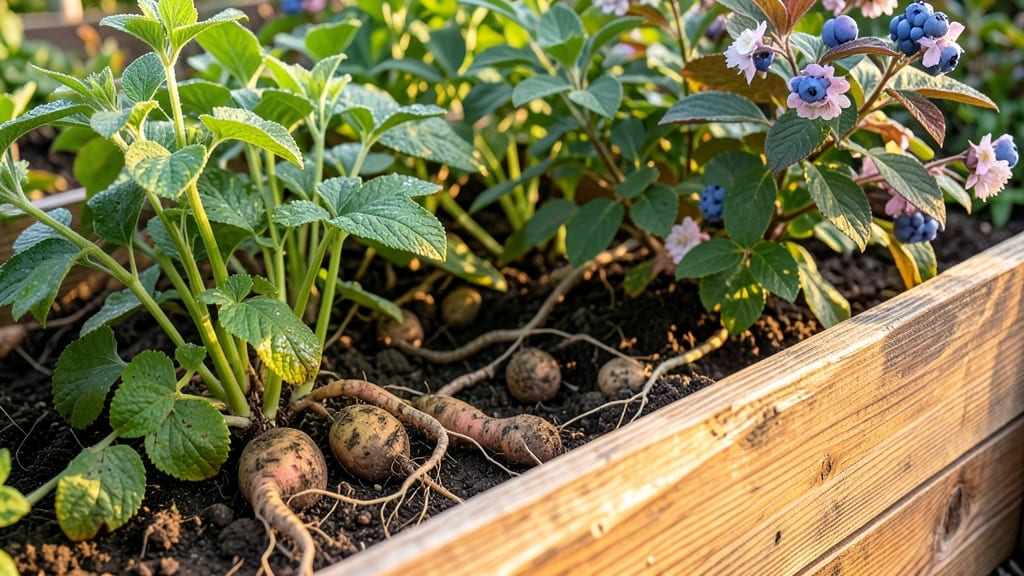
If your blueberry bushes struggle with compacted soil, potatoes are the unsung heroes you’ve been missing. Their sprawling tubers act as natural soil aerators, breaking up dense layers while thriving in the same pH 4.8-5.5 range as blueberries—no extra work for you!
Plant seed potatoes in early spring, spacing them 12 inches apart and 4 inches deep. As they grow, mound soil around the stems to encourage more tuber formation, which also helps prevent erosion in blueberry beds. The deep roots improve drainage, reducing waterlogged stress on both crops.
This pairing is perfect for gardeners with limited space—potatoes grow well in containers or raised beds alongside blueberries. Plus, you’ll harvest nutrient-rich tubers while keeping your berry bushes happy and healthy. 🌱
Rhubarb: Tart Companion for Acidic Gardens
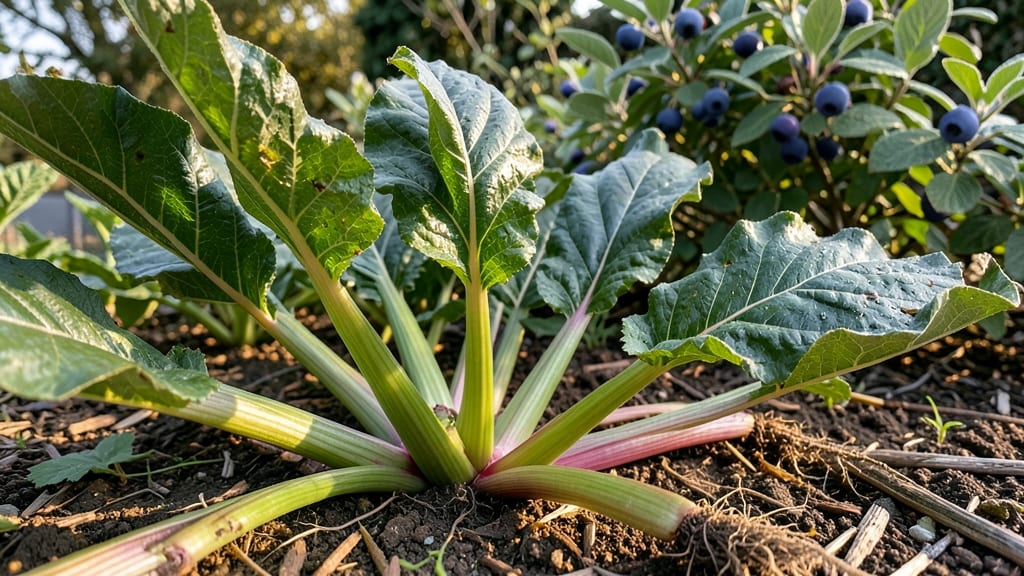
Looking for a vegetable that thrives in acidic soil while also protecting your blueberries from pests? Rhubarb is the perfect dual-purpose plant for your garden, offering both tart stalks and natural pest deterrence.
This hardy perennial prefers a pH range of 5.5-6.5, making it an ideal companion for blueberries. Its large, broad leaves create a natural shade canopy, protecting delicate berry plants from the harsh afternoon sun. Plus, rhubarb deters pests like spider mites and aphids, which commonly target blueberries, reducing the need for chemical interventions.
Perfect for gardeners with limited space, rhubarb is low-maintenance and produces abundant harvests for years. Its early spring emergence also means you get a jumpstart on the growing season. 🌟
Cranberries: The Ultimate Soil pH Match
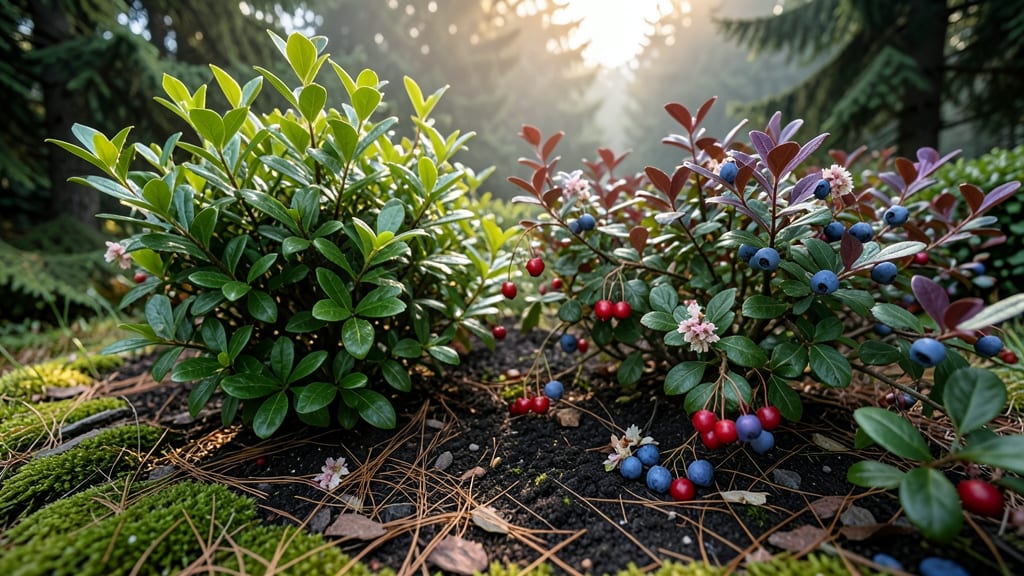
Want a self-sustaining acidic garden that doubles as a harvest? Cranberries are the secret weapon for gardeners who love blueberries but want more from their low-pH beds. These tart berries thrive in the same pH 4.5-5.5 range as blueberries, creating a natural acidic microclimate that benefits both plants.
Plant cranberries alongside your blueberry bushes to maintain ideal soil conditions while enjoying a dual harvest of sweet-tart berries. They prefer wet, boggy soil and partial sun, making them perfect for container bog gardens or low-lying areas. The edible fruit ripens in late summer to fall, adding a festive touch to your garden and kitchen.
This pairing is ideal for gardeners who want year-round interest and a functional food source without compromising their blueberry yields. Plus, the cranberries' unique growing habits help keep the soil acidic naturally. 🌟
Peppers: Spicy Soil Stabilizers
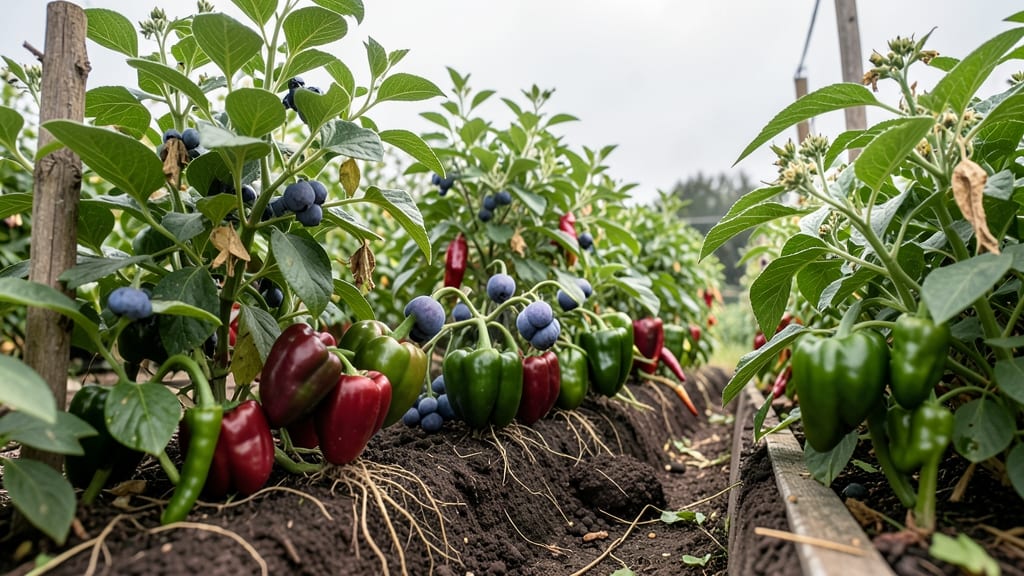
If deer are raiding your blueberry beds or erosion is turning your raised soil into a muddy mess, peppers might be the unexpected solution you need. Their deep roots anchor soil while repelling hungry wildlife, making them a perfect companion for your acidic-loving blueberries.
Peppers thrive in a pH range of 5.5-6.8, which aligns beautifully with blueberry needs, and their strong scent deters deer naturally. Plant varieties like jalapeños or bell peppers around your blueberry bushes—their 3-4 foot height provides shade while their roots stabilize the soil structure. For best results, add compost to the soil before planting to support their heat-loving nature.
This dual-purpose crop gives you fresh peppers for cooking while protecting your blueberries—ideal for gardeners who want both productivity and pest control in one package. 🌻
Tomatoes: Acid-Tolerant Fruit Producers
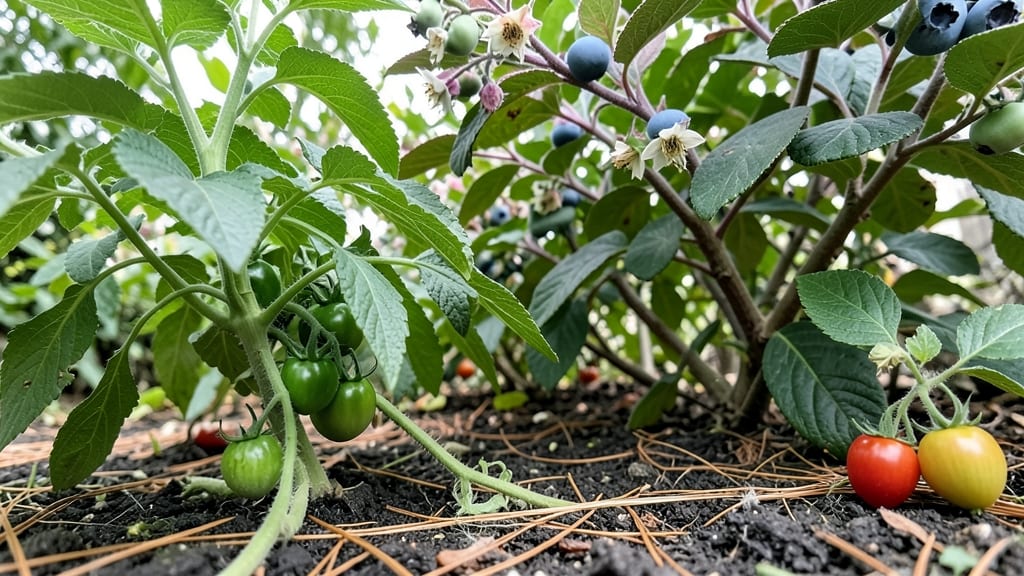
If your blueberry bushes need a summer companion that thrives in acidic soil while adding shade and structure, 'Acid-Lover' tomatoes are your secret weapon. These varieties aren’t just tolerant of low pH—they flourish in the same pH 5.5-6.5 range as blueberries, creating a mutually beneficial planting partnership.
Plant them near your blueberry beds to provide natural shade for delicate berry roots during hot afternoons, while their extensive root systems loosen compacted soil and improve aeration. Varieties like 'Mountain Merit' or 'Cherokee Purple' produce robust vines that support each other, and their lush foliage helps retain soil moisture. For best results, stake or trellis them to maximize space and airflow—especially important in dense blueberry plantings.
This pairing is ideal for gardeners with limited space who want year-round productivity from their acidic soil. The tomatoes’ deep roots also help prevent soil erosion, making them a smart choice for slopes or raised beds. 🌱
Eggplants: Purple Power for Acidic Soil
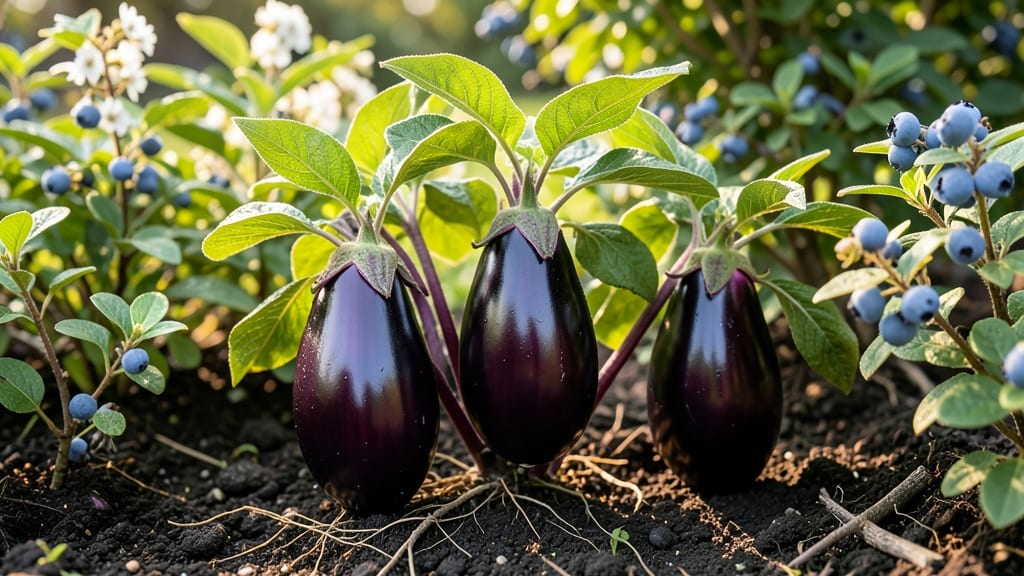
Looking for a vegetable that thrives in acidic soil while giving you a double harvest? Eggplants are the purple powerhouse you need—perfect for gardeners who love blueberries but want more from their acidic beds.
These glossy-skinned beauties prefer a pH of 5.5-6.8, making them ideal neighbors for blueberry bushes. But here’s the bonus: their large, broad leaves make exceptional mulch. Spread them around your blueberries to retain soil acidity, suppress weeds, and keep moisture locked in—all while adding organic matter as they break down. Varieties like 'Black Beauty' or 'Ichiban' grow well in these conditions and produce bountiful fruit.
Urban gardeners with limited space will love how eggplants grow compactly in containers, while their deep roots help prevent soil erosion. Plant them near blueberries in late spring for a summer-long harvest of both berries and eggplants—no extra work required! 🌻
Kale: Nutrient-Dense Acidic Soil Green
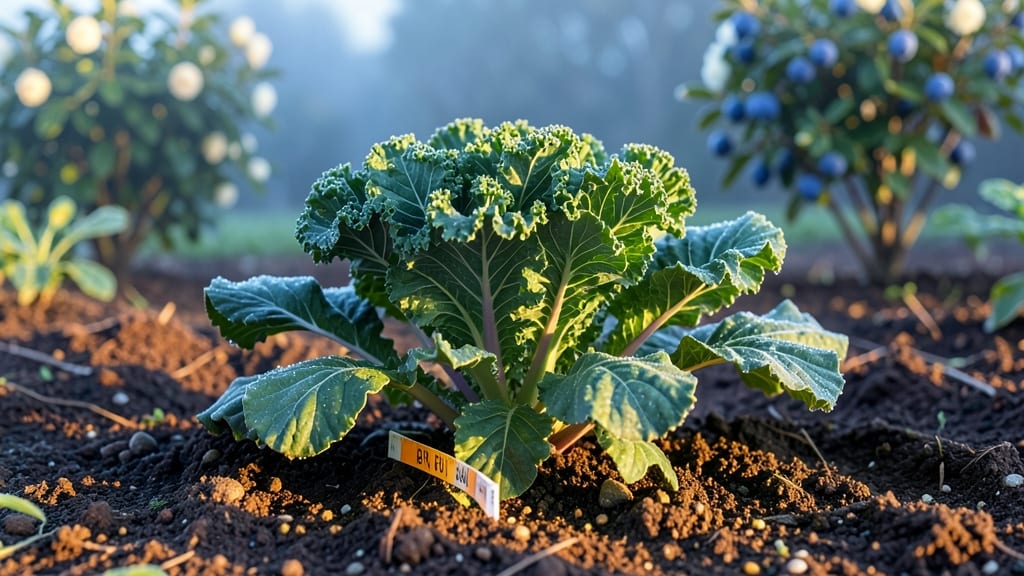
Looking for a winter green that thrives in your acidic soil while giving back to the garden? Kale is your perfect companion—it not only survives but flourishes in slightly acidic conditions (pH 6.0-7.0) and even improves soil health through nitrogen fixation.
This hardy brassica tolerates cooler temperatures better than most vegetables, making it ideal for late fall and early spring harvests. Plant it alongside blueberries to enjoy nutrient-dense leaves while its deep roots help prevent soil compaction. Varieties like Winterbor or Lacinato are excellent choices for their cold hardiness and flavor.
Gardeners with limited space or those practicing organic methods will appreciate kale’s dual benefits—it feeds you and feeds the soil. Plus, its striking purple stems add visual interest to your acidic garden beds. 💚
Blueberry Companion Radishes
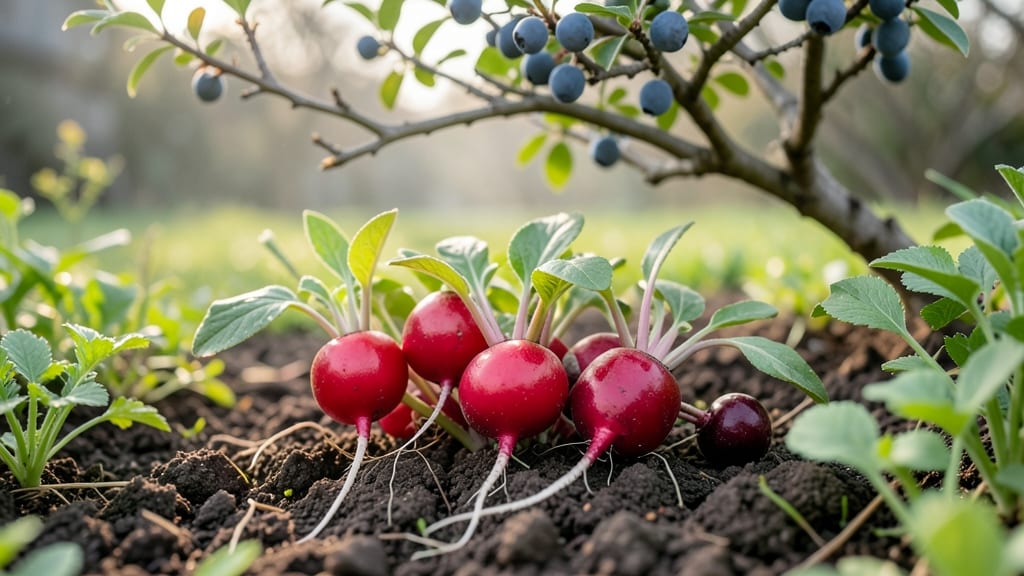
If you're eager to boost your blueberry bushes without waiting for summer, radishes are your secret weapon. These fast-growing, pH 6.0-6.8 crops break up compacted soil and deter pests—perfect for early spring planting when blueberries are still dormant.
Sow radish seeds (like 'Cherry Belle' or 'French Breakfast') 4-6 weeks before your last frost, spacing them 1 inch apart and ½ inch deep. Their quick growth (30-50 days) means you’ll harvest before blueberry foliage emerges, minimizing competition. Radishes also release beneficial compounds that repel blueberry thrips and flea beetles, protecting your bushes naturally.
This dual-purpose strategy gives you a quick harvest while improving soil structure—ideal for small-space gardeners or those with heavy clay. Your blueberries will thank you with stronger roots and fewer pests! 🌱
Mustard Greens: Soil-Building Acid Tolerators
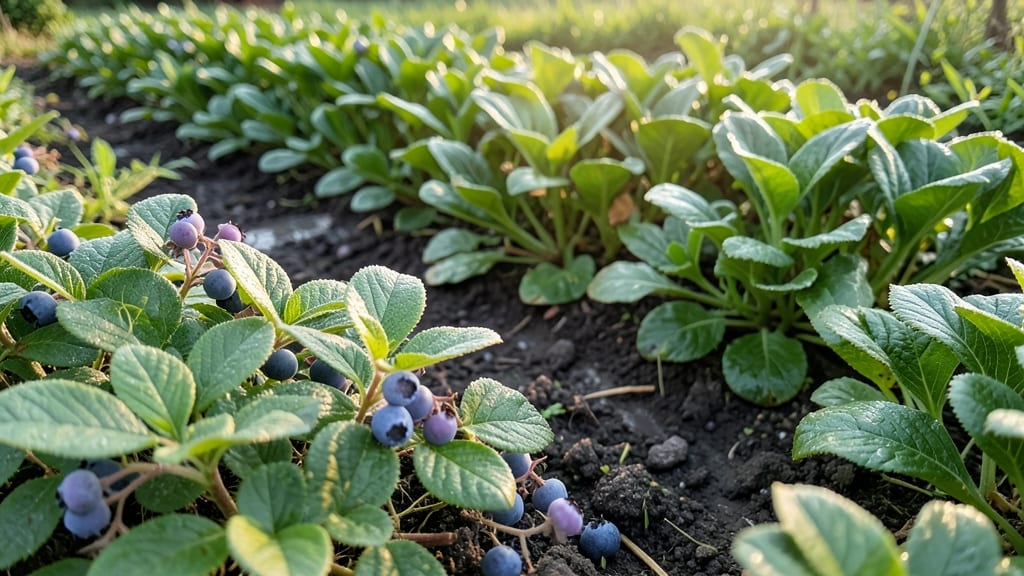
If your blueberry patch needs a double-duty helper, mustard greens are your secret weapon. This hardy leafy green thrives in the same acidic soil (pH 5.8-6.5) as blueberries while acting as a living mulch that protects the soil from erosion and compaction.
Plant mustard greens in early spring or late summer for a quick harvest—you’ll get tender leaves in just 30-40 days. After harvesting, till them into the soil to add organic matter and nutrients, creating a richer environment for your blueberry bushes. Their fast growth also suppresses weeds naturally.
Perfect for gardeners who want low-maintenance soil improvement, mustard greens are especially useful in blueberry beds where soil health is critical. Try varieties like 'Southern Giant Curled' for extra hardiness. 🌱
Cucumbers: Vine Cover for Acidic Beds

If your blueberry bushes need extra protection from the elements, lemon cucumbers might be the unexpected solution you’ve been missing. These crisp, tangy cucumbers thrive in the same pH 5.8-6.8 range as blueberries while creating a living canopy that shields roots from harsh rain and sun.
Planting lemon cucumbers alongside blueberries serves double duty: their sprawling vines act as a natural umbrella, preventing soil splashing that can damage delicate berry roots during downpours. The shade they provide also helps maintain consistent soil moisture, reducing stress on your blueberry plants. For best results, train vines along a trellis or fence to maximize coverage without crowding.
This pairing is perfect for gardeners who want to extend their harvest season while keeping blueberries happy—plus, you’ll enjoy fresh, zesty cucumbers straight from your acidic beds! 🌻