
Container Gardens
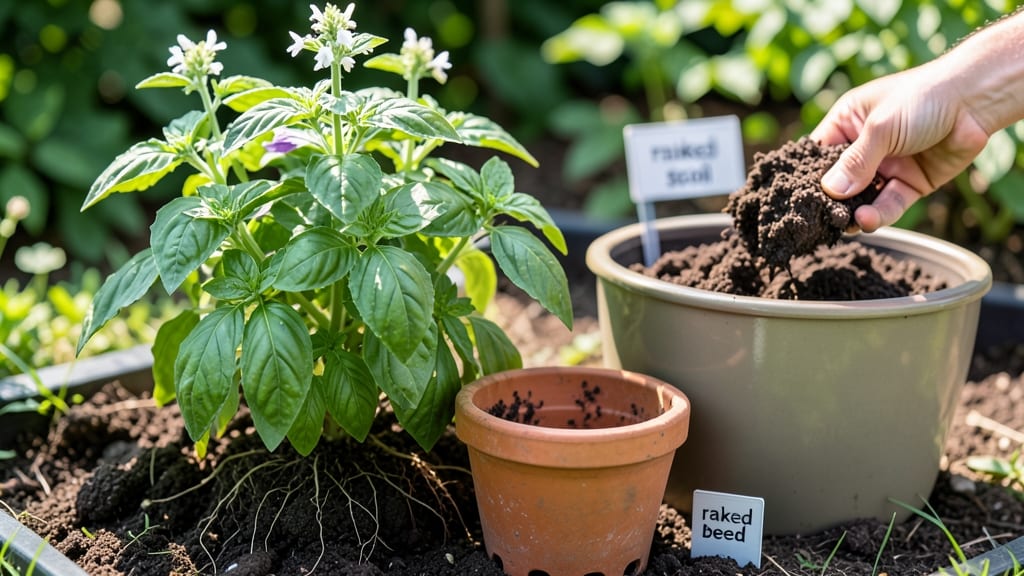
This raised bed soil can be used in pots, but it needs modifications: break up clumps, blend in organic matter like compost or perlite, and add drainage materials to prevent root suffocation. Skip nutrient-poor or clay-heavy soils unless you amend them properly.
Raised bed soil can be used in pots only when you address its natural density and nutrient balance. 🌱 Container gardening demands lighter, faster-draining mixes because roots have limited space to spread. I’ve found that adding 20-30% perlite or vermiculite by volume creates the necessary air pockets while retaining moisture.
For heavy clay soils, mix in 50% compost to improve structure and fertility—this combo mimics the looser texture of commercial potting soil. The key is testing your amended mix: if water pools on top after 10 minutes, add more perlite.
Another critical factor is plant selection. Root crops like carrots or potatoes won’t thrive in repurposed raised bed soil, but herbs, lettuce, and compact veggies like bush beans adapt well. Always choose containers with drainage holes—without them, even amended soil can become waterlogged.
For best results, I recommend pre-mixing your soil amendments in a wheelbarrow before filling pots, ensuring even distribution throughout.
💡 In This Article
- Why Raised Bed Soil Needs Modification for Container Gardening
- Step-by-Step Guide to Repurposing Raised Bed Soil for Pots
Why raised bed soil needs modification for container gardening
Raised bed soil is designed for deep root systems and bulk nutrient storage, but container gardening creates a fundamentally different environment. In pots, roots grow in a confined space with limited oxygen circulation, which causes soil to compact more quickly than in open beds.
This compaction reduces pore space—critical for root respiration—by up to 40% compared to loose potting mixes. Without adjustments, roots suffocate, leading to stunted growth or rot, even with healthy plants.
The texture of raised bed soil is another key issue. Most garden soils contain 10-20% clay particles, which bind tightly when wet and create a brick-like structure. Clay-heavy soils hold 3-4 times more water than sandy mixes, making them prone to waterlogging in pots.
The ideal potting mix has 45-60% pore space for oxygen and drainage, while typical garden soil only achieves 20-30%. Adding 1 part perlite to 3 parts soil increases porosity by 25-30%, mimicking the airy structure of commercial mixes.
Nutrient availability also shifts dramatically in containers. Raised beds benefit from continuous organic matter decomposition, but pots lack this replenishment cycle. A 10-gallon pot holds only about 1 cubic foot of soil, which depletes nutrients 3-4 times faster than in-ground beds.
Without amendments, micronutrients like iron or zinc become locked up in clay minerals, making them inaccessible to plants. Mixing in 20-30% compost by volume adds microbial activity that breaks down nutrients on demand, while also improving water retention without suffocating roots.
Root growth patterns change entirely in confined spaces. In raised beds, roots spread horizontally and vertically, but in pots, they circle the container edges—a phenomenon called pot-bound roots. This restricts water and nutrient uptake, even with amended soil.
The solution? Choose plants with compact root systems like herbs (basil, thyme) or dwarf varieties (bush beans, lettuce), and repot every 1-2 years to refresh the soil. For heavy feeders like tomatoes, supplement with slow-release fertilizer at planting time.
Consider the sensory differences too: fresh potting soil smells earthy and light, while garden soil often has a dense, musty aroma from organic matter breakdown. Amended container soil should feel crumbly when dry and moist but not sticky when wet.
If it forms hard clods when squeezed, add more perlite or coconut coir. The goal is to create a balance where water drains in 10-15 minutes after watering, leaving the top inch dry to the touch—this prevents both drowning and dehydration.
One common misconception is that "any soil will work if it drains." That’s not true—even well-draining garden soil lacks the microbial diversity of potting mixes. Container plants rely on mycorrhizal fungi (beneficial soil microbes) to access phosphorus, but these organisms struggle in compacted soil.
Adding 1 cup of worm castings per gallon of mix boosts beneficial microbes by 500%+, improving nutrient uptake and disease resistance.