
Vegetables
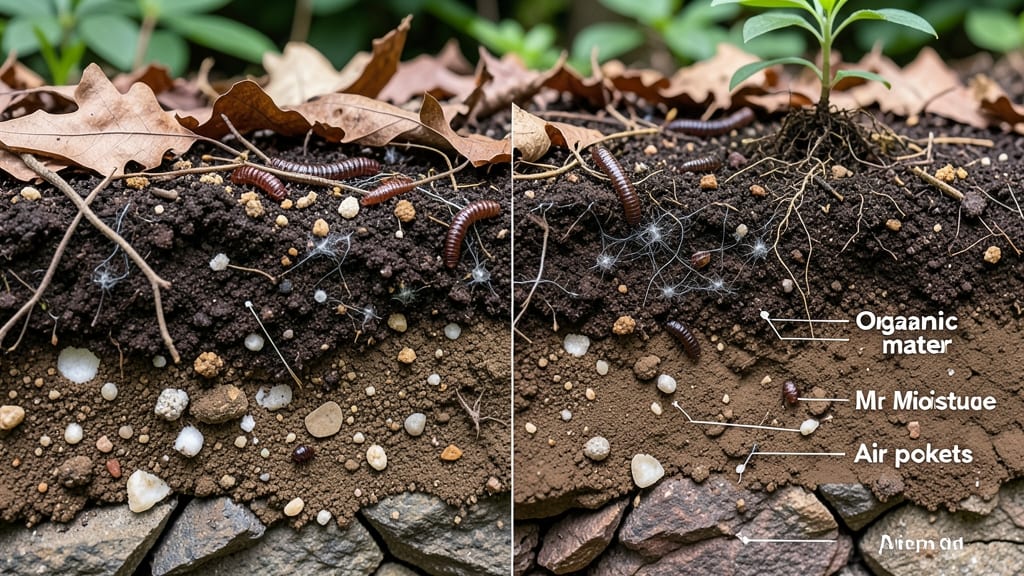
Topsoil is made through centuries of organic matter breaking down, rock weathering, and biological activity—including roots, microbes, and soil organisms—working together in the earth's uppermost layer.
This process starts with parent material—like broken-down rock—combining with decomposed plant and animal matter. Climate plays a huge role too: temperature and moisture levels speed up or slow down decomposition. 🌱 For gardeners, understanding this means you can mimic nature by adding compost or mulch to boost fertility.
The result? Rich, nutrient-packed soil perfect for growing strong plants.
One key detail often overlooked is how microorganisms like bacteria and fungi act as nature's recyclers. They break down complex materials into simpler nutrients plants can use. Without them, topsoil would remain barren. That's why healthy soil teems with life—it's not just dirt, but a thriving ecosystem.
💡 In This Article
- Natural Topsoil Formation Process Explained
- Key Factors Affecting Topsoil Quality in Gardening
Natural topsoil formation process explained
The foundation of topsoil begins with parent material—broken-down rock fragments from bedrock or transported sediments like sand or silt. Over time, physical forces like freeze-thaw cycles and chemical reactions (such as oxidation) break these rocks into finer particles.
For example, granite bedrock can take thousands of years to weather into the clay and sand particles that form the base of topsoil. This process is slower in dry climates and faster in wet, temperate regions where moisture accelerates chemical breakdown.
Biological activity then transforms this mineral base into fertile soil. Organic matter—dead leaves, twigs, and animal remains—decomposes through microbial action. Fungi and bacteria break down complex compounds into simpler nutrients like nitrogen, phosphorus, and potassium.
A single teaspoon of healthy topsoil can contain billions of microbes working to recycle organic material. This decomposition releases humus, a dark, spongy substance that improves soil structure and water retention. Without these organisms, the soil would remain a lifeless mix of minerals.
Climate plays a critical role in shaping topsoil. In tropical regions, warm temperatures and high rainfall accelerate decomposition, creating deep, nutrient-rich topsoil in centuries. Conversely, cold climates slow microbial activity, resulting in thinner, less fertile layers.
For instance, the Amazon rainforest's topsoil forms at a rate of about 1 millimeter per year, while Arctic tundra soils may take millennia to develop just a few centimeters. Even seasonal variations—like wet winters and dry summers—affect how organic matter accumulates and decomposes.
Root systems from plants also contribute significantly. As roots grow, they penetrate the soil, breaking up compacted layers and creating channels for air and water. When plants die, their roots add to the organic matter pool.
Deep-rooted species like oak trees can bring nutrients from lower soil layers to the surface, enriching the topsoil over time. This process, combined with microbial activity, turns barren mineral deposits into a thriving ecosystem capable of supporting diverse plant life.
One often-overlooked factor is the role of soil fauna. Earthworms, ants, and insects mix organic matter into the mineral soil through burrowing and feeding. A single earthworm can process up to 500 pounds of soil per year, aerating it and improving its structure.
Without these creatures, topsoil would lack the porosity needed for proper drainage and root penetration. Their activity creates a dynamic, self-sustaining system where nutrients are constantly recycled and redistributed.
Finally, the interplay between these factors results in the A-horizon—the topsoil layer. This layer is typically 2 to 20 inches deep and contains the highest concentration of organic material and microbial life. Its dark color comes from humus, which gives it a crumbly, fertile texture ideal for plant growth.
Understanding this process helps gardeners replicate nature’s methods by adding compost, mulch, or cover crops to enhance soil health and fertility.