
Light Requirements
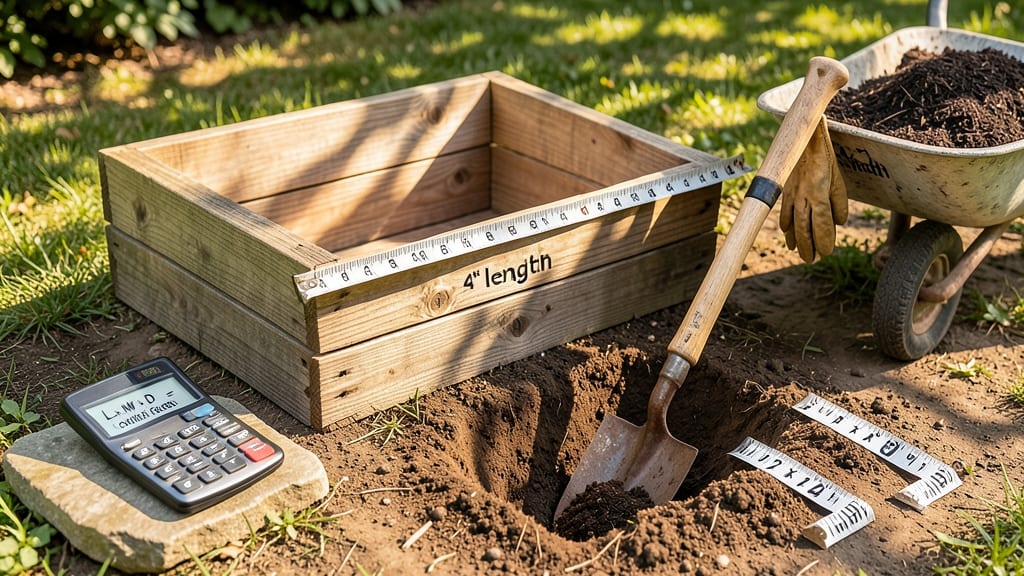
To determine how many cubic feet of soil you need, multiply the container’s length, width, and depth (in feet), then adjust for plant root depth—small shrubs need 1-2 cubic feet, while large trees require 10+ cubic feet of well-draining soil.
Figuring out soil volume comes down to two key factors: your plant's root system and the space you're filling. 🌱 For container gardening, I always recommend adding an extra 10% to account for settling—soil compacts over time, and you don't want your plants struggling for space.
Large trees need deep, loose soil to support their weight, while smaller plants thrive in shallower, nutrient-rich mixes. The right soil mix makes all the difference between thriving plants and struggling ones.
For example, a 5-gallon container (about 1.5 cubic feet) works perfectly for herbs or small annuals, but a 30-gallon pot (roughly 7.5 cubic feet) is better suited for shrubs like hydrangeas.
In-ground planting requires even more volume—digging a hole twice as wide as the root ball and just as deep ensures proper root expansion. Always check your plant's tag for specific recommendations!
💡 In This Article
- Calculating Soil Volume by Plant Type and Root Space
- Choosing the Right Soil Mix for Containers and In-Ground Planting
Calculating soil volume by plant type and root space
Soil volume calculations start with understanding your plant's root system. The rule of thumb is to provide at least twice the root ball diameter in width and depth for in-ground planting.
For example, a 3-inch diameter root ball (common for small perennials) needs a hole that's 6 inches wide and deep, equating to roughly 0.5 cubic feet of soil.
Trees with 12-inch diameter root balls require holes 24 inches wide and deep, yielding about 5-6 cubic feet of soil—this accounts for proper root expansion and stability.
The depth matters just as much as width. Shallow-rooted plants like strawberries or herbs only need 6-12 inches of soil depth, while deep-rooted trees like oaks require 36+ inches. For containers, multiply length × width × depth (in feet) to get cubic feet.
A 12" × 12" × 12" cube (1 cubic foot) works for small succulents, but a 24" × 24" × 24" cube (17.3 cubic feet) is better for mature shrubs. Always add 20% extra volume for settling—soil compresses over time, especially in heavy clay mixes.
Drainage requirements also affect soil volume. Containers need 10-20% perlite or sand mixed into potting soil to prevent waterlogging, which reduces usable volume. For example, a 5-gallon container (1.5 cubic feet) might only provide 1.2 cubic feet of effective root space after accounting for drainage materials.
In-ground planting requires amending native soil with compost to improve aeration, often increasing the needed volume by 15-20% to achieve proper texture.
Plant maturity changes the equation. A 1-year-old shrub might need 1-2 cubic feet of soil, but the same plant at 5 years old could require 5-10 cubic feet. The key is observing root growth—if roots circle the container, it's time to upgrade.
For vegetables, 1 cubic foot per plant is standard, but tomatoes need 2-3 cubic feet to support their heavy foliage and fruit production.
Soil compaction is the silent volume thief. Native clay soil can compact by 30-40% after planting, while loose potting mixes settle 10-15%. To combat this, I always backfill with 50% native soil and 50% compost for in-ground planting, which maintains better structure.
For containers, use a lightweight potting mix with coconut coir or vermiculite to minimize settling.
Consider these plant-specific examples:
- Herbs (basil, parsley): 0.5-1 cubic foot per plant in 6-12" deep containers
- Tomatoes: 2-3 cubic feet per plant in 18"+ deep containers
- Small shrubs (hydrangeas): 3-5 cubic feet for 3-5 year old plants
- Mature trees (apple trees): 10-15 cubic feet for 10+ year old specimens
Always verify with the plant's tag—some varieties (like blueberries) need acidic, peat-heavy mixes that affect volume calculations differently.