
Light Requirements
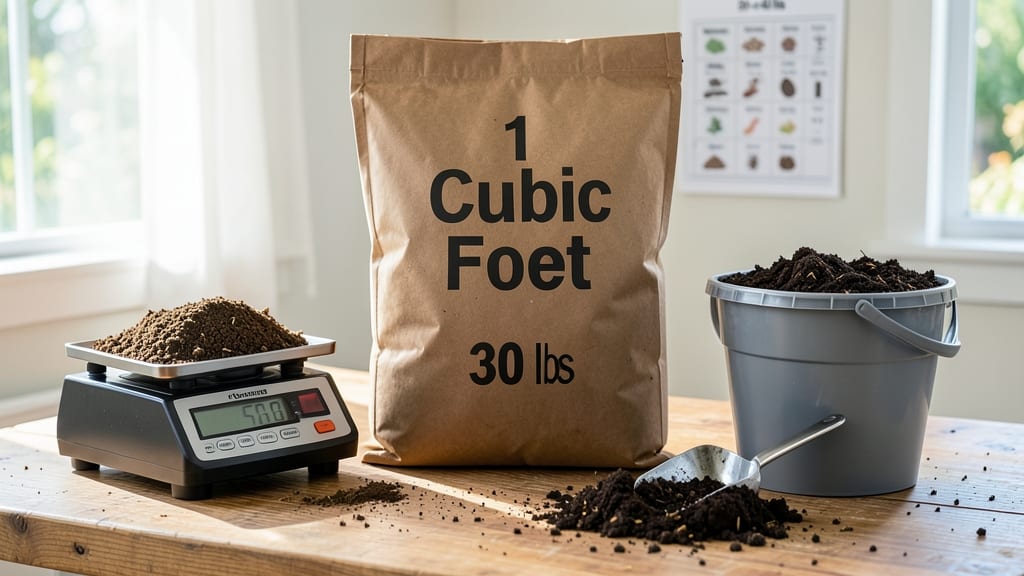
To determine how much 1 cubic foot of potting soil weighs, expect a range of 20 to 35 pounds, influenced heavily by moisture levels and the mix's organic composition—drier, peat-based soils fall on the lighter end, while wet, compost-rich blends approach the upper limit.
Understanding potting soil weight isn't just about numbers—it's about practical gardening. 🌱 The moisture content alone can swing the weight by 5-10 pounds between dry and saturated states, which is why I always weigh my soil before large projects.
For example, a standard 5-gallon container (about 0.35 cubic feet) might hold just 7 pounds of dry mix but nearly 12 pounds when damp.
This variation matters when calculating shipping costs for bulk orders or determining how much soil your raised beds can actually hold before becoming too heavy for the frame.
Another key factor is the mix's composition. Peat moss-dominant blends stay lighter because they hold less water, while coco coir or compost-heavy soils absorb more moisture and thus tip the scale upward.
If you're planning a container garden, this means your 10-gallon pots might need 20-30 pounds of soil depending on what you're growing—heavy enough to stay stable but not so much that it becomes unwieldy. Always check the label for density specs if you're buying pre-mixed bags.
💡 In This Article
- Factors Affecting Potting Soil Weight per Cubic Foot
- Potting Soil Weight Guide by Type and Use Case
Factors affecting potting soil weight per cubic foot
Moisture content is the single biggest factor influencing potting soil weight. Organic materials like peat moss or coconut coir can absorb 3-5 times their dry weight in water—meaning a 10-pound dry bag of peat-heavy mix might swell to 30-50 pounds when saturated.
This is why gardeners often see weight variations of 10-15 pounds per cubic foot between dry and damp states. The porosity of inorganic additives like perlite or vermiculite also plays a role; these materials stay lighter because they don't retain moisture like organic matter does.
Composition matters just as much as moisture. Peat moss has a bulk density of about 0.2-0.4 pounds per cubic foot when dry, while coco coir packs more densely at 0.3-0.5 pounds per cubic foot due to its fibrous structure.
Compost-heavy blends can reach 0.5-0.7 pounds per cubic foot when moist, explaining why raised-bed soils often feel significantly heavier. Even the pH level affects density—acidic soils (pH 5.5-6.5) tend to hold more water than neutral mixes, increasing weight.
Compaction during use changes everything. Freshly bagged soil often weighs 20-25 pounds per cubic foot, but after settling into containers or raised beds, it can compress to 30-35 pounds per cubic foot.
This is why I always recommend fluffing soil before measuring—1 cubic foot of loose soil might shrink to 0.8 cubic feet when packed down, adding 5-10 pounds of unexpected weight to your project.
For container gardens, this means your 5-gallon pots might need 15-20 pounds of soil after settling, not the 10 pounds you'd estimate from fresh bags.
Temperature and seasonal changes also create subtle variations. Soil stored in cold garages stays lighter due to reduced microbial activity, while summer heat can cause organic matter to decompose faster, increasing density.
If you're buying bulk soil in winter, expect weights to be 10-15% lighter than summer purchases due to seasonal moisture fluctuations. This is why professional growers always test soil weight before large-scale planting—what seems like a 1-cubic-foot bag in January might measure 0.9 cubic feet by planting time.
Here's a quick comparison of common components:
- Peat moss: 0.2-0.4 lbs/cubic foot dry, 0.6-1.0 lbs/cubic foot wet
- Coco coir: 0.3-0.5 lbs/cubic foot dry, 0.8-1.2 lbs/cubic foot wet
- Compost: 0.4-0.6 lbs/cubic foot dry, 1.0-1.5 lbs/cubic foot wet
- Perlite/vermiculite: 0.1-0.2 lbs/cubic foot (negligible moisture)
The key takeaway? Never assume—always weigh your specific mix before major projects. A 10-gallon container might hold 20 pounds of one blend but 30 pounds of another, and that difference can mean the difference between a stable plant and a toppling pot. 🌱