
Light Requirements
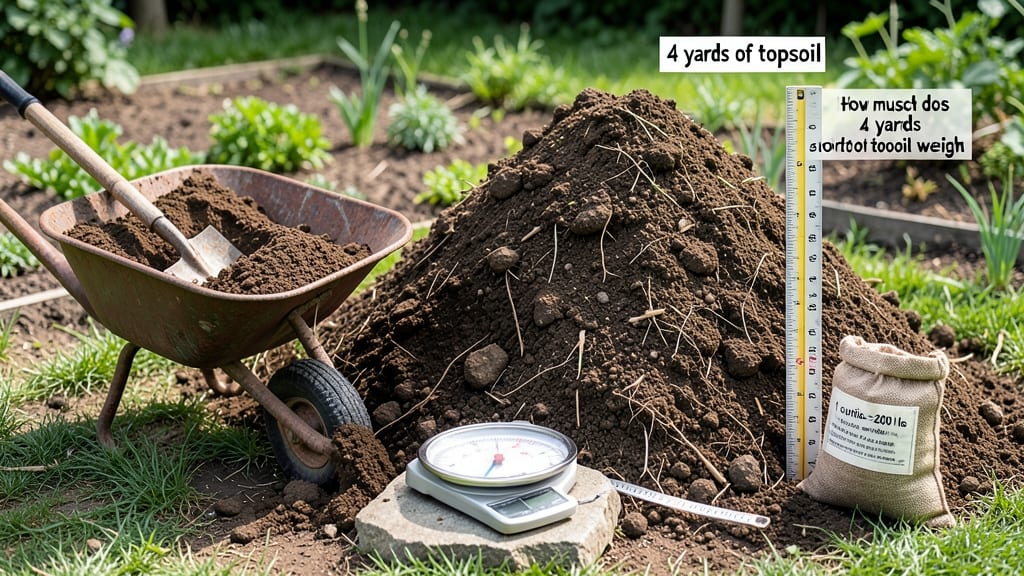
Four yards of topsoil typically weighs 1,800 to 2,400 pounds, depending on moisture content and compaction—drier, loose topsoil leans toward 1,800 lbs, while wet or compacted soil can exceed 2,200 lbs. Always confirm with suppliers, as weight varies by soil type and delivery method.
Understanding how much topsoil weighs is crucial for planning deliveries and projects. 🌱 The weight shifts dramatically based on how much water the soil holds—dry topsoil feels light and airy, while damp or compressed soil becomes significantly heavier.
For instance, a sandy topsoil might stay closer to 1,800 lbs when dry, whereas clay-heavy soil can push toward 2,400 lbs or more when saturated. This variation directly impacts how much your truck can carry or how many bags you'll need to move manually.
Beyond moisture, the type of soil matters too. Organic-rich topsoil with compost blends often weighs more than pure mineral soil because of its higher density.
If you're planning a large garden bed or lawn renovation, I recommend calling your supplier ahead of time—they can give you a precise estimate based on their specific soil mix and current moisture levels. A little extra planning now saves headaches later when unloading heavy loads!
💡 In This Article
- Factors Affecting Topsoil Weight per Yard
- Topsoil Weight Guidelines for Landscaping Projects
Factors affecting topsoil weight per yard
Topsoil weight isn't just about volume—it's a science of porosity, particle size, and moisture retention.
Sandy soils have larger particles with more air pockets, making them lighter (around 1,500–1,800 lbs per yard when dry), while clay soils pack tightly with minimal air space, weighing 2,200–2,600 lbs per yard when saturated.
The difference comes down to how water clings to particles: clay holds 30–50% more water by weight than sand, dramatically increasing bulk density.
Moisture content is the wild card here. A 10% increase in water saturation can add 200–300 lbs to your 4-yard order.
For example, dry topsoil might weigh 1,800 lbs, but after a rainstorm, that same volume could hit 2,300 lbs—a 28% weight jump that catches many homeowners off guard.
Even organic matter plays a role: compost-amended topsoil often weighs 5–10% more than mineral-only blends due to decomposed plant material's higher density.
Compaction matters just as much as moisture. When soil is tamped down (like in delivery trucks or construction sites), air pockets collapse, increasing weight by 15–25%. This is why loose, freshly screened topsoil feels feather-light at the store but becomes noticeably heavier after delivery.
The USDA Soil Texture Triangle helps explain this—clay soils stay dense even when dry, while loamy soils (ideal for gardens) balance weight and moisture retention beautifully.
Regional variations add another layer. Topsoil from arid climates (like Arizona) stays lighter due to natural dryness, while humid regions (like the Pacific Northwest) deliver heavier soil year-round. Even elevation affects weight—mountain-grown topsoil often contains more organic debris, tipping scales higher than flatland soil.
For precise planning, I recommend checking your supplier's moisture-adjusted weight charts—they're usually available upon request.
Here's a quick comparison to visualize the differences:
- Sandy topsoil (dry): 1,500–1,800 lbs/yard (feels like dry beach sand)
- Loamy topsoil (moderate moisture): 1,800–2,100 lbs/yard (ideal gardening mix)
- Clay-heavy topsoil (wet): 2,200–2,600 lbs/yard (sticky, dense, hard to move)
Understanding these factors helps you avoid overestimating your project's needs—whether you're planning for truck capacity or manual labor. The key takeaway? Always ask for current moisture conditions when ordering, as seasonal changes can shift weights by hundreds of pounds. 🌱