
Light Requirements
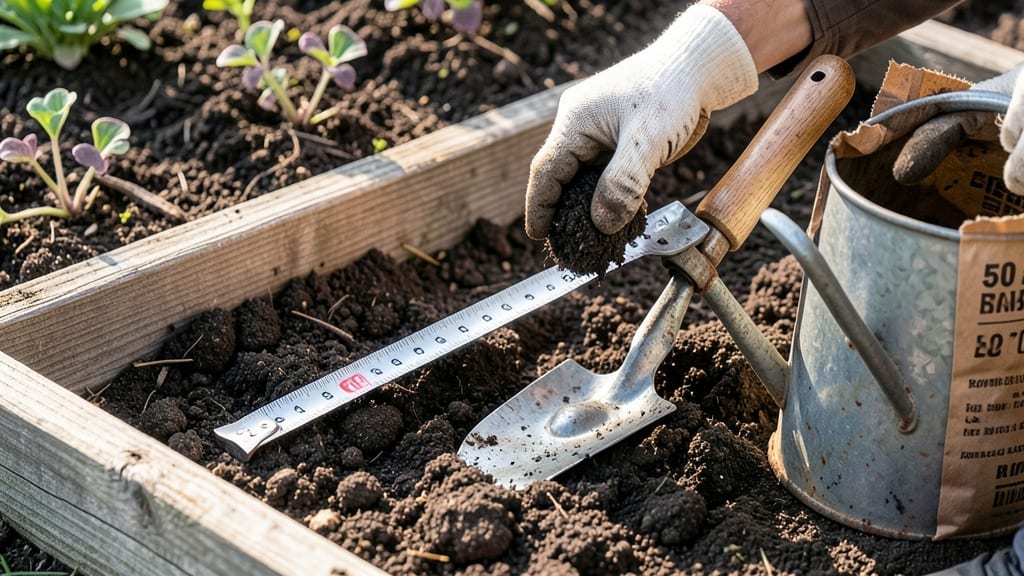
To determine how much soil for a garden bed, multiply the bed's length by width by depth (all in feet), then divide by 27 to convert cubic feet to cubic yards. For instance, a 4-foot by 8-foot bed filled to 6 inches depth requires about 1.78 cubic yards of soil.
Figuring out soil volume isn't just about throwing numbers together—it's about matching your garden's needs to the right amount. 🌱 A common mistake is eyeballing depth; even a small bed like 3’x6’ at just 4” depth needs 0.33 cubic yards—that's roughly 10 cubic feet.
For raised beds, I always round up to account for uneven edges or settling. Pro tip: Measure depth in feet (e.g., 6” = 0.5 feet) to avoid conversion headaches later.
Why this matters? Soil type plays a huge role. Topsoil is great for most plants, but clay-heavy areas might need compost blends to improve drainage. Sandy soil, on the other hand, benefits from organic matter to retain moisture.
I’ve learned the hard way that skimpier soil means more watering and less vibrant plants—so always calculate generously, especially for vegetable gardens where roots need room to grow.
💡 In This Article
- Garden Bed Soil Volume Formula Explained
- Choosing the Right Soil Type for Your Garden Bed
Garden bed soil volume formula explained
The core of calculating soil volume lies in understanding three dimensions: length, width, and depth. You start by converting all measurements to feet—this is critical because soil is typically sold in cubic yards, not cubic feet.
For example, a 6-inch depth converts to 0.5 feet, while a 3-foot width stays the same. Multiply these together to get cubic feet: length (ft) × width (ft) × depth (ft) = cubic feet.
This formula works because volume is a three-dimensional measurement, and soil fills space just like water in a rectangular tank.
Here’s where the conversion gets interesting: 27 cubic feet equals 1 cubic yard. This ratio comes from the fact that a yard is 3 feet in each dimension (length × width × height), so 3 × 3 × 3 = 27 cubic feet.
Divide your cubic feet total by 27 to get cubic yards.
For instance, a 4’x8’ bed at 6” depth yields 16 cubic feet (4 × 8 × 0.5), which equals 0.59 cubic yards—but most suppliers sell in 0.5-yard increments, so you’d round up to 0.6 cubic yards to avoid shortages.
Odd dimensions (like 5’x7’ at 8”) require precise math: 5 × 7 × 0.67 = 23.45 cubic feet, or 0.87 cubic yards, rounded to 0.9 yards.
Depth is often the trickiest part because it’s easy to misjudge.
A 6-inch depth might feel shallow, but for root vegetables like carrots or potatoes, you’ll need 12 inches or more—that’s 1 foot, doubling your soil volume. 🌱 For raised beds, I always add an extra 2 inches to account for settling over time.
This extra cushion prevents roots from hitting hardpan (compacted subsoil) and ensures plants have the space to thrive. For example, a 4’x8’ bed at 12” depth jumps from 1.78 yards to 3.56 yards—nearly double the soil!
Partial yards can be frustrating because suppliers often sell whole yards. To minimize waste, measure your space precisely and consider buying slightly less if your bed is small.
For larger projects, like a 10’x20’ vegetable garden at 12” depth, you’d need 8.89 cubic yards—rounding up to 9 yards ensures you have enough, even after accounting for uneven edges or future expansions.
Pro tip: Use a soil calculator (many are free online) to automate these conversions and avoid math errors.
What most gardeners overlook is how soil settles after watering. Loose, fluffy topsoil can compact by 10-20% once moistened, reducing its volume. This is why I recommend adding 10-15% extra soil for in-ground beds or 5-10% extra for raised beds, where drainage and aeration reduce compaction.
For example, if your calculation shows 2 cubic yards, order 2.2 yards to stay ahead of settling. This extra buffer also helps if you decide to amend the soil later with compost or fertilizer.
Visualizing the math helps: Imagine a 1-yard cube of soil—it’s roughly the size of a small refrigerator. Now picture stacking 27 of these cubes to fill a 3’x3’x3’ space. That’s why a 4’x8’ bed at 6” depth feels like a lot less soil than it actually needs.
The key is to think in layers: each 6-inch layer across 32 square feet (4’x8’) is about 16 cubic feet, or 0.59 cubic yards. 💫 This layering approach makes it easier to adjust for different plant types—deeper roots need thicker layers, while shallow-rooted herbs can thrive in thinner soil.
For raised beds, consider the material of the frame. Wooden frames may require slightly more soil to account for the frame’s thickness, while metal or composite frames offer cleaner edges and less waste. Always measure the interior dimensions of your bed, not the exterior.
For example, a 4’x8’ wooden raised bed might have 3.5’x7.5’ interior space—a difference that adds up when calculating soil volume. This attention to detail ensures you buy the right amount without overpaying for extra soil you’ll never use.