
How To
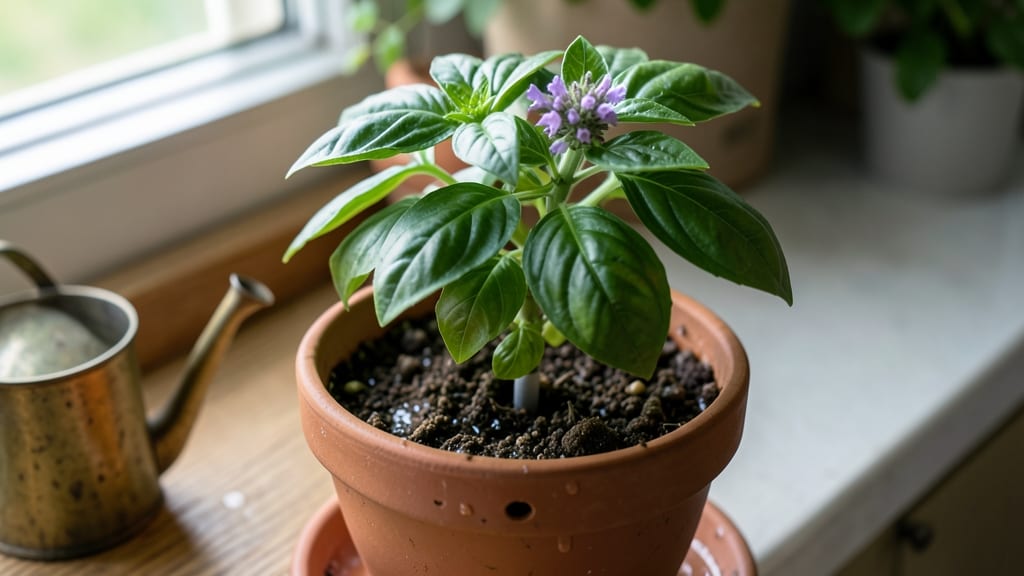
To check potting soil moisture, press your finger 1-2 inches deep—dry soil signals watering time, while damp or sticky soil means you've overwatered. Electronic moisture meters give precise readings for consistent plant care and root health.
Understanding soil moisture is all about balance—too dry and roots struggle, too wet and they suffocate. 🌱 The finger test works because it mimics how plants absorb water: when your finger comes out clean, roots have likely absorbed enough.
For container gardens, I've found that sandy soils dry faster than clay-based mixes, so adjust your schedule accordingly. Electronic meters take the guesswork out by giving numerical readings, which is especially helpful for picky plants like orchids that need precise conditions.
What's interesting is how soil texture affects moisture retention. Clay-heavy mixes hold water longer but can suffocate roots, while sandy soils drain quickly but require frequent watering. The key is matching your soil type to your plant's natural habitat—succulents thrive in fast-draining mixes, while ferns prefer consistently moist environments.
This is why I always check both the moisture level and the plant's specific needs before watering.
💡 In This Article
- How Soil Texture and Plant Needs Affect Moisture Levels
- Best Tools for Measuring Potting Soil Moisture Accurately
How soil texture and plant needs affect moisture levels
The moisture levels your potting mix holds depend entirely on its particle size and composition. Sandy soils have large particles with big air pockets that drain water quickly, often requiring watering every 2-3 days.
In contrast, clay-based mixes have tiny particles that pack tightly, trapping water and nutrients but also reducing oxygen flow to roots. This is why a loamy mix (balanced sand, silt, and clay) is ideal for most container plants—it retains moisture while allowing proper drainage. 🌱
Plant biology plays a crucial role too. Succulents like snake plants store water in their leaves, so their soil should dry out completely between waterings. Meanwhile, tropical plants like ferns need consistently moist soil because their roots are adapted to high humidity environments.
The science behind this involves capillary action—how water moves through soil pores. Fine-textured soils have more surface area for water adhesion, while coarse soils let water flow through faster. This is why a 50-50 mix of peat moss and perlite works well for most houseplants.
Here's what happens when you get it wrong: Overwatering clay-heavy mixes can lead to root rot within 5-7 days due to oxygen deprivation, while underwatering sandy mixes causes roots to dry out and recede from the soil surface.
The key is matching your soil type to your plant's natural habitat—desert plants need fast-draining mixes, while jungle plants thrive in moisture-retentive blends. For example, a cactus mix might be 60% perlite, while a fern mix could be 60% peat moss.
Seasonal changes also affect moisture needs. During winter, most plants go dormant and require 30-50% less water than in summer when evaporation rates climb.
Even the same plant in the same pot can have different moisture needs based on its growth stage—seedlings need consistently moist soil, while mature plants can handle slightly drier conditions.
This is why I always check both the moisture level and the plant's specific needs before watering, especially when transitioning between seasons.
Consider these key factors when choosing your potting mix:
- Drainage needs: Add 20-30% perlite or vermiculite to improve aeration in heavy soils
- Moisture retention: Include 20-40% coconut coir or peat moss for water-holding capacity
- Plant type: Orchids need chunky bark mixes for airflow, while herbs prefer light, fertile soils
What most people don't realize is how container size affects moisture levels. A 6-inch pot dries out faster than a 12-inch pot because of the smaller soil volume. This is why I recommend using larger containers for thirsty plants and smaller ones for succulents.
The surface area to volume ratio changes dramatically with pot size, which directly impacts evaporation rates and root zone moisture. 💫