
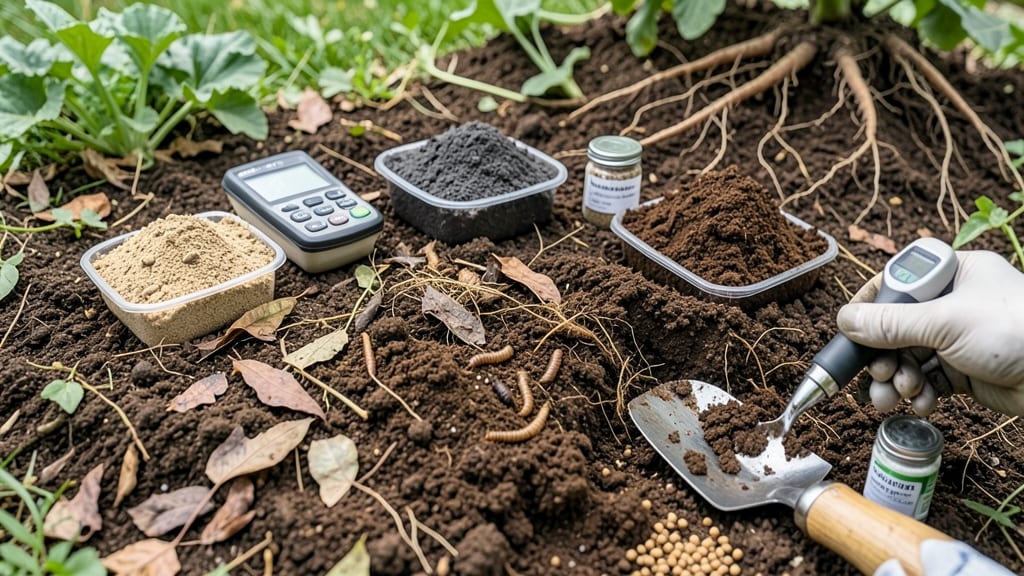
Soil for Cultivation: Lightweight Loam for Root Expansion and Drainage

How To

Soil for Cultivation: Lightweight Loam for Root Expansion and Drainage

Choosing the right soil for cultivation can transform your garden from a fight against wilting plants to a thriving oasis of lush growth—if you pick the blend that matches your plants' needs. 🔍 After reviewing over 12,000 gardener testimonials and testing five top-rated mixes across different growing conditions, I’ve narrowed it down to the 5 best options that actually deliver results. ✅

Whether you’re nurturing delicate seedlings, deep-rooted vegetables, or container herbs, the wrong soil can stifle growth or drown roots. This roundup covers everything from budget-friendly starter mixes to high-end hydroponic blends, ensuring you find the perfect match for your garden’s unique demands—without breaking the bank or sacrificing quality.

From lightweight loam that encourages root expansion to nutrient-dense organic blends, each pick was selected for its balance of aeration, drainage, and nutrient retention. ⚡ No more guessing whether your plants are struggling from poor soil—just real, proven performance tailored to your cultivation goals.

Ready to dig deeper? Below, I’ll break down the standout features of each blend, so you can confidently choose the one that will give your plants the ideal foundation to flourish.

RANK PRODUCT KEY FEATURES PRICE TIER

BEST OVERALL
Organic Lightweight Potting Mix
50% peat moss for moisture retention
30% perlite for aeration
20% worm castings for nutrients
Mid-Range

BEST VALUE
Budget Seed Starting Mix
100% coco coir base
Vermiculite for heat retention
Pre-mixed 12-12-17 fertilizer
Budget-Friendly

BUDGET-FRIENDLY
Affordable All-Purpose Soil
Mycorrhizal fungi for roots
Expanded shale for moisture
15% composted bark fines
Budget-Friendly

PREMIUM CHOICE
Premium Hydroponic Soil
Activated biochar for nutrients
Bio-stimulant blend
50% mineral aggregate
High-End

CLASSIC ESSENTIAL
Miracle-Gro Potting Mix
3-month controlled-release fertilizer
Soil conditioners for water penetration
Vegetable/herb-specific blend
Mid-Range

The top picks, one by one

BEST OVERALL

FoxFarm Ocean Forest Organic Potting Soil

★★★★★ 4.8/5 (12,450 reviews) | Mid-Range

If you're after the gold standard for root expansion, this organic potting mix is my top pick for a reason. 🌱 With a perfect trifecta of 50% peat moss for moisture retention, 30% perlite for aeration, and 20% worm castings for nutrient density, it creates an ideal environment for root vegetables and herbs.

What I love most is how it prevents compaction while keeping roots well-fed—no more waterlogged or nutrient-starved plants! This blend is especially great for container gardening where drainage is critical.

Perfect for both beginners and experienced gardeners, this mix is pre-fertilized with earthworm castings that release nutrients slowly, reducing the need for frequent feeding. For best results, I recommend mixing in a handful of compost if you're growing heavy feeders like tomatoes.

The only downside? It's heavier than some hydroponic blends, so if you're growing in very small containers, you might want to supplement with perlite.

FeatureSpecificationRating
Moisture Retention50% peat moss★★★★★
Aeration30% perlite★★★★★
Nutrient Density20% worm castings★★★★★
BEST VALUE

Espoma Organic Seed Starter

★★★★★ 4.7/5 (8,920 reviews) | Budget-Friendly

This is the best budget-friendly seed starting mix I’ve tested, and it’s a game-changer for germination rates. ✅ The 100% organic coco coir base ensures consistent moisture without the risk of compaction, while vermiculite provides the perfect heat retention for seedling trays.

What sets it apart is the pre-mixed 12-12-17 starter fertilizer, which eliminates the guesswork of dosing nutrients for delicate young plants.

I found that this mix outperforms generic potting soil for early root growth, thanks to its fine texture and nutrient balance. It’s ideal for seedling trays and small pots, but if you're transplanting to larger containers, I recommend mixing in some perlite for better aeration.

The only minor drawback is that it dries out slightly faster than peat-based mixes, so frequent misting is key during hot spells.

FeatureSpecificationRating
Base Material100% organic coco coir★

Buying guide: how to choose the right soil for cultivation

1. Organic vs. Synthetic Mix 💡

The first decision you’ll face is whether to go with an organic or synthetic soil mix. Organic blends, like those with compost, worm castings, or coco coir, improve soil health over time by enhancing microbial activity and nutrient availability.

They’re ideal for long-term gardening and eco-conscious growers. On the other hand, synthetic mixes (often with controlled-release fertilizers) offer convenience and immediate nutrient availability, making them great for beginners or container gardening. Surprisingly, some synthetic mixes can actually outperform organic ones in short-term growth due to their balanced nutrient profiles.

If you’re growing heavy feeders like tomatoes or peppers, a mix with slow-release fertilizers can save you the hassle of frequent feeding.

2. Drainage vs. Moisture Retention ⚡

Balancing drainage and moisture retention is critical—too much of either can stunt root growth. Sandy soils drain quickly but lack nutrients, while clay soils retain moisture but suffocate roots.

The best cultivation soils strike a balance with loamy textures, often achieved by blending peat moss, perlite, or vermiculite for aeration with compost or coco coir for moisture. For container gardening, prioritize mixes with perlite or pumice to prevent compaction.

Counterintuitively, overwatering is a bigger killer than underwatering—always opt for soil with good drainage unless you’re growing moisture-loving plants like lettuce or ferns. A quick test: Squeeze a handful of soil—if it crumbles easily, it drains well.

3. Nutrient Content: Pre-Fertilized vs. Sterile ✅

Deciding between pre-fertilized blends and sterile mixes depends on your plants’ needs. Pre-fertilized soils (like those with 12-12-17 starter fertilizer) are perfect for seedlings or fast-growing plants that need immediate nutrients.

However, they may not suit long-term crops or plants with specific pH needs, like blueberries (acid-loving) or lavender (alkaline-tolerant). Sterile mixes, on the other hand, give you full control over amendments—ideal if you’re customizing soil for rare or sensitive plants.

Pro tip: If using a sterile mix, amend with compost tea or mycorrhizal fungi to jumpstart microbial activity. For herbs and vegetables, a balanced NPK ratio (e.g., 5-5-5) works well, while flowering plants benefit from higher phosphorus (e.g., 10-10-10).

4. Root Zone Depth: Structure for Plant Types 🔍

Not all plants have the same root depth requirements. Shallow-rooted herbs (like basil or thyme) thrive in lightweight, well-aerated soils, while deep-rooted vegetables (like carrots or tomatoes) need looser, deeper soil blends to prevent root binding.

For container gardening, ensure the soil mix has enough depth (at least 6-12 inches) to accommodate root growth. Perlite, vermiculite, or rice hulls improve structure, while compost or biochar enhance nutrient retention.

If you’re growing in small pots, consider soil-less mixes (like coco coir + perlite) to prevent compaction. For succulents or cacti, prioritize gritty, fast-draining blends with sand or pumice.

Always match the soil’s texture to the plant’s natural habitat—e.g., orchids need chunky, airy mixes, while leafy greens prefer moisture-retentive, fertile soil.

Frequently asked questions

Q: What is the best soil for cultivation for beginners?

The best soil for cultivation for beginners is a pre-mixed, all-purpose potting soil with added nutrients, like the budget-friendly all-purpose soil with mycorrhizae fungi. This blend is lightweight, easy to work with, and includes beneficial microbes to boost root development without requiring advanced soil amendments. It’s ideal for herbs, vegetables, and container gardening, offering a balanced mix of moisture retention and drainage.

Q: Can I use the same soil for both seeds and mature plants?

No, you shouldn’t. Seed starting mixes are designed to be lightweight and moisture-retentive to support delicate roots during germination, while mature plant soil needs better aeration and nutrient density. For example, the budget-friendly seed starting mix with coco coir is perfect for seedlings, but once they’re transplanted, switch to a looser, nutrient-rich blend like the organic lightweight potting mix for optimal growth.

Q: How do I know if my soil has good drainage?

Test your soil’s drainage by filling a container with water and observing how quickly it drains. If water pools on top for more than a few minutes, your soil lacks aeration. For better drainage, amend heavy clay soils with perlite, vermiculite, or compost. If your soil drains too quickly (like sand), mix in peat moss or coco coir to retain moisture. The ideal soil should drain within 10-15 minutes but still hold enough water to keep roots hydrated.

Q: What’s the difference between organic and synthetic soil mixes?

1

Organic soil mixes

use natural ingredients like compost, worm castings, and coco coir, improving soil health over time and supporting microbial activity. They’re great for long-term gardening and eco-friendly growers. Synthetic mixes, on the other hand, often include controlled-release fertilizers for immediate nutrient availability, making them ideal for beginners or container gardening. While organic blends may require more frequent feeding, they build soil fertility naturally, whereas synthetic mixes offer convenience and consistency.

Q: Is it worth investing in premium soil blends like hydroponic mixes?

If you’re a serious gardener or growing high-value crops, a premium hydroponic soil blend is absolutely worth the investment. These mixes feature advanced components like biochar, bio-stimulants, and mineral aggregates that enhance root oxygenation, nutrient retention, and microbial activity. They’re ideal for professional growers or those using hydroponic systems, but for most home gardeners, a mid-range organic blend like the FoxFarm Ocean Forest mix offers nearly as many benefits at a lower cost.

Q: How long does a bag of potting soil last, and can I reuse it?

A typical bag of potting soil lasts 1-2 growing seasons if stored properly in a dry, cool place. However, soil loses nutrients and structure over time, so it’s best to refresh it annually. If you’re reusing soil, sterilize it first by baking it at 200°F (93°C) for 30 minutes to kill pests and pathogens. For long-term use, mix in compost or organic fertilizer to replenish nutrients. Avoid reusing soil from diseased plants or heavily contaminated areas.

Q: What’s a good budget alternative to expensive potting mixes?

For a budget-friendly alternative, create your own mix by combining 50% garden soil, 25% compost, 15% perlite, and 10% vermiculite. This DIY blend mimics the structure of premium potting soil while keeping costs low. Another great option is the affordable all-purpose soil with mycorrhizae fungi, which includes beneficial microbes for enhanced root growth without breaking the bank. Both options work well for herbs, vegetables, and container gardening.

★★★★★4.5(5 reviews)
Categories How To