
Container Gardens
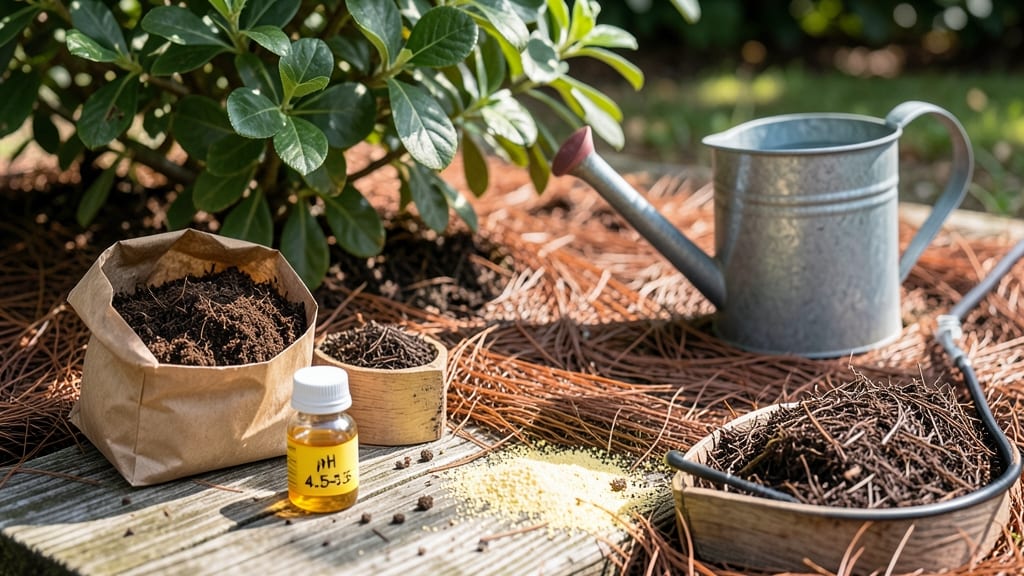
Growing blueberries demands soil with an acidic pH between 4.5 and 5.5 and a minimum of 25% organic content to promote strong root development and nutrient uptake. A well-draining sandy loam blend is ideal, while alkaline conditions can trigger deficiencies like chlorosis.
Blueberries thrive in acidic soil because their roots struggle to absorb essential nutrients like iron and phosphorus when pH levels climb above 5.5. 🌱 The organic matter—think composted leaves, pine needles, or peat moss—improves soil structure while slowly releasing nutrients.
I’ve found that mixing in sulfur can help adjust pH over time, especially in garden beds where soil naturally leans alkaline. Without proper acidity, plants may develop yellowing leaves or stunted growth, even if you’re watering and fertilizing correctly.
For container growers, pre-mixed blueberry soil blends often include these amendments, but DIY mixes let you tailor the recipe to your local soil. A simple pH test kit can save you from costly mistakes—just remember to test before planting and again after amending.
Over time, mulching with pine bark or oak leaves helps maintain acidity while suppressing weeds. The key is consistency: blueberries reward patience with vibrant foliage and abundant fruit.
💡 In This Article
- Why Blueberry Soil Must Be Acidic and Rich in Organic Matter
- Step-by-Step Guide to Amending Soil for Blueberry Plants
Why blueberry soil must be acidic and rich in organic matter
Blueberries evolved in acidic, peat-rich environments like the bogs of North America, where their roots naturally access iron and phosphorus in their most available forms.
When soil pH rises above 5.5, these essential nutrients bind to soil particles and become locked away, causing yellowing leaves (chlorosis) even if the plant receives adequate fertilizer. The root zone also struggles with aluminum toxicity in alkaline conditions, which stunts growth by blocking water and nutrient uptake. 🌱
Organic matter plays a dual role: it physically improves soil structure by creating air pockets for root respiration while slowly releasing nutrients through decomposition. Peat moss, for example, holds 16-20 times its weight in water while maintaining acidity, but it breaks down over time—requiring replenishment every 2-3 years.
Pine bark fines or composted oak leaves add structure without drastically altering pH, making them excellent long-term amendments for container gardens.
Micronutrient availability is where acidity truly matters. At pH 4.5-5.5, manganese, zinc, and copper—critical for blueberry fruit development—remain soluble and accessible. In contrast, alkaline soils (pH 7+) make these nutrients nearly inert.
The root tips also secrete organic acids that further solubilize nutrients in acidic conditions, creating a feedback loop where healthy roots promote better nutrient uptake. 💫
Drainage becomes equally critical when mixing organic amendments. Sandy loam provides the ideal balance: it retains moisture for root development while preventing waterlogging that can suffocate roots.
A 1:1 ratio of sandy soil to organic matter (like peat moss or compost) creates this texture, though container mixes often use 50% peat moss, 30% pine bark, and 20% perlite for optimal aeration. Without proper drainage, even acidic soil can lead to root rot.
For gardeners dealing with naturally alkaline soil, elemental sulfur is the most effective amendment. It lowers pH by 1 unit per pound per 100 square feet when worked into the top 6 inches of soil.
However, sulfur takes 2-3 months to fully acidify the root zone, so plan ahead. Over-application can create toxic conditions—always test pH 2-3 weeks after amending to avoid overshooting the 4.5-5.5 target.
What most growers overlook is how mulch affects long-term acidity. A 3-inch layer of pine needles or oak leaves can maintain soil acidity for 6-12 months by slowly decomposing and releasing organic acids.
This passive method works best in established beds where you’ve already adjusted the pH, as it won’t drastically change existing conditions but will help sustain them. 🌿