
Plants
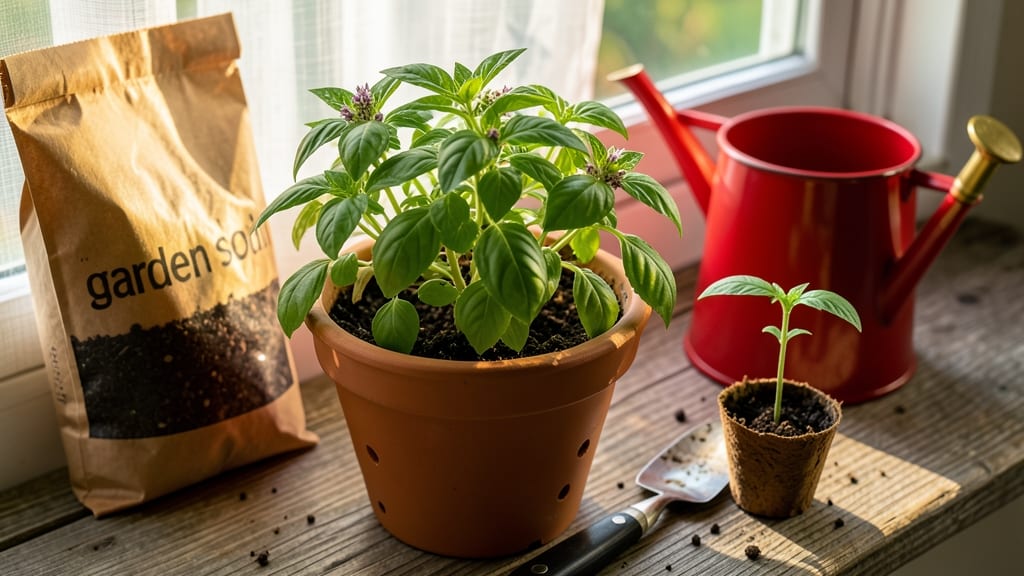
You shouldn't use garden soil for potting plants because it compacts easily, lacks proper drainage, and may harbor pests or diseases. Instead, choose a lightweight potting mix with perlite or compost to promote healthy root development.
Garden soil is designed for outdoor plant beds, not containers, because its heavy clay and organic matter create a dense medium that suffocates roots. 🌱 Without proper aeration, moisture pools at the bottom, leading to rot, while weeds and pathogens thrive in the compacted environment.
Even "amending" garden soil with sand or compost often fails to replicate the loose, nutrient-balanced structure of commercial potting mixes.
For container gardening, prioritize mixes labeled "potting soil" that include perlite, vermiculite, or coconut coir to improve airflow and moisture control. 💫 Herbs like basil and succulents need fast-draining blends, while vegetables benefit from mixes with added compost.
If you must use garden soil, sterilize it first by baking at 200°F for 30 minutes to kill pests, then blend it 50/50 with perlite.
💡 In This Article
- Why Garden Soil Fails as Potting Mix
- Best Potting Mix Alternatives for Container Gardening
Why garden soil fails as potting mix
Garden soil's primary flaw is its high clay content, which creates a dense, compacted structure when moist. This density reduces pore space by up to 40% compared to ideal potting mixes, restricting oxygen flow to roots.
Healthy roots need 10-30% air space in the soil matrix to breathe—something garden soil simply can't provide in containers. The result? Roots suffocate, growth stalls, and plants become more susceptible to fungal infections like root rot.
The water retention issue is equally critical. Garden soil holds moisture like a sponge, often 60-70% water content after rain, while potting mixes stay at 30-40%. This excess moisture creates anaerobic pockets where beneficial microbes die and harmful pathogens thrive.
You'll notice this in wilting leaves or yellowing foliage—classic signs of oxygen deprivation. Even well-draining garden soil from sandy areas can still contain 2-5% organic matter, which breaks down too quickly in containers, leaving roots starved of nutrients.
Pest and disease risks are another silent killer. Garden soil often contains weed seeds (50-100 per cubic foot), larvae, and fungal spores that lie dormant until activated by container warmth. Unlike outdoor beds where pests have natural predators, potted plants in garden soil become sitting ducks.
The closed system of containers accelerates these problems—what might take months in ground soil can kill a potted plant in 2-4 weeks. This is why professional growers sterilize soil at 180°F (82°C) for 30 minutes before use.
Let's talk about nutrient imbalances. Garden soil's nutrients are designed for deep-rooted perennials, not container plants with 1/10th the root zone. Essential micronutrients like iron and zinc become locked up in clay particles, making them unavailable to plants.
The pH also shifts unpredictably—garden soil often sits at 6.0-7.5, while most container plants thrive at 5.5-6.5. This mismatch leads to nutrient deficiencies that show as stunted growth or unusual leaf discoloration.
For a visual comparison, imagine pouring water through two materials: garden soil takes 30-60 minutes to drain completely, while a good potting mix drains in 5-15 minutes. This slow drainage means containers stay soggy at the bottom while the top layer dries out—creating the perfect storm for root diseases.
The texture difference is dramatic too: garden soil feels gritty and heavy when dry, while potting mixes remain light and fluffy, almost like a cloud when you squeeze it.
What most gardeners don't realize is how quickly these problems escalate in containers. Without proper aeration, roots can't explore beyond a 1-inch radius from the pot walls, severely limiting nutrient uptake.
This root-bound condition shows as yellowing leaves even when you're watering regularly—a classic sign your soil choice is working against your plants. 🌱