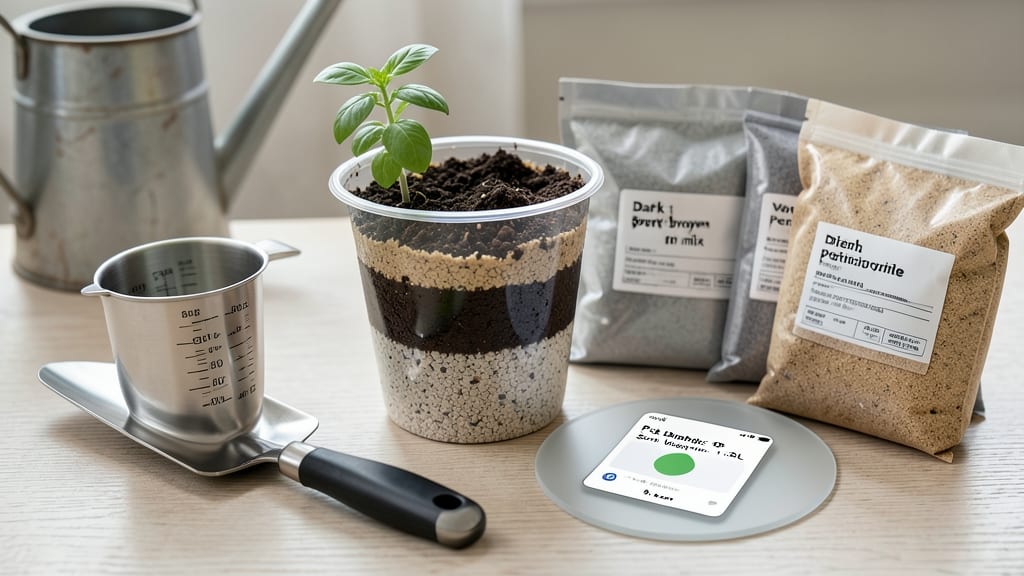
Buying guide: how to choose the right soil calculator for pots
1. Accuracy and Precision Needs 💡
Not all soil calculators are created equal, and your choice depends on how precise you need to be. Digital soil calculators with moisture compensation are ideal for serious gardeners who need exact measurements for fertilizer dosing and nutrient balance.
These tools adjust for soil moisture, ensuring consistency even when your mix varies. For example, if you’re growing succulents or orchids, where soil weight directly impacts watering schedules, a digital calculator with gram/ounce conversion is a game-changer.
On the other hand, analog tools or apps are perfect for beginners or those working with standard potting mixes—they offer quick estimates without the complexity.
Counter-intuitively, higher precision doesn’t always mean better results. If you’re primarily growing herbs or annuals in small pots, a simple measuring cup with a reference chart might be all you need.
The key is matching the tool to your plants’ needs—succulents and epiphytes demand exactness, while vegetables and flowers can often thrive with approximate measurements.
2. Portability and Ease of Use ⚡
If you’re gardening on the go—whether you’re filling pots at a nursery, repotting in your backyard, or traveling with plants—portability matters. Digital scales and measuring cups are lightweight and easy to toss in a gardening bag, but their ease of use varies.
For instance, smartphone apps are the most portable, requiring no physical tools at all. However, they rely on your phone’s screen and battery life, which can be inconvenient in bright sunlight or when you’re deep in the garden.
I recommend prioritizing tools with clear, easy-to-read displays (or markings) and durable materials if you’ll be using them frequently. Analog measuring cups and foldable rulers are the most rugged, while digital scales with backlit screens are ideal for low-light conditions.
If you’re repotting multiple plants in one session, a compact, battery-powered digital calculator strikes the best balance between precision and convenience.
3. Additional Features: Moisture Tracking and Data Export ✅
Beyond basic measurements, some soil calculators offer advanced features that can elevate your gardening game. Moisture compensation is a standout feature—it adjusts weight readings based on how wet your soil is, ensuring you’re not over- or under-watering.
This is especially useful for hydroponic setups or soilless mixes, where moisture content fluctuates frequently. Data export capabilities (via Bluetooth or USB) let you log soil conditions over time, helping you refine your mixes for specific plants.
If you’re tracking multiple pots or experimenting with different soil blends, look for tools that allow customizable settings or data logging. For example, a professional-grade digital scale might sync with an app to track moisture levels and nutrient adjustments across your entire garden.
While these features come at a higher price point, they’re worth it for gardeners who treat soil science like a fine art.
4. Budget Considerations vs. Long-Term Value 💰
Your budget will dictate the type of soil calculator you choose, but long-term value often outweighs upfront costs. Budget-friendly options like analog measuring cups or free apps are perfect for casual gardeners or those just starting out—they’re affordable and get the job done without breaking the bank.
However, if you’re serious about container gardening, investing in a mid-range digital calculator or even a premium professional scale will pay off in the long run.
Think about how often you’ll use the tool and what you’ll use it for. If you’re repotting dozens of plants annually, a high-end scale with moisture tracking will save you time and improve plant health.
But if you’re only filling a few pots a year, a simple analog tool or app will suffice. Remember, the most expensive tool won’t help if you don’t use it—choose based on your gardening habits, not just features.
5. Compatibility with Your Gardening Style 🔍
Finally, consider how the soil calculator fits into your existing gardening workflow. If you’re already using a smartphone app for plant tracking, a digital soil calculator app might integrate seamlessly. Conversely, if you prefer physical tools, a measuring cup or ruler will feel more intuitive.
Some tools even sync with weather apps or irrigation systems, adding another layer of convenience for tech-savvy gardeners.
Pro tip: If you’re unsure, start with a mid-range digital calculator—it offers the best balance of precision, portability, and features. Once you’ve mastered the basics, you can upgrade to more specialized tools as your gardening skills (and collection of pots!) grow.
The right soil calculator isn’t just about measuring—it’s about empowering you to create the perfect growing environment for your plants.
Frequently asked questions
Q: What is a soil calculator for pots and why do I need one?
A soil calculator for pots is a tool designed to help you determine the exact amount of soil needed for your containers, ensuring optimal plant health. Whether you're using a digital scale, measuring cup, or app-based calculator, these tools eliminate guesswork by providing precise measurements for soil volume and weight. Without one, you risk overfilling pots (leading to poor drainage) or underfilling them (resulting in stunted growth). For example, a 12-inch pot might need 2-3 gallons of soil, but without a calculator, you could easily misjudge by 30% or more.
Q: How do I use a digital soil calculator for accurate measurements?
Using a digital soil calculator is straightforward: start by selecting your pot’s diameter and depth from the device’s settings. Place the pot on the scale, then add soil until the calculator displays the recommended weight for your plant type. Most digital tools include a moisture compensation feature—simply adjust the setting if your soil is damp. For instance, if your calculator suggests 5 lbs of soil for a tomato plant, but your mix is wet, the tool will recalibrate the reading automatically. Always tare the scale (zero it out) before each use to ensure accuracy.
Q: Can I use a soil calculator app on my phone instead of a physical tool?
Yes! A soil calculator app is a fantastic option for gardeners who prefer convenience and portability. These apps typically require you to input your pot’s dimensions and select your plant type, then they calculate the ideal soil volume. Some even allow you to adjust for soil density (e.g., lightweight potting mix vs. heavier garden soil). While apps are less precise than digital scales, they’re perfect for quick estimates, especially if you’re gardening on the go. Just ensure your phone’s battery is charged or use the app offline to avoid interruptions.
Q: What’s the difference between a digital soil calculator and an analog measuring cup?
The main difference lies in precision and features. A digital soil calculator offers exact weight measurements in grams or ounces, adjusts for moisture, and often includes customizable settings for different pot sizes. In contrast, an analog measuring cup provides volume-based estimates (e.g., cups or liters) and relies on a reference chart for common pot sizes. Digital tools are ideal for serious gardeners who need accuracy for fertilizer dosing or moisture control, while analog cups are better for quick, approximate measurements—think of them as the "Swiss Army knife" vs. the "precision scalpel" of soil calculation.
Q: How often should I recalibrate or check my soil calculator for accuracy?
For digital scales, recalibrate them every 3-6 months or after significant use, especially if you notice readings drifting. Most devices have a calibration function—simply place a known weight (like a 1-lb bag of soil) on the scale and follow the prompts. For analog tools or apps, accuracy depends more on proper usage. Double-check your pot measurements and soil type settings regularly, as errors in input (e.g., misjudging pot depth) can lead to inaccurate results. If your plants show signs of stress (e.g., wilting or root rot), it may be time to reassess your soil calculations.
Q: Are there any budget-friendly alternatives to high-end soil calculators?
If you’re on a budget, consider a basic measuring cup with a pot size chart or a free soil calculator app. These options are typically under $15 and still provide reliable estimates for most container gardening needs. For example, a 500ml measuring cup with a chart can cover 80% of common pot sizes, while apps like "Soil Calculator Pro" offer offline functionality and customizable soil density settings without costing a dime. While they lack advanced features like moisture compensation, they’re perfect for beginners or casual gardeners who prioritize simplicity over precision.
Q: Will a soil calculator work for all types of pots, including non-standard shapes?
Most soil calculators are designed for standard round or square pots, but many digital tools allow you to input custom dimensions for unique shapes (e.g., oblong planters or hanging baskets). For non-standard pots, measure the length, width, and depth manually, then use the calculator’s "custom pot" setting if available. If you’re using an analog tool or app, estimate the volume by breaking the pot into simpler shapes (e.g., a rectangle for oblong pots) and summing their individual volumes. For example, a hanging basket might be treated as a hemisphere for volume calculations—just divide its diameter by 2 to estimate depth.