
Fertilization
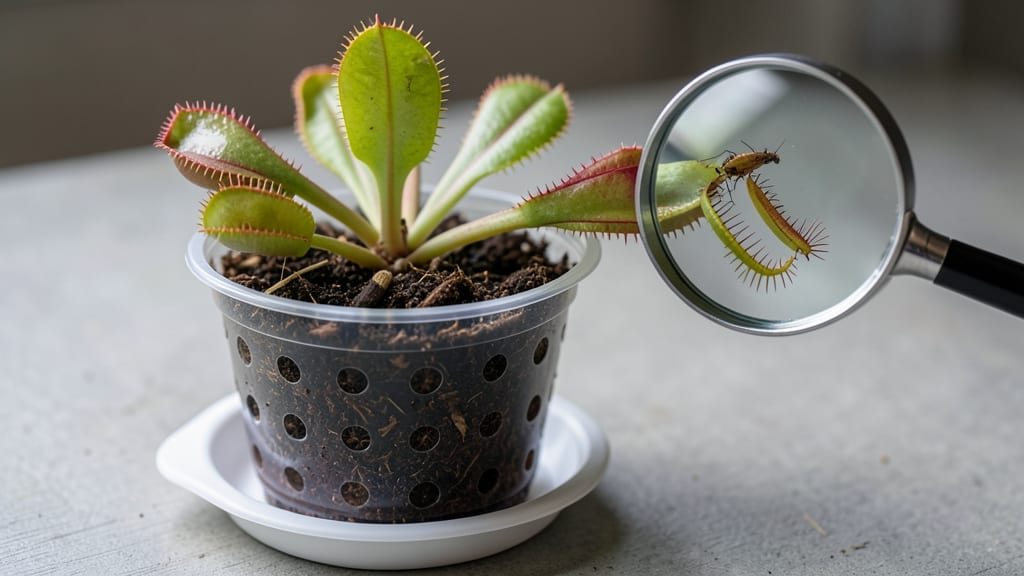
For a Venus Fly Trap 🪰 to thrive, you need soil that mimics its natural bog habitat—acidic, airy, and free of nutrients that would confuse its carnivorous instincts.
Picture this: your plant’s traps snap shut on a gnat, only to wilt days later because the soil is too dense or alkaline. That’s not just a missed meal—it’s a death sentence.
The right mix isn’t just about pH; it’s about recreating the swampy conditions where these plants evolved to hunt.
Most garden soils are a disaster—too rich, too compact, and packed with minerals that choke out the delicate roots. Instead, we’re talking peat moss, perlite, and a dash of sand, all balanced to stay moist without drowning the plant.
Below, I’ll walk you through the exact ratios, why pH matters (and how to test it), and the one mistake that kills more Venus Fly Traps than anything else.
You’ll learn how to mix your own substrate at home, spot the warning signs of bad soil, and keep your plant hungry for bugs—not fertilizer—for years to come.
Why Venus fly traps need acidic, peat-based soil (and what happens if you get it wrong)
Venus fly traps (Dionaea muscipula) evolved in the nutrient-poor, acidic bogs of the southeastern U.S., where they thrive in low-pH soil between 4.5–6.0. This acidic environment isn’t just a preference—it’s a survival necessity.
Without it, your plant can’t absorb the iron and nitrogen it needs to grow, let alone digest insects. Think of it like a carnivore’s diet: wrong soil is like feeding a meat-eater a vegan meal—it just won’t work.
The key ingredient is peat moss, a partially decomposed sphagnum that holds moisture while allowing air to circulate. Unlike regular garden soil, peat moss lacks the minerals that would clog your fly trap’s roots or trigger nutrient overload.
It mimics the waterlogged, oxygen-rich conditions of their natural habitat. Without it, your plant’s roots suffocate, and its traps weaken—leaving it vulnerable to rot or starvation.
| Soil Component | Purpose | pH Level | Avoid Mixing With |
|---|---|---|---|
| Peat Moss | Retains moisture, mimics bog conditions | 3.0–4.5 | Lime, compost, garden soil |
| Perlite | Improves drainage, prevents root rot | Neutral (7.0) | None (inert) |
| Sphagnum Moss | Holds moisture, adds acidity | 3.0–4.5 | Tap water, fertilizers |
| Sand | Aerates soil, mimics mineral-poor bogs | Neutral (7.0) | Calcium-rich sand |
| Charcoal | Prevents bacterial growth, filters impurities | Neutral (7.0) | Chemical-treated charcoal |
Using garden soil or compost is a common mistake that can kill your Venus fly trap in weeks. Garden soil is packed with organic matter and minerals that trigger root rot and nutrient toxicity.
Your plant’s roots aren’t designed to process these nutrients—they evolved to absorb them from trapped insects, not soil. Within days, you’ll see yellowing leaves or mushy stems, signs your plant is drowning in its own "dirt soup."
The consequences of wrong soil go beyond stunted growth. A pH above 6.0 locks out essential nutrients like phosphorus and iron, causing chlorosis (yellowing between leaf veins). Worse, alkaline soil disrupts the plant’s digestive enzymes, making it unable to break down insects.
Imagine eating a steak but not being able to digest it—your fly trap faces the same fate if its soil is off.
Even tap water can throw off the pH balance over time due to chlorine or mineral deposits. Always use distilled or rainwater to maintain the acidic environment your plant craves.
I’ve seen fly traps recover from underwatering but never from soil that’s too alkaline—once the roots are damaged, it’s often irreversible. That’s why I test my mix with a pH meter before planting, adjusting with sphagnum moss if needed.
Another silent killer is compacted soil, which cuts off oxygen to the roots. Venus fly traps need aeration to thrive, just like your lungs need air. Without it, roots suffocate, leading to blackened stems and failed traps.
The solution? A 50% peat moss, 50% perlite mix keeps the soil light and breathable. I’ve experimented with adding orchid bark for extra aeration, and it’s made a noticeable difference in root health.
Let’s talk about digestion. Your fly trap’s traps rely on a precise balance of acidity and enzymes to dissolve insects. Improper soil throws off this balance, causing traps to fail to close or rot prematurely.
I once had a plant where the traps wouldn’t snap shut—turns out, the soil pH had crept up to 6.5 from using well water. A simple peat moss refresh and switch to distilled water fixed it within weeks.
If you’re repotting, never reuse old soil. Over time, it breaks down and loses its acidity and structure. I repot my fly traps every 1–2 years with a fresh mix, and it’s the difference between a struggling plant and one that’s actively snapping up flies.
The goal is to mimic their natural bog habitat as closely as possible—moist, acidic, and mineral-free.
Pro tip: Add a thin layer of sphagnum moss on top of the soil to retain humidity and prevent pH spikes from evaporation. This mimics the moisture-rich atmosphere
Step-by-step guide: how to mix the perfect Venus fly trap soil at home
Creating the right soil mix for your Venus fly trap is like crafting a gourmet meal for a picky eater—get it wrong, and your plant will refuse to thrive. The key lies in a low-pH, peat-based blend that mimics its natural bog habitat.
This mix must stay acidic (4.5–6.0), well-aerated, and free of minerals that would harm its delicate roots. Let’s break it down into simple, foolproof steps so your carnivore stays happy and hungry.
Before you start, gather your supplies: peat moss (the foundation), perlite (for aeration), and coarse sand (to prevent compaction). Optional but helpful additives include sphagnum moss (for moisture retention) and activated charcoal (to prevent bacterial growth).
Avoid garden soil, compost, or any amendments with lime—these will raise the pH and kill your plant. Grab a large mixing container, gloves, and a pH testing kit to ensure your mix stays in the right range.
How to Mix Venus Fly Trap Soil: Step-by-Step
- Step 1: Measure 2 parts peat moss into your container. Peat moss is the backbone of your mix—it holds moisture while keeping the soil acidic.
- Step 2: Add 1 part perlite to improve drainage and aeration. Perlite prevents the soil from becoming waterlogged, which is critical for root health.
- Step 3: Mix in 1 part coarse sand (like horticultural sand). This keeps the soil loose and mimics the gritty texture of natural bogs.
- Step 4 (Optional): Stir in 1 part sphagnum moss for extra moisture retention. This is especially useful if you live in a dry climate.
- Step 5 (Optional): Add a small handful of activated charcoal to prevent bacterial or fungal growth. This step is great for long-term soil health.
- Step 6: Thoroughly mix all ingredients until the blend is uniform. The final texture should be light, fluffy, and slightly gritty.
- Step 7: Test the pH level using a pH meter or test kit. Aim for a reading between 4.5 and 6.0. If it’s too high, add a bit more peat moss or sphagnum moss.
Once your mix is ready, store it in a sealed container to preserve its freshness. Keep it in a cool, dry place away from direct sunlight, and avoid adding water until you’re ready to use it—peat moss can mold if stored damp.
When repotting your Venus fly trap, use this mix exclusively. Never reuse old soil, as it can compact over time or accumulate harmful bacteria. For best results, refresh the soil every 1–2 years or when you notice the mix breaking down.
Pro tip: If you’re unsure about the quality of your peat moss, opt for sphagnum peat moss, which is more acidic and less likely to contain contaminants. And remember, distilled or rainwater is a must—tap water can introduce minerals that raise the pH and harm your plant.
With this perfect blend, your Venus fly trap will stay vibrant, active, and ready to snap shut on its next insect snack! 🪰