
Plants
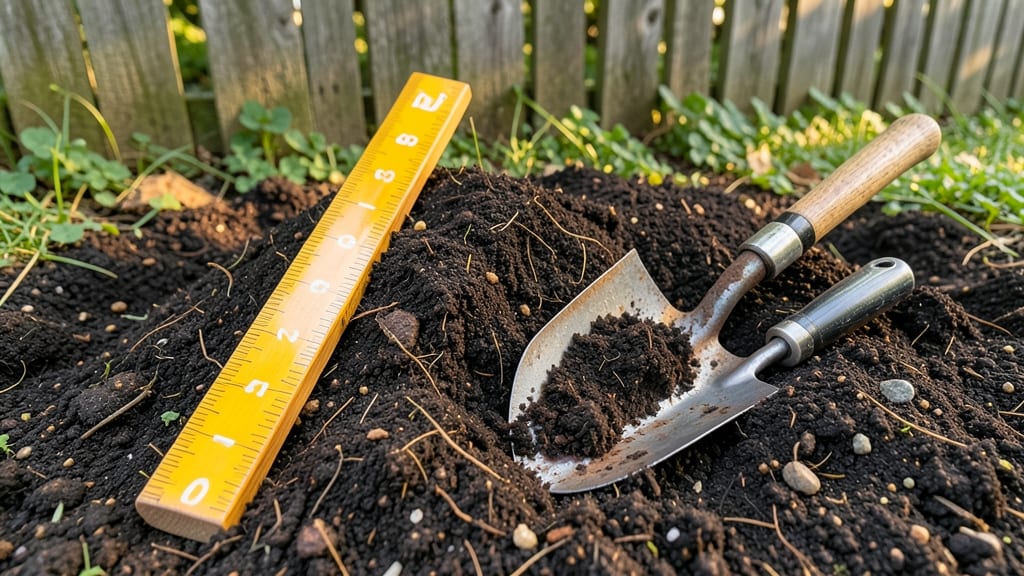
A cubic yard of soil looks like a cube measuring 3 feet in every direction—imagine a small dumpster or a wheelbarrow completely packed with dirt. This volume weighs roughly 2,000–2,500 pounds when damp, depending on its composition.
A cubic yard of soil is essentially a three-dimensional space that's the same length, width, and height—3 feet in each direction. 🌱 To put it into perspective, this volume is about the size of a standard refrigerator or a large bathtub.
When you're planning a garden or landscape project, visualizing this measurement helps you determine how much soil you'll need to buy or move. For example, a typical wheelbarrow holds about one cubic foot, so you'd need 27 full loads to match a cubic yard.
This measurement is crucial for estimating costs, as soil is often sold by the cubic yard. Many garden centers deliver soil in quantities of 1/2, 3/4, or full cubic yards, so knowing your project's dimensions helps avoid overbuying or running short.
For instance, a 4x8-foot raised bed filled to 12 inches deep requires about 1.33 cubic yards of soil.
💡 In This Article
- Visualizing Soil Volume: Cubic Yard Dimensions Compared to Everyday Objects
- How Much Soil Do You Need for Common Gardening Projects?
Visualizing soil volume: cubic yard dimensions compared to everyday objects
A cubic yard of soil occupies a perfect cube measuring 3 feet × 3 feet × 3 feet, creating a volume of 27 cubic feet. To visualize this, imagine stacking 9 standard refrigerator boxes (each 3 feet long) in a 3x3 grid—this is your soil volume.
The weight becomes immediately apparent when you consider that a single wheelbarrow typically holds only 2-3 cubic feet of soil, meaning you'd need 9-13 full loads to match this volume. 🌱
The texture and moisture content dramatically affect how this volume feels. Dry, sandy soil might weigh closer to 1,800 pounds, while wet, clay-heavy soil can exceed 2,700 pounds. This weight variation explains why moving soil manually becomes exhausting—each cubic foot adds about 100-120 pounds when damp.
For comparison, a standard pickup truck bed holds roughly 2-3 cubic yards, while a small dumpster typically accommodates 3-4 cubic yards, making these common delivery options for landscaping projects.
Visualizing depth helps too: A cubic yard is equivalent to covering a 100-square-foot area with 3 inches of soil. This means your 3x3-foot raised bed filled to 12 inches would require 1 cubic yard—a perfect match.
The key insight is that soil volume scales with surface area and depth, so larger projects require proportionally more material. For example, a 10x10-foot garden bed at 6 inches deep needs 0.75 cubic yards, while a 20x20-foot lawn topsoil application at 2 inches demands 1.11 cubic yards.
Consider these real-world comparisons to solidify the mental image:
- Standard bathtub: Holds about 0.5 cubic yards when filled with soil
- Large kiddie pool: A 4-foot diameter pool filled to 3 feet holds roughly 1.5 cubic yards
- Mini fridge: The interior volume is about 0.25 cubic yards
- Standard mattress: A queen-size mattress occupies roughly 0.5 cubic yards of space
The most surprising aspect is how quickly these volumes accumulate. A 50-square-foot patio garden needing 6 inches of soil requires 2.08 cubic yards, which is why professional gardeners always calculate soil needs by multiplying length × width × depth (in feet) and dividing by 27.
This simple formula converts any project dimensions into cubic yards, making material estimation straightforward. 💫
For home gardeners, this visualization translates directly to cost savings. Buying 1/2 cubic yards at a time for small projects avoids waste, while renting a dumpster for larger jobs becomes economical when you're moving 3+ cubic yards.
The key takeaway is that understanding these volume comparisons transforms abstract measurements into actionable planning tools for any gardening or landscaping endeavor.