
How To
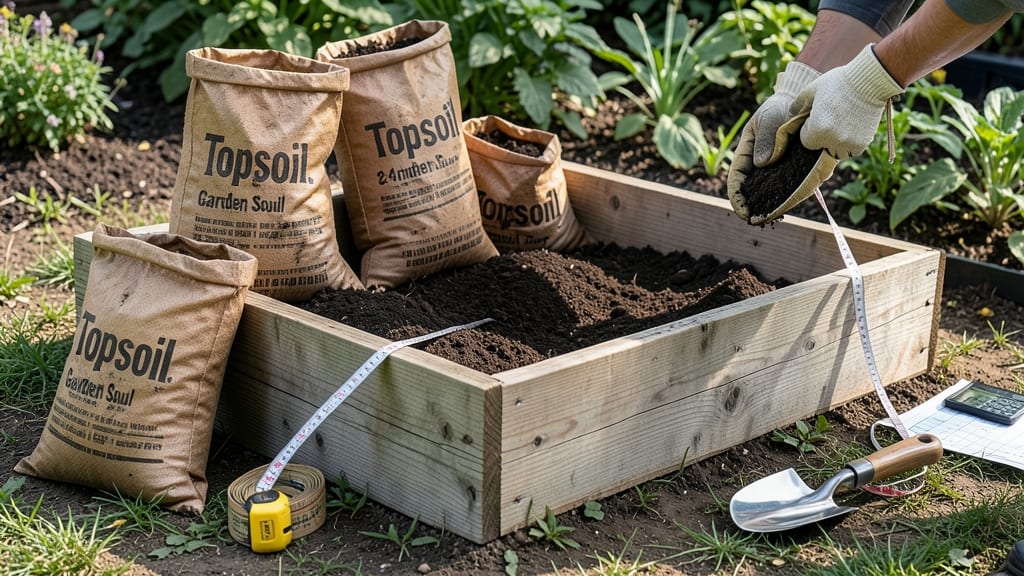
To determine how many bags of soil to fill a raised bed, multiply the bed's length, width, and depth (in feet) to find cubic feet, then divide by the bag size (typically 2-4 cubic feet). For instance, a standard 4’x8’ bed filled to 12" depth needs roughly 50-60 bags of 2-cubic-foot soil, while larger or deeper beds may require 80+ bags. Don't forget to factor in soil compaction and organic amendments.
Calculating soil needs starts with simple math: length × width × depth (all in feet) gives you the total cubic footage. 🌱 For example, a 4’x8’ bed filled to 12" depth equals 32 cubic feet—divide that by a 2-cubic-foot bag size, and you get 16 bags before accounting for settling.
Most gardeners add 20-30% extra for compaction, which is why you’ll often see recommendations for 50-60 bags. Using a mix of garden soil and compost not only improves drainage but also reduces the total bags needed by cutting down on bulk soil requirements.
Another key factor is bag size—some brands offer 4-cubic-foot bags, which can nearly halve your trips to the store. 💛 However, these larger bags are heavier and may require a wheelbarrow for transport.
If you're working with a deeper bed (18"+), consider pre-mixing your soil with perlite or vermiculite to improve aeration and reduce the overall volume needed. Always check the soil type too: potting mixes are lighter than garden soil, so you might need fewer bags for the same space.
💡 In This Article
- Calculating Soil Volume for Raised Garden Beds
- Best Soil Bag Sizes and Types for Raised Beds
Calculating soil volume for raised garden beds
Start by measuring your raised bed's dimensions in feet—not inches—to avoid confusion. For instance, a bed that's 4 feet long, 3 feet wide, and 12 inches deep converts to 1 foot in depth (12 ÷ 12 = 1).
Multiply these numbers: 4 × 3 × 1 = 12 cubic feet. This raw volume assumes no settling, but real-world soil compacts by 20-30% after watering and settling, so you'll need 14-16 cubic feet of loose soil to fill the same space.
The depth matters more than you might think. A 12-inch-deep bed is standard, but deeper beds (18+ inches) improve root growth for larger plants like tomatoes or squash.
For example, that same 4’x3’ bed at 18 inches deep becomes 18 cubic feet before compaction. 🌱 Using a 2-cubic-foot bag means you'd need 9-11 bags just for the raw volume, plus 20% extra for settling—so 12 bags minimum for optimal fill.
Soil type affects volume too. Garden soil is heavier and settles more than potting mixes, which are lighter and fluffier. A 2-cubic-foot bag of garden soil might actually fill 1.5 cubic feet after settling, while potting mix retains closer to 1.8 cubic feet.
This is why gardeners often mix soil types: blending 60% garden soil with 40% compost reduces settling and improves drainage, cutting your total bag count by 10-15%.
Don’t overlook the weight—soil is heavy! A 2-cubic-foot bag of garden soil weighs 40-50 pounds, while potting mix is lighter at 30-40 pounds.
For a 4’x8’ bed (12” deep), you’d be moving 2,000-2,400 pounds of soil if using standard bags. 💪 This is why many gardeners opt for 4-cubic-foot bags (though they’re 80-100 pounds each
Pro tip: Use a soil calculator (available online) to input your exact dimensions and soil type. These tools account for compaction and even suggest amendment ratios. For example, they might recommend 30% compost for clay-heavy soils to improve aeration, reducing the need for extra soil volume. Always round up—underestimating leads to half-filled beds and unhappy plants! Finally, consider the moisture factor. Dry soil weighs more but settles less than moist soil. If you’re filling your bed in dry conditions, add 5-10% extra volume to account for future watering. Conversely, pre-moistening soil before filling can reduce settling by 10-15%**, saving you bags and back strain.