
Light Requirements
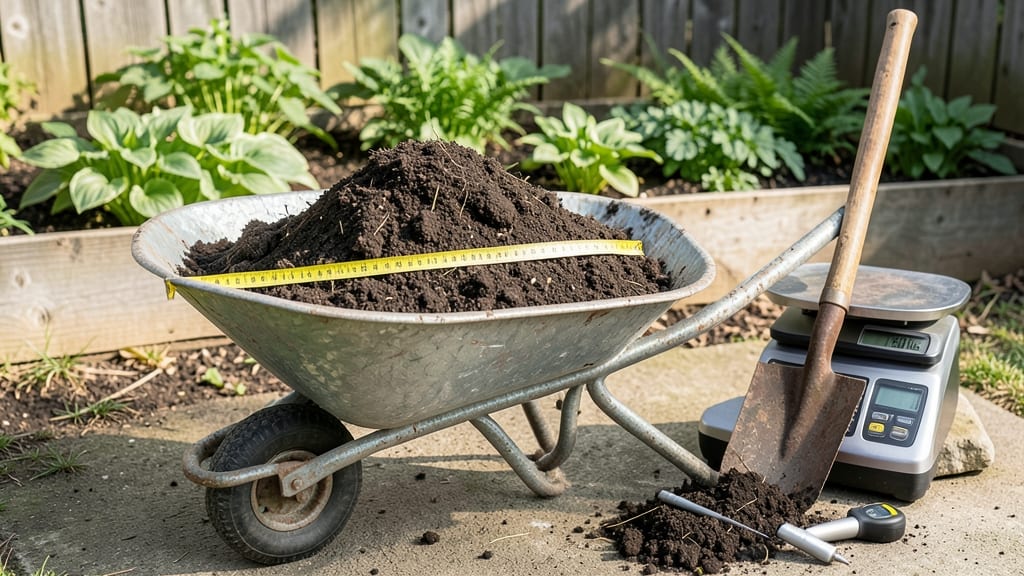
To determine how much one yard of soil weighs, know that dry soil ranges from 1,500 to 2,000 pounds, while saturated soil can reach up to 3,000 pounds due to water absorption and soil composition differences.
Understanding soil weight is crucial for projects like landscaping or gardening, where precise calculations prevent overloading equipment or underestimating material needs. 🌱 The weight swings dramatically depending on whether your soil is bone-dry or waterlogged—moisture alone can add up to 1,500 pounds to a cubic yard!
For example, sandy soil stays lighter (closer to 1,500 pounds) even when wet, while clay holds more water and tips the scales toward the heavier end. I always double-check local moisture conditions before ordering bulk soil, especially in rainy seasons when weight estimates can be off by hundreds of pounds.
Most gardeners also need to account for organic matter—compost or peat moss can reduce weight slightly, but they improve soil structure. If you're planning a raised bed, stick with 1,800 pounds per yard as a safe middle ground for dry, loamy soil.
For container gardening, lighter potting mixes (often 1,000 pounds per yard) work better, but they still require sturdy supports. Always verify with your supplier, as their soil blends may vary significantly from standard weight charts.
💡 In This Article
- Factors Affecting Soil Weight per Cubic Yard
- Practical Weight Estimates for Gardening Projects
Factors affecting soil weight per cubic yard
Soil weight varies dramatically because it's not just dirt—it's a complex mix of minerals, organic matter, water, and air pockets. The mineral component alone (sand, silt, clay) accounts for about 45-50% of soil's total weight in dry conditions.
Clay particles, being flat and tightly packed, create dense soil that can weigh up to 2,500 pounds per cubic yard when dry, while sandy soil—with its loose, granular structure—typically stays under 1,800 pounds due to higher air content between particles.
Moisture is the wild card here.
Water adds significant bulk: a cubic yard of soil can absorb up to 1,500 pounds of water when fully saturated, turning a 2,000-pound dry load into a 3,500-pound monster. 💧 The porosity of your soil determines how much water it holds—clay soils act like sponges, while sandy soils drain faster.
Organic matter (like decomposed leaves or compost) can reduce weight slightly by adding air spaces, but it also increases water retention, creating a balancing act that affects overall density.
Compaction plays a sneaky role too. When soil is tilled or walked on, particles press together, reducing air pockets and increasing weight. For example, a freshly tilled garden bed might weigh 10-15% less than the same soil after a few weeks of foot traffic.
This is why professional landscapers always specify "loose" or "compacted" weight when ordering bulk soil—it can mean the difference between a manageable load and one that requires heavy machinery.
Temperature also matters, though it's often overlooked. Cold soil holds more water because ice crystals form in pores, increasing weight temporarily. In winter, a cubic yard of frozen soil might tip the scales at 3,000 pounds—double its summer weight.
This seasonal shift explains why spring planting often requires stronger equipment or more frequent deliveries to account for heavier, wetter soil conditions.
Here's a quick breakdown of how these factors interact:
- Clay soil: Dense, holds 30-50% water by volume → 2,500-3,000 lbs dry, up to 3,500 lbs wet
- Sandy soil: Loose, drains quickly → 1,500-1,800 lbs dry, up to 2,200 lbs wet
- Loamy soil (ideal mix): Balanced → 1,800-2,200 lbs dry, up to 2,800 lbs wet
The key takeaway? Soil weight isn't static—it's a dynamic system where moisture, particle size, and compaction create a sliding scale. Always test your local soil's moisture level before calculating weights for projects, especially in regions with seasonal rainfall variations. 🌦️