
How To
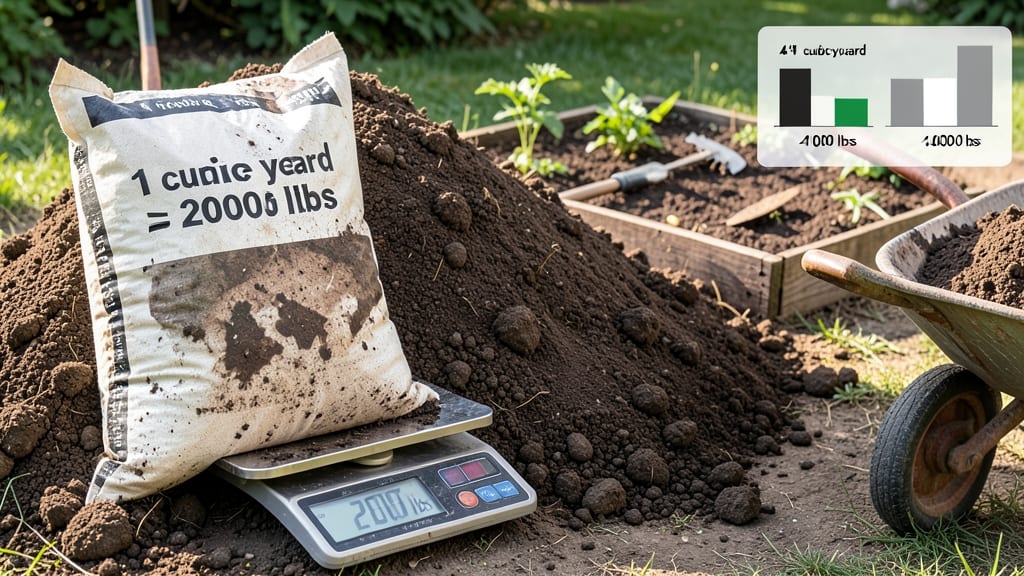
Determining the weight of a cubic yard of topsoil reveals it typically ranges from 2,000 to 2,700 pounds when loose, but this varies dramatically based on moisture content and how tightly packed the soil is—dry conditions can reduce weight to 1,800 pounds, while waterlogged soil may exceed 3,000 pounds. Always confirm exact measurements with your supplier before planning transport or storage.
Understanding why topsoil weight fluctuates this widely starts with its composition.
Soil isn't just dirt—it's a mix of minerals, organic matter, and air pockets that change when exposed to moisture or pressure. 🌱 For example, freshly tilled garden soil might weigh closer to 2,200 pounds per cubic yard, but after a heavy rain, those same dimensions could swell to nearly 3,000 pounds due to water absorption.
This variability is why professional landscapers always account for a 10% buffer when estimating delivery needs—your project's success depends on knowing whether you're working with dry, loose soil or damp, compacted earth.
Beyond moisture, compaction plays a critical role. When soil is heavily compressed—like under construction equipment or foot traffic—the air gaps collapse, making the same volume significantly heavier. This is why bagged topsoil often feels lighter than bulk deliveries: the bags maintain loose consistency, while truckloads get packed down during transport.
To test your soil's weight at home, simply weigh a small known volume (like a 5-gallon bucket) and scale up—this DIY method gives you real-time adjustments for your specific conditions.
💡 In This Article
- How Moisture and Compaction Affect Topsoil Weight
- Calculating Topsoil Weight for Landscaping Projects
How moisture and compaction affect topsoil weight
Topsoil's weight isn't fixed because it behaves like a porous sponge. The key factor is its bulk density, which measures how much solid material occupies a given volume. Dry topsoil contains about 25-40% air by volume, creating lightweight pockets that reduce overall weight.
When you add moisture, water fills these air gaps—each pound of water absorbed can increase the total weight by nearly 8.34 pounds per cubic foot (since water's density is about 62.4 pounds per cubic foot). 💧
Compaction crushes these air pockets, drastically altering weight. For example, loose topsoil might weigh 2,200 pounds per cubic yard, but when compacted to 70% of its original volume (like under heavy machinery), the same cubic yard could weigh 2,800 pounds.
This happens because soil particles shift closer together, displacing air with denser minerals. The USDA Soil Survey Manual notes that clay soils compact more than sandy soils due to their smaller particle size and higher plasticity.
Real-world examples highlight these variations. A 5-gallon bucket (0.03 cubic yards) of dry topsoil weighs about 35-40 pounds, but after saturation, it jumps to 50-60 pounds. This 30-50% weight increase explains why landscapers see truckloads feel heavier after rain.
The moisture doesn't just add weight—it also makes soil stickier and harder to move, which is why many suppliers deliver during dry spells to avoid delivery complications. 🚛
Particle size distribution plays a hidden role. Sandy soils have larger particles with more air space, making them lighter (1,900-2,300 pounds per cubic yard when dry), while silty or clay-heavy soils pack more tightly (2,400-2,800 pounds).
The specific gravity of soil minerals (typically 2.65) contrasts sharply with air (0.0012) and water (1.0), creating the dramatic weight swings you observe in practice.
Temperature also subtly influences weight through moisture evaporation. In 90°F+ heat, topsoil loses moisture faster, reducing weight by 5-10% per day in dry climates. Conversely, cool, humid conditions keep soil saturated longer. This is why winter deliveries often feel heavier—soil retains more water from seasonal precipitation.
For precise planning, always check the 3-day weather forecast before ordering bulk topsoil to account for these seasonal variations. ❄️
Understanding these factors helps explain why a 10-ton truck can carry 4-5 cubic yards of dry topsoil but only 3 cubic yards when wet. The difference isn't just about volume—it's about the physics of how water and pressure interact with soil's natural structure.
This knowledge becomes especially critical when designing large-scale projects where weight calculations directly impact equipment selection and labor costs.