
Landscaping
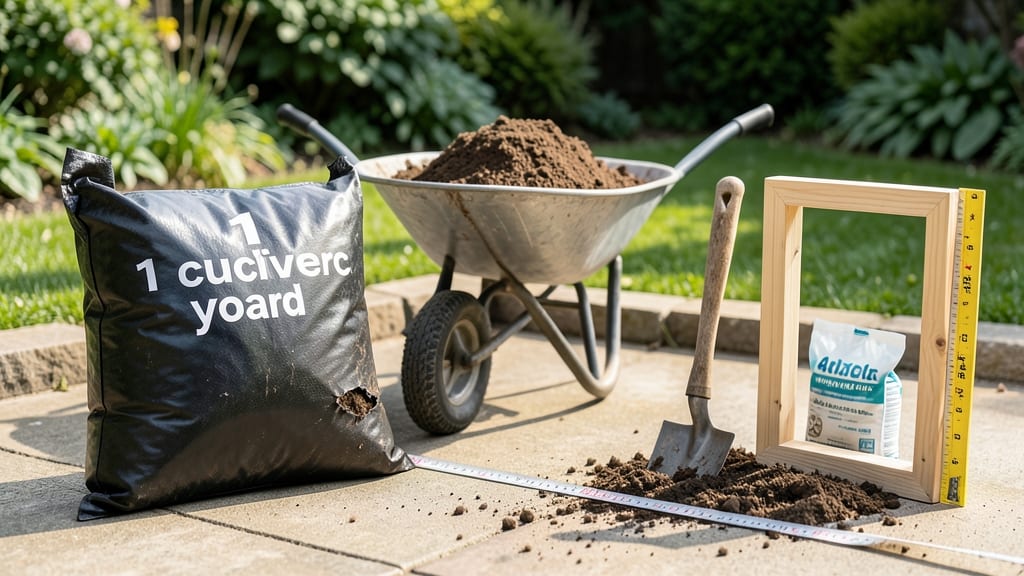
To determine how many bags of soil are in a yard, remember that a cubic yard equals 27 cubic feet, which translates to about 27 standard 2-cubic-foot bags or 13.5 bags if using 4-cubic-foot bags. Always double-check bag sizes for precise project planning.
Understanding this conversion is key for any gardening or landscaping project. 🌱 A cubic yard is the standard measurement for bulk soil, but bag sizes vary widely—some brands even sell 3-cubic-foot or 5-cubic-foot options.
For example, a raised garden bed requiring 3 cubic yards would need roughly 81 standard 2-cubic-foot bags, but using 4-cubic-foot bags cuts that to just 40.5 bags. I always recommend weighing your options: bulk purchases save money but require storage space, while smaller bags offer flexibility for smaller projects.
What's interesting is how bag weight factors into the equation. A 2-cubic-foot bag of topsoil typically weighs 40-50 pounds, while a 4-cubic-foot bag can tip the scales at 80-100 pounds. 💪 This makes lifting and transporting a significant consideration for DIY gardeners.
For raised beds or container gardening, I often opt for smaller bags to avoid strain, while larger projects benefit from the efficiency of bigger bags.
💡 In This Article
- Calculating Cubic Feet to Soil Bags: The Math Behind Landscaping
- Choosing the Right Soil Bags for Your Gardening Project
Calculating cubic feet to soil bags: the math behind landscaping
The conversion from cubic yards to cubic feet is straightforward but essential for accurate soil bag calculations. A cubic yard equals 27 cubic feet because 3 feet × 3 feet × 3 feet = 27 cubic feet.
This means if you're working with a standard yard of soil, you're dealing with a volume that's equivalent to a cube measuring 3 feet on each side. For landscaping projects, this conversion is critical because most soil bags are sold in cubic feet increments, not cubic yards.
Bag sizes vary significantly, with the most common options being 2-cubic-foot and 4-cubic-foot bags.
A 2-cubic-foot bag is roughly the size of a small microwave, while a 4-cubic-foot bag is closer to the volume of a standard cooler. 🌱 For example, if you need to fill a garden bed that requires 3 cubic yards of soil, you'd need 81 bags of 2-cubic-foot soil or 40.5 bags of 4-cubic-foot soil.
This difference can save you trips to the store or reduce the number of heavy bags you need to carry.
Understanding this math helps you plan efficiently. For instance, a raised garden bed measuring 4 feet long × 2 feet wide × 1 foot deep requires 8 cubic feet of soil. That translates to 4 bags of 2-cubic-foot soil or 2 bags of 4-cubic-foot soil.
This precision ensures you don't overbuy or run out mid-project. Always double-check the depth of your garden beds, as even a few inches can add up quickly in terms of volume.
Another factor to consider is the density of the soil. Topsoil is typically lighter than potting mix or specialty blends, which can affect how much volume you actually get per bag.
For example, a 2-cubic-foot bag of topsoil might weigh 40-50 pounds, while a bag of potting mix could weigh slightly more due to added organic matter. This weight difference impacts how many bags you can comfortably handle and transport, especially if you're working alone.
For larger projects, like filling in a sunken patio or creating a new flower bed, it's often more cost-effective to order soil in bulk rather than buying multiple bags. However, bulk soil is sold by the cubic yard, so you'll need to calculate how many cubic yards you require first.
For example, a project needing 10 cubic yards would require 270 bags of 2-cubic-foot soil or 135 bags of 4-cubic-foot soil. This can be a significant difference in both cost and effort.