
How To
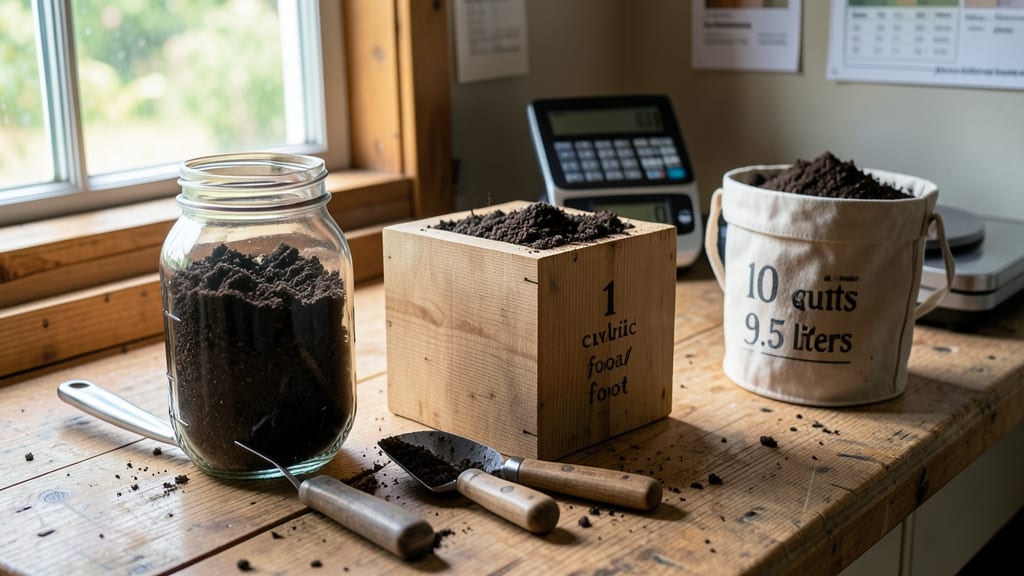
Converting 40 quarts of soil equals approximately 1.11 cubic feet, a key measurement for gardeners calculating planting volumes, container sizes, or soil mix ratios in raised beds and pots.
Understanding soil volume conversions is crucial for gardeners because different soil types pack differently—loamy soil compresses more than sandy mixes, while compost blends may expand slightly when moist. 🌱 This conversion helps you estimate how much soil you need for projects like filling a 5-gallon pot (which holds about 0.625 cubic feet) or calculating bulk purchases for raised beds.
For example, a standard 4'x8' raised bed (2 feet deep) requires roughly 64 cubic feet of soil, meaning you'd need about 57 quarts based on this ratio.
Why does this matter? Most garden centers sell soil by the cubic foot, while DIY projects often use quart measurements for smaller containers. Knowing this conversion saves you from overbuying or running short mid-project.
I always double-check moisture content too—wet soil weighs more and takes up less space, so adjustments may be needed for accuracy.
💡 In This Article
- How Soil Volume Conversions Work for Gardening
- Practical Applications for Measuring Soil in Quarts vs Cubic Feet
How soil volume conversions work for gardening
The conversion between quarts and cubic feet relies on understanding that 1 cubic foot equals 29.92 quarts, but soil adds complexity. Unlike water, soil volume varies due to particle size and composition. Loamy soil—ideal for most plants—packs tightly, while sandy soil contains larger air pockets.
For example, 1 cubic foot of sand might actually hold 32 quarts when loose, but compresses to 28 quarts when tamped down. This is why your 40 quarts of loam soil becomes 1.11 cubic feet but could occupy 1.3 cubic feet if sandy.
Moisture content plays a critical role too. Dry soil particles settle more compactly, while moist soil expands slightly as water fills air gaps. A 10% moisture increase can make the same weight of soil occupy 5-8% more volume.
This is why bagged soil often lists "cubic feet" at a specific moisture level—usually 15-20% moisture for optimal handling. For precision, weigh your soil: 1 cubic foot of dry loam typically weighs 60-80 pounds, while moist loam can reach 100 pounds.
Density differences matter when mixing soils. A 50-50 compost-loam blend will have more air pockets than pure loam, increasing volume by 10-15%. For instance, 40 quarts of compost might occupy 1.25 cubic feet due to its fibrous structure.
This explains why seed-starting mixes (lighter, airy) require more cubic feet per quart than heavy garden soil. Always check the soil's bulk density—the ratio of dry weight to volume—when calculating for large projects.
Here's how to visualize it: Imagine filling a 12"x12"x12" cube (1 cubic foot) with soil.
If you scoop 40 quarts of typical garden loam into it, you'll see about 1.11 cubic feet of space used—but if you use the same soil in a 5-gallon pot, the pot's shape forces the soil to compress differently, potentially reducing its effective volume by 10%.
This is why gardeners often overestimate container capacities.
For accurate measurements, use a calibrated soil scoop or digital scale. A 1-quart scoop of loam weighs roughly 2.2 pounds when dry, but 2.8 pounds when moist. This weight-to-volume relationship helps you adjust for different soil types.
For example, 40 quarts of potting mix (lighter due to perlite/vermiculite) might only equal 0.95 cubic feet, while 40 quarts of clay-heavy soil could reach 1.25 cubic feet.
Pro tip: When buying soil in bulk, ask for the dry bulk density—this tells you how much volume to expect after accounting for moisture. Most garden centers use 1.1 cubic feet per 33 quarts as a standard for loam, but verify for your specific project.
This attention to detail prevents costly over-purchases or mid-project shortages.